
By The Pulseline News Desk
The Department of Prisons has clarified the rules governing clothing worn by convicted persons, stating that those sentenced to more than three years’ imprisonment must be produced before court wearing prison clothing issued by the Department, irrespective of their status or position.
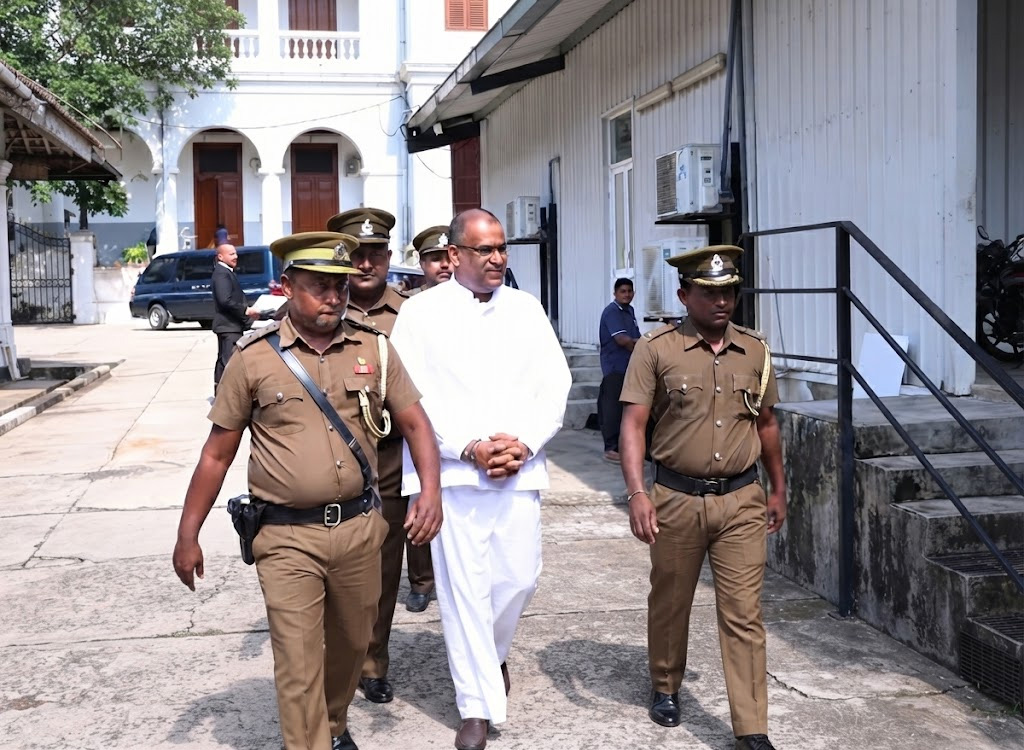
Prison Media Spokesperson Commissioner of Prisons Senaka Palletenna has made the clarification amid discussion over the clothing worn by individuals serving prison sentences, following the removal of the robes of Ven. Galagodaaththe Gnanasara Thera after he began serving the remaining period of his prison sentence.
Palletenna has said that, under prison regulations, a Buddhist monk sentenced to a term of simple imprisonment may continue to wear robes while serving the sentence.
However, persons sentenced to rigorous imprisonment are required to wear prison clothing, regardless of their status, he has said.
He has explained that when a convicted person serving a sentence of less than three years is produced before court, the prison superintendent may grant permission for the individual to wear the civilian clothing worn before the commencement of the sentence.
Similarly, a Buddhist monk serving a sentence of less than three years may be permitted to appear before court wearing robes.
However, any person sentenced to more than three years’ imprisonment must be produced before court wearing clothing issued by the Department of Prisons, Palletenna has said.
The clarification comes after Gnanasara Thera was taken into custody to serve the remaining period of a six-year prison sentence imposed following his conviction for contempt of court. The Court of Appeal on October 5 directed the Commissioner General of Prisons to implement the remaining sentence.
Following his admission to Welikada Prison, prison authorities have said the Thera’s robes were removed and he was issued standard prison attire and registered as an ordinary inmate. He was also being held in a ward designated for ordinary prisoners.
The issue has since prompted a request from retired Senior Professor and Anunayake Maha Thera Ven. Kotapitiye Rahula Thera, who has urged the Prisons authorities to allow Gnanasara Thera to retain his robes and appear in them whenever he is brought outside the prison.
In a letter to the Commissioner General of Prisons, Ven. Kotapitiye Rahula Thera has reportedly said the authority to remove or change the robes of an ordained monk rests with the monk concerned and the relevant Maha Sangha.
He has said the Sri Jayawardenapura Kotte Sri Kalyani Samagridharma Maha Sangha Sabha, to which Gnanasara Thera belongs, had no objection to the court ruling and fully accepted the supremacy of the judiciary.
However, he has said the Sangha Sabha had taken note of reports concerning the removal of the Thera’s robes.
According to Ven. Rahula Thera, established religious practices require the removal of a monk’s robes to be considered by the relevant Maha Sangha, and a monk’s robes should be preserved so that he may appear in them when brought outside his place of detention.
He has further said Gnanasara Thera had not been reported to the Sangha Sabha as having committed a Parajika offence under the Vinaya Pitaka or another offence considered sufficiently serious to warrant the removal of his robes.
He has therefore requested that the Prisons authorities allow Gnanasara Thera to retain his robes and appear in them when brought before court.
Meanwhile, Palletenna has said the same prison regulations applied to other religious figures serving sentences.
He has stated that more than 63 religious figures are currently serving prison sentences at correctional institutions across the country and that they are also subject to the applicable regulations governing prison clothing.
The Government has maintained that no special procedure was applied in Gnanasara Thera’s case, with Cabinet Spokesman, Minister Nalinda Jayatissa saying the same procedure was being followed in the case of Buddhist monks currently serving prison sentences.
The dispute has therefore centred not on the court’s authority to enforce the prison sentence, which the senior monk has said he accepted, but on whether the decision concerning an ordained monk’s robes should be governed by prison regulations or determined through the relevant Buddhist ecclesiastical authorities.











Leave a comment