
By The Pulseline News Desk
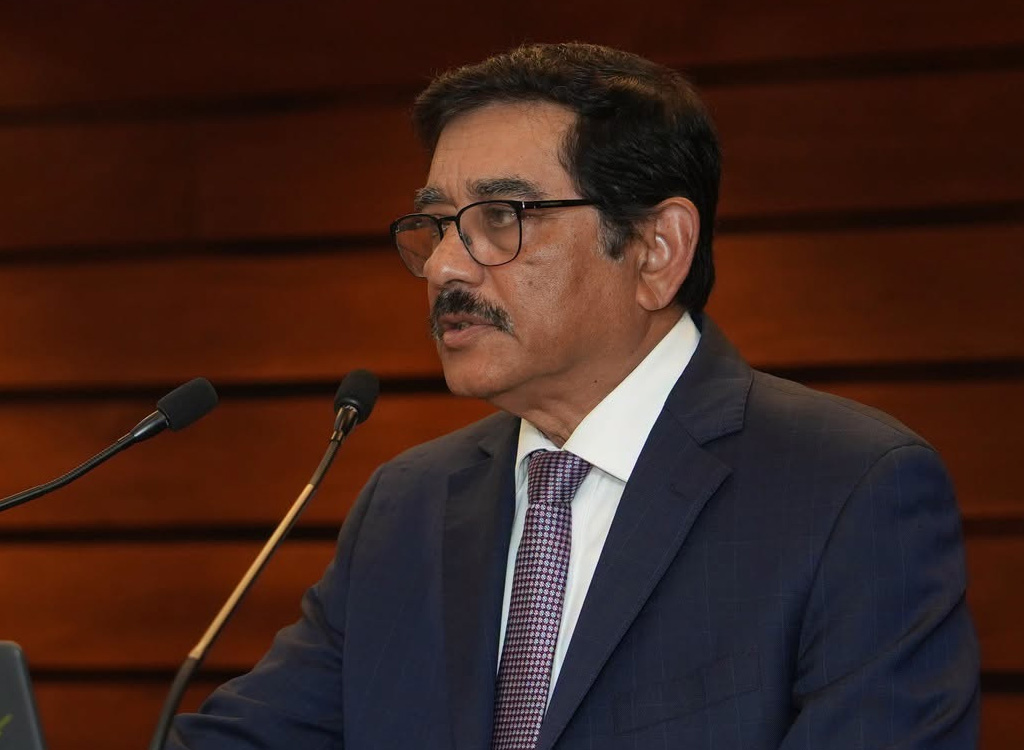
Sri Lanka’s Central Bank is encouraging individuals and businesses to borrow at prevailing market interest rates if they have the capacity to repay, with Governor Nandalal Weerasinghe saying the institution does not impose a specific target for credit growth.
Rejecting suggestions that borrowers should postpone taking loans amid recent monetary policy tightening, Weerasinghe has said borrowing remained important for economic activity, provided it was supported by genuine financial needs, viable business opportunities and sufficient repayment capacity. “At this moment, according to the prevailing interest rates, if one has the ability to borrow, one should definitely take a loan,” the Governor has told reporters.
Total credit in the economy is currently expanding by more than 20 percent, easing only marginally from growth rates of around 24 to 25 percent recorded during the post-crisis economic recovery in 2024 and 2025.
Weerasinghe has described the sustained expansion as a positive development, noting that maintaining credit growth above 20 percent for two consecutive years was relatively unusual in Sri Lanka’s economic history. “Credit growth being over 20 percent means we currently see it as a very good provision of credit to the economy,” he has said.
His remarks came amid questions about the Central Bank of Sri Lanka’s (CBSL’s) latest Credit Supply Survey, which indicated increasing demand for loans alongside tighter credit supply conditions.
However, the Governor has rejected suggestions that commercial banks were deliberately discouraging lending, explaining that lower interest rates had naturally encouraged borrowing demand.
He has said banks were nevertheless required to assess borrowers’ repayment capacity, the feasibility of proposed projects and associated risks before approving loans, in keeping with regulatory requirements.
CBSL, he has explained, does not seek to maintain credit growth at a predetermined level. Instead, it monitors the overall expansion of borrowing by the private sector and the Government and assesses its impact on aggregate demand in the economy.
Of particular concern is whether excessive domestic demand translates into higher imports and inflationary pressure, potentially undermining price stability.
Weerasinghe has said monetary policy interest rates were used to influence overall borrowing and spending conditions rather than dictate how much individuals or businesses should borrow.
The Governor’s comments also highlight CBSL’s attempt to balance two competing priorities: ensuring adequate credit flows to support economic recovery and preventing excessive demand from generating renewed inflationary pressures.
For businesses, the message is that access to credit remains important for investment and expansion, although borrowing decisions must be based on realistic assessments of future earnings and repayment obligations.
For households, the Governor has said the decision to take a loan ultimately rests with the individual, depending on financial circumstances and the ability to service the debt.













Leave a comment