
By The Pulseline News Desk
Saudi Arabia could run out of oil stocks available for export within days if its crucial East-West oil pipeline is not restored, raising the prospect of another major shock to global energy markets — and exposing oil-importing economies such as Sri Lanka to renewed pressure on fuel prices, inflation and foreign exchange.
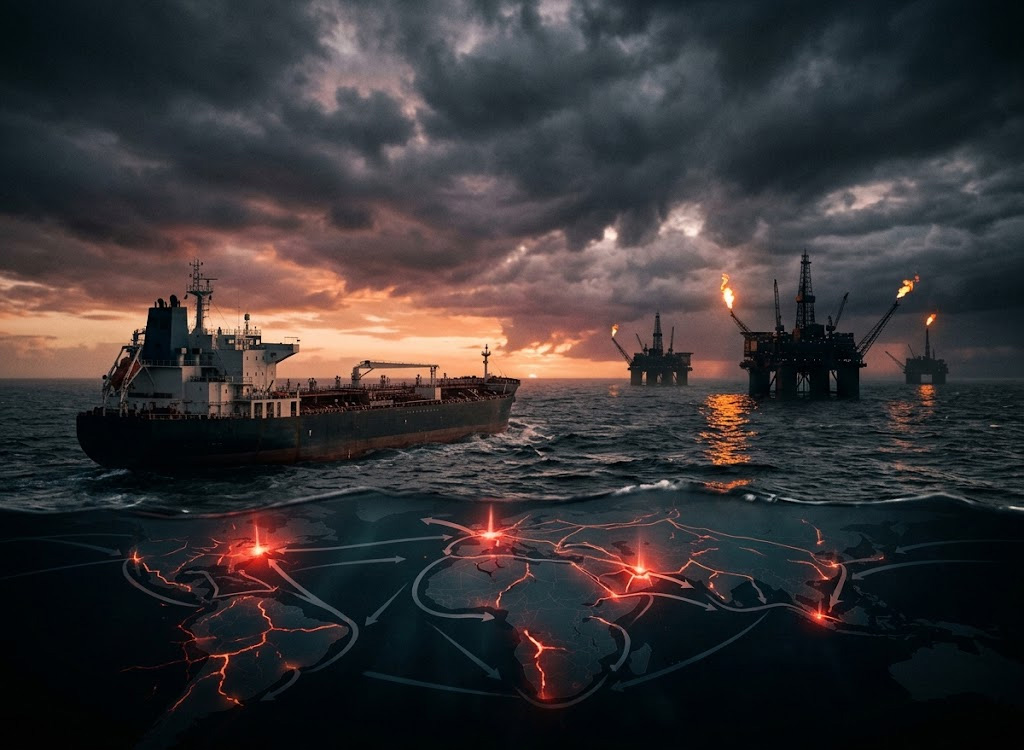
The 1,200-kilometre pipeline, which transports crude from Saudi Arabia’s eastern oil-producing areas to the Red Sea port of Yanbu, was shut following drone attacks. The route had become particularly important after the disruption to shipping through the Strait of Hormuz.
Saudi Arabia has been using the pipeline to reroute around 4 million barrels of oil a day, equivalent to roughly 4% of global oil supply, to Yanbu. With the pipeline now offline, industry sources reportedly estimate that stocks at Yanbu may support exports for only five to seven days.
The shutdown comes as the global oil market is already facing a severe supply squeeze. Saudi oil production fell to about 6.2 million barrels per day in August, from 10.9 million barrels per day in February, according to figures reported to OPEC. The International Energy Agency has also warned of an exceptionally large global supply disruption.
Oil prices have already responded. Brent crude has moved above US$106 a barrel, while WTI rose above US$102 following renewed attacks and growing concerns over supplies.
For Sri Lanka, the developments present a particularly important economic risk.
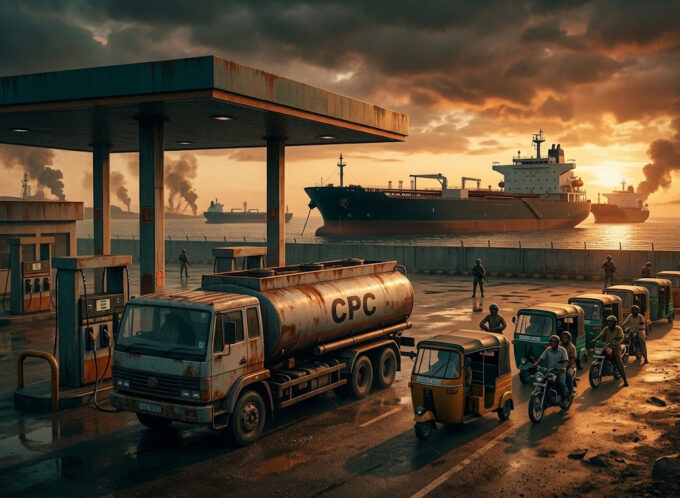
Fuel prices could become the first pressure point
Sri Lanka remains heavily dependent on imported petroleum products to meet its transport and energy requirements. Any sustained rise in international crude prices would therefore increase the country’s import bill.
The immediate question is not simply whether Sri Lanka can obtain fuel, but how much it will have to pay for it.
If the Saudi pipeline remains shut and other Middle Eastern supply routes remain disrupted, international buyers could compete for a smaller pool of available crude. At the same time, tanker operators are charging substantially higher rates because of the security risks surrounding the Gulf, Red Sea and Bab el-Mandeb routes.
That combination — higher crude prices and higher shipping costs — could make every imported barrel more expensive.
The International Monetary Fund (IMF) has already warned that higher oil prices would increase inflation and weaken Sri Lanka’s current account. The IMF said the ongoing Middle East war had significantly worsened Sri Lanka’s economic outlook and identified higher oil prices as a key downside risk.
Transport costs could spread the shock
The impact would not stop at petrol and diesel.
Higher fuel costs feed into virtually every part of the Sri Lankan economy because transport is embedded in the movement of food, agricultural products, construction materials and manufactured goods.
A prolonged increase in petroleum prices could therefore raise:
- bus and other transport operating costs;
- freight and logistics expenses;
- prices of food transported from farming areas to cities;
- construction and manufacturing costs;
- costs faced by fishermen and other fuel-dependent industries; and
- the operating expenses of businesses.
The result could be a second-round inflationary effect, even if the initial increase is confined to global oil markets.
This is particularly significant because Sri Lanka has only recently emerged from a severe economic crisis and remains vulnerable to external shocks.
Foreign exchange pressure could return
A sustained oil price increase would also mean Sri Lanka needs more foreign currency to purchase the same quantity of petroleum.
That could widen the country’s import bill and place additional pressure on the balance of payments.
The IMF has specifically warned that higher oil prices would weaken Sri Lanka’s current account.
For a country that has spent the past several years rebuilding its foreign exchange reserves, this could become an important test.
Higher fuel costs could increase demand for dollars precisely when Sri Lanka is also required to meet other external payments and rebuild reserves.
Inflation is another concern
The danger is that an oil shock could arrive through several channels simultaneously.
The first would be the direct impact of higher fuel prices. The second would come through transportation and logistics. The third would be the cost of imported goods. The fourth could emerge through food prices, as higher diesel costs raise the expense of transporting agricultural produce and operating machinery.
The IMF has warned that energy-importing economies are particularly vulnerable to the current Middle East shock, with higher energy and input costs creating inflationary pressure and weakening economic activity.
For Sri Lanka, this could complicate the Government’s efforts to maintain price stability while supporting economic growth.
Electricity sector could also feel the pressure
Higher petroleum prices could have implications for electricity generation if thermal generation becomes more expensive or if shortages in other energy sources require greater reliance on oil-based generation.
Sri Lanka has recently benefited from improved hydroelectric generation and lower generation costs. But a prolonged international energy shock could reverse some of those gains if imported fuel costs rise sharply.
That could place renewed pressure on electricity tariffs or require greater government intervention to absorb increased generation costs.
Shipping disruption adds another risk
There is also a broader threat to Sri Lanka because the crisis is not confined to oil.
The East-West pipeline had allowed Saudi Arabia to bypass the Strait of Hormuz by moving crude to Yanbu on the Red Sea. But the security situation around the Red Sea and Bab el-Mandeb is deteriorating at the same time.
The capture of strategic Mayun Island by Houthi forces has increased concerns over shipping through the Bab el-Mandeb Strait.
Shipping companies could respond by avoiding the Red Sea and taking longer routes around the Cape of Good Hope.
That would increase voyage times, fuel consumption, insurance costs and freight rates.
For Sri Lanka, whose economy depends heavily on maritime trade and imports, higher freight costs could eventually affect the prices of everything from fuel and food to industrial inputs and consumer goods.
Reuters has reported that tanker rates have already reached record levels amid the growing risks to Middle Eastern shipping routes.
A test for Sri Lanka’s economic recovery
The timing is particularly important. Sri Lanka’s economic recovery has been built partly on rebuilding foreign exchange reserves, restoring fiscal stability and improving external financing conditions.
An international oil shock could put pressure on all three.
A higher petroleum import bill could weaken the external position. Higher inflation could reduce household purchasing power. And weaker global growth caused by an energy shock could affect tourism, trade and investment.
The key question
A short-lived Saudi pipeline outage may have a limited impact if repairs are completed quickly and alternative supplies remain available.
The greater danger is a prolonged disruption.
If Saudi Arabia cannot restore the East-West pipeline and the Strait of Hormuz and Bab el-Mandeb remain under pressure, the global market could lose several of its most important supply routes simultaneously.
That would transform the crisis from a temporary price shock into a potentially prolonged energy crisis.
For Sri Lanka, the consequences would extend far beyond the fuel station.
The country could face a larger petroleum import bill, higher transport and production costs, renewed inflationary pressure, greater demand for foreign exchange and additional pressure on households already dealing with elevated living costs.
In other words, what is happening to a pipeline thousands of kilometres away could eventually be felt in Sri Lankan homes, businesses and government finances.
(With input from agencies)








Leave a comment