
By The Pulseline News Desk
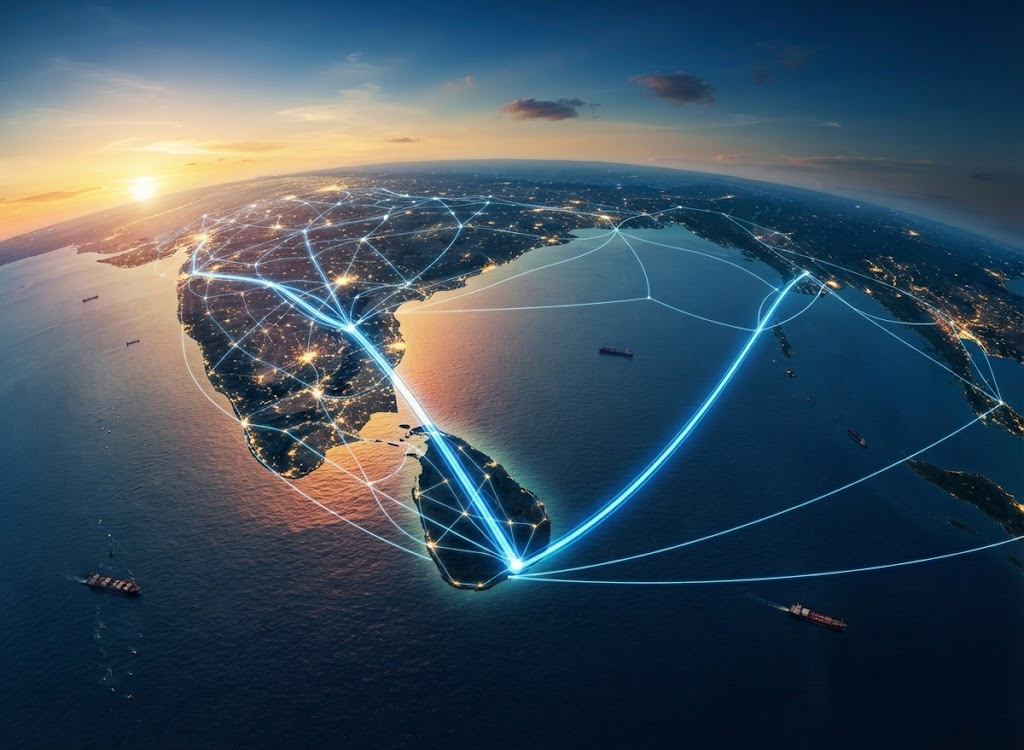
Sri Lanka has entered official-level discussions on connecting its electricity system to a wider regional power network under an Asian Development Bank (ADB)-backed initiative, potentially broadening the country’s approach to cross-border electricity trade beyond its long-running focus on India.
Ministry of Energy Secretary G.M.R.D. Aponsu has confirmed to the media that Sri Lanka is participating in discussions on the proposed regional electricity connectivity initiative, which seeks to explore greater integration among electricity grids across South Asia, with connectivity extending towards Myanmar in Southeast Asia while excluding Pakistan.
Aponsu has said Sri Lanka’s participation remains at the discussion stage, with a formal commitment requiring a policy-level decision by the Government.
The development comes as Sri Lanka continues to examine the possibilities and challenges associated with interconnecting its national grid with neighbouring electricity systems.
For more than a decade, those efforts have largely centred on the proposed bilateral electricity interconnection between Sri Lanka and India. The latest regional discussions could potentially place that project within a much wider framework of electricity trade and grid integration.
ADB’s Pan-Asia power vision
The discussions are taking place against the backdrop of the ADB’s Pan-Asia Power Grid Initiative (PAGI), which seeks to strengthen energy security and facilitate cross-border electricity trade through greater integration of national electricity systems.
The initiative is structured around four broad areas: infrastructure development, regulatory harmonisation, innovative financing and institutional readiness.
The ADB expects approximately $50 billion to be mobilised to expand affordable, reliable and cleaner energy connectivity across the region.
The concept is based on the different generation resources, demand patterns and periods of electricity surplus and shortage experienced by countries across Asia.
Greater interconnection could allow electricity to be transferred between countries according to demand and availability, potentially improving the utilisation of generation capacity while providing an additional layer of energy security.
South Asia already has experience in this area. India, Nepal, Bangladesh and Bhutan have developed cross-border electricity trade arrangements, creating a foundation for further regional integration.
The ADB has identified Sri Lanka as a potential participant in future regional grid connectivity, reflecting its geographic position and potential connection to the Indian electricity system.
For Sri Lanka, the attraction of such connectivity would extend beyond access to imported electricity.
An interconnected system could provide greater flexibility in managing fluctuations in domestic generation, particularly as the country expands renewable energy capacity. Solar and wind generation can vary according to weather conditions, creating challenges in maintaining a consistent balance between electricity supply and demand.
Regional electricity trading could help manage some of these fluctuations by allowing surplus power to be exchanged across interconnected systems.
India connection provides the starting point
Sri Lanka’s consideration of regional connectivity cannot be separated from its longstanding discussions with India.
The two countries signed a Memorandum of Understanding in 2010 to conduct a feasibility study on connecting their electricity grids. The study was subsequently undertaken jointly by the then Ceylon Electricity Board (CEB) and Power Grid Corporation of India Ltd.
The initial proposal examined a 1,000 MW High-Voltage Direct Current (HVDC) interconnection.
Subsequent technical studies considered different routes and configurations as authorities examined how the connection could be constructed and operated.
The rationale for the project has traditionally included the potential benefits arising from differences in electricity demand patterns and generation resources between Sri Lanka and India.
Such an interconnection could enable electricity to flow in either direction, allowing Sri Lanka to import power during periods of domestic shortages and potentially export electricity when excess generation is available.
However, the project has faced questions over its economics.
Earlier feasibility assessments found that the configurations examined at the time were not economically and financially viable. The high cost of submarine cables and HVDC technology was among the factors affecting the project’s financial and economic case.
Further economic and financial assessments have consequently been considered alongside the technical development of the proposal.
The emergence of the broader ADB-backed regional initiative introduces another dimension to those discussions.
Instead of treating the India connection solely as an isolated bilateral infrastructure project, Sri Lanka can assess it within the context of a potential regional electricity market involving multiple interconnected systems.
Size matters
While regional integration could create opportunities, the technical characteristics of Sri Lanka’s electricity system present important considerations.
A senior electrical engineer attached to the National System Operator (NSO), has told The Sunday Morning on condition of anonymity, that any connection between Sri Lanka and a substantially larger regional grid should be supported by comprehensive technical, economic and financial studies.
A key issue identified by the engineer is the substantial difference between the sizes of the Sri Lankan and Indian electricity systems.
Sri Lanka operates a relatively small electricity network compared with India’s vast power system. An interconnected arrangement would therefore require carefully designed safeguards to ensure that the operation of the larger regional network does not compromise the stability and reliability of Sri Lanka’s domestic system.
Protection mechanisms, frequency control, system balancing, emergency procedures and communication systems would all become increasingly important in an interconnected environment.
The engineer has also cautioned that Sri Lanka could become increasingly dependent on electricity imports if appropriate safeguards were not incorporated into any future arrangement.
That distinction is important since regional connectivity could serve as a source of flexibility during shortages, but sustained reliance on imported electricity could expose Sri Lanka to external prices, supply decisions and regulatory or geopolitical developments.
Economics will remain critical
The financial dimension is likely to be central to Sri Lanka’s assessment.
An international grid connection involving submarine cables and HVDC infrastructure requires substantial upfront investment. The costs would have to be weighed against the potential value of electricity trading, improved system reliability and access to additional generation resources.
The viability of the connection would also depend on how frequently the infrastructure could be used and the price differential between electricity markets.
A system capable of transmitting large volumes of electricity is not necessarily commercially viable unless sufficient electricity trading takes place.
The broader regional framework could alter some of these calculations by creating access to a larger pool of electricity buyers and sellers. At the same time, it would introduce more complex market and regulatory requirements.
Regulatory and security questions
Cross-border electricity connectivity would require more than physical infrastructure.
Sri Lanka would need arrangements governing electricity pricing, transmission charges, market participation, scheduling, settlement of transactions and responsibility for system disturbances.
Compatibility between national regulatory frameworks would also be necessary.
The ADB’s focus on regulatory harmonisation and institutional readiness is therefore particularly relevant. A regional electricity market would require participating countries to develop common or compatible technical standards and operating procedures.
There would also be questions concerning the security of the national grid.
Interconnection can provide additional resilience by allowing electricity to be sourced from neighbouring systems during domestic shortages. At the same time, interconnected networks can transmit disturbances between systems if appropriate protection mechanisms are not in place.
For Sri Lanka, maintaining the reliability of the domestic grid would therefore remain a central consideration.
A wider role for Sri Lanka’s power system
The regional discussions come as Sri Lanka seeks to reshape its electricity sector around greater renewable energy generation and improved system efficiency.
As the share of variable renewable energy increases, balancing supply and demand becomes more important. Regional electricity trading, energy storage and stronger transmission networks are among the mechanisms that could help manage this transition.
A regional grid could therefore serve a role beyond conventional electricity imports.
It could facilitate electricity exchanges linked to renewable generation, provide additional flexibility during periods of peak demand and create opportunities to utilise generation capacity more efficiently across borders.
But those benefits would depend heavily on the commercial structure, technical design and operating rules governing the interconnection.
Sri Lanka’s experience with the proposed India link demonstrates that technical feasibility must ultimately be matched by a viable economic model and adequate system safeguards.
The ADB-backed initiative now places Sri Lanka within a much larger discussion about the future of electricity connectivity across Asia.
The immediate significance is that the country’s electricity strategy is no longer being considered solely through the prism of a bilateral India connection. It is now being examined against the possibility of a broader regional electricity market.










Leave a comment