
By The Pulseline News Desk
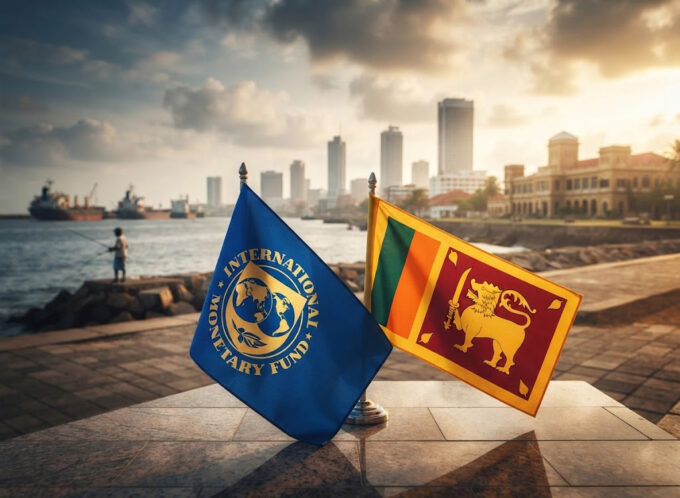
A key Sri Lanka-India Joint Working Group meeting on cross-border bottom trawling has been postponed, delaying planned bilateral discussions on the continued intrusion of Indian fishing vessels into Sri Lankan waters.
Fisheries Ministry Secretary Kolitha Kamal Jinadasa has reportedly said the meeting, originally scheduled for September, was postponed at the request of the Indian side and has now been proposed for October, although a new date has yet to be finalised.
Speaking at a forum on marine and coastal issues in Sri Lanka, Jinadasa has described the long-running dispute between Sri Lankan and Indian fisherfolk as a “quite delicate diplomatic question.”
“Our plan was to manage this with the Indian Government, and we had planned for the next working group in September, but following a request from the Indian side, it was postponed to October,” he has said.
Jinadasa has told the media that the postponement was strictly due to a medical emergency and was not politically motivated.
The delay has also affected plans for the two countries to meet on the sidelines of the Food and Agriculture Organization (FAO) Committee on Fisheries (COFI) conference in Rome, as the Indian Secretary was unable to attend the event.
The two sides are now facing an additional scheduling hurdle, with Sri Lankan Government officials restricted from travelling overseas during the parliamentary Budget period. Sri Lanka has therefore asked India to schedule the meeting either before or after the Budget period.
Persistent incursions
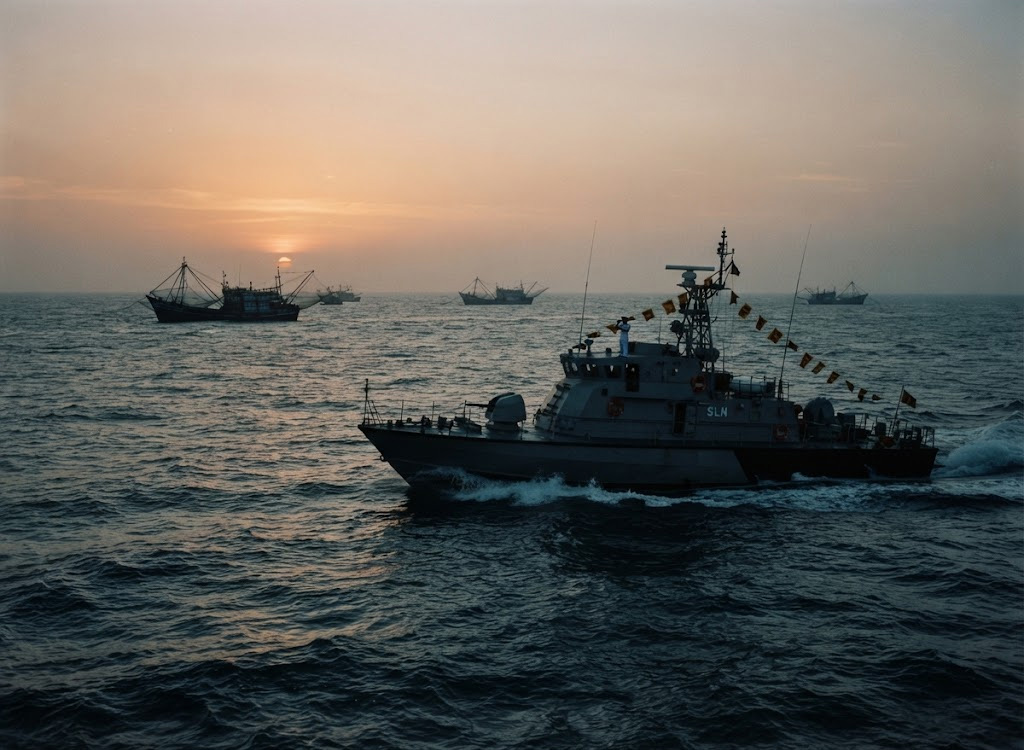
The dispute centres on mechanised trawlers from India’s Tamil Nadu state crossing the International Maritime Boundary Line (IMBL) and entering northern Sri Lankan waters.
Sri Lankan authorities have long raised concerns over the impact of bottom trawling on fish stocks and marine ecosystems, while northern fishing communities have repeatedly complained that the practice destroys fishing grounds and threatens their livelihoods.
Sri Lanka completely banned bottom trawling in 2017 and introduced heavy fines the following year. Despite these measures, illegal incursions by Indian trawlers have continued.
Jinadasa has said Sri Lanka was pursuing a two-track strategy to address the problem — maritime enforcement alongside continued diplomatic engagement with India. “Our plan involves action in two ways: one is continuing arrests and another is discussions with the Government,” he has said.
Sri Lankan authorities continue to conduct maritime patrols and apprehend an estimated 50 to 75 illegal trawlers annually.
According to Jinadasa, radar tracking and vessel-entry monitoring data indicate a significant reduction in incursions by Tamil Nadu trawlers, although the problem has not been eliminated.
India pushes alternatives
Alongside diplomatic discussions, India has been attempting to transition its fishing fleet away from bottom trawling.
Jinadasa has said Indian authorities had introduced a low-interest loan scheme to help fishermen convert bottom trawlers into deep-sea tuna long-lining vessels, with Indian authorities reporting positive results from the programme.
India has also moved to prevent the expansion of the bottom-trawling fleet in Tamil Nadu by restricting new registrations of such vessels. A Vessel Monitoring System (VMS) is also being introduced to monitor fishing vessels and enable the Indian Navy and Coast Guard to better regulate fleet movements.
Jinadasa described the VMS as “one of the best in this region.”
However, the continued incursions highlight the limits of unilateral enforcement, leaving Sri Lanka dependent on sustained cooperation with India to address the problem at its source.
Domestic bottom-trawling dilemma
The Fisheries Ministry is also confronting a separate bottom-trawling problem within Sri Lanka.
Jinadasa has said bottom trawling remained an issue in areas including Kalpitiya, Mannar and Jaffna, despite gazette notifications prohibiting the practice.
He has said enforcement had previously been weak, with a court injunction eventually halting bottom-trawling operations involving 28 fishermen in Kalpitiya.
The issue has proven particularly difficult because of the commercial value of the shrimp fishery targeted by the local fleet.
Known locally as kurutu issa, the shrimp is considered a valuable commercial resource and an important potential source of foreign exchange, creating pressure from fishing communities for authorities to allow continued access to the fishery.
At the same time, authorities are concerned about the wider ecological consequences of destructive fishing methods.
Search for alternative fishing gear
The Ministry has therefore turned to the National Aquatic Resources Research and Development Agency (NARA) and local universities to develop alternative and more selective fishing gear.
Jinadasa has noted that NARA research had indicated that completely stopping harvesting could also alter the ecosystem, with non-target species such as karalla (ponyfish) potentially becoming dominant.
The challenge, therefore, is to develop a fishing method that allows fishermen to exploit the commercially valuable shrimp resource without causing the ecological damage associated with bottom trawling.
“We do not have any new fishing gear for this fishery other than bottom trawling,” Jinadasa has said, while inviting researchers and other organisations to develop alternatives.
The Fisheries Ministry is also preparing new fisheries legislation aimed at modernising the country’s regulatory framework, with the legislation expected to be presented to Parliament.
For Sri Lanka, the delayed Joint Working Group meeting therefore comes at a critical point. While the Government continues to arrest vessels entering its waters illegally, the long-term resolution of the dispute will depend heavily on whether Sri Lanka and India can agree on a workable transition away from bottom trawling while protecting the livelihoods of fishing communities on both sides of the maritime boundary.










Leave a comment