
By The Pulseline News Desk
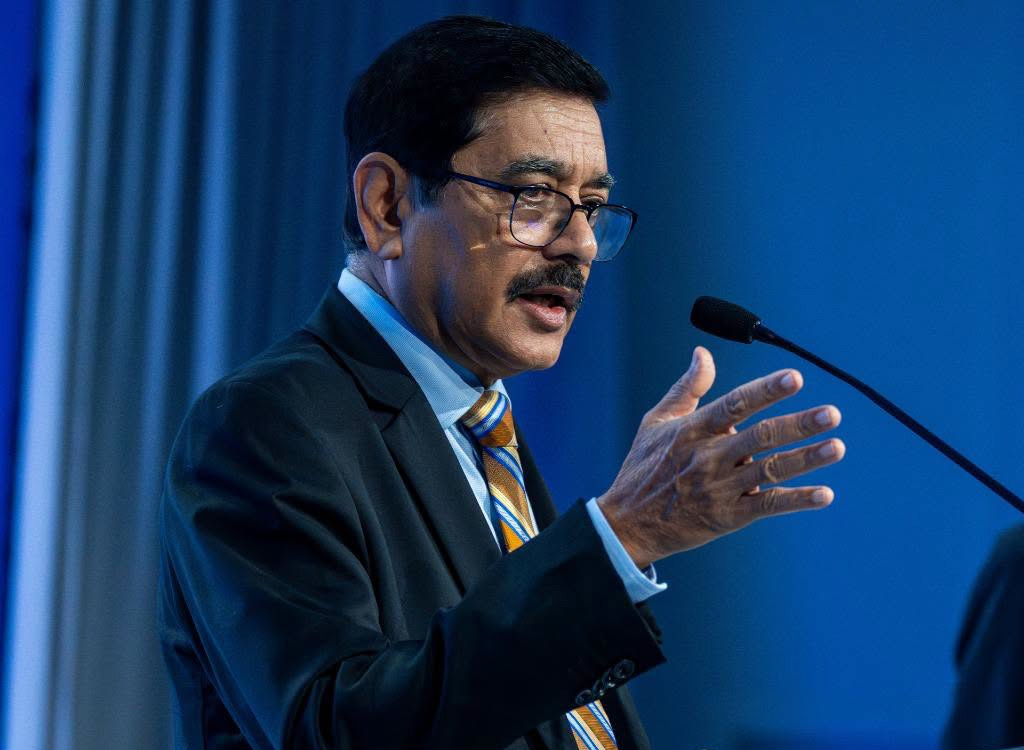
Sri Lanka’s inflation is expected to remain around 8% or slightly higher through the end of 2026 and the first quarter of 2027 before gradually easing towards the Central Bank’s 5% target from the second quarter of next year, Central Bank of Sri Lanka (CBSL) Governor Dr. Nandalal Weerasinghe has said.
Despite persistent price pressures, the country has made significant progress in rebuilding its foreign reserves, strengthening government revenue collection and sustaining foreign exchange inflows from tourism and overseas worker remittances, according to the Governor’s assessment of the economic outlook.
Weerasinghe has explained that inflationary pressures arising from higher energy and transport costs would take time to subside, even if the factors driving price increases stabilise. “When inflation goes up and prices increase due to energy and transport price shocks, they do not come down immediately,” he has said, adding that prices would need time to stabilise before inflation returned to the CBSL’s target of 5%.
Under the Bank’s current projections, inflation is expected to begin moving back towards the target from the second quarter of 2027, partly due to the base effect and provided key assumptions, including petroleum prices remaining around current levels, hold.
The outlook suggests that households and businesses could continue to face elevated price pressures over the coming months, even as the broader economy shows signs of recovery from the unprecedented economic crisis of 2022.
Tourism and remittances support external recovery
The Governor has identified tourism earnings and overseas worker remittances as key contributors to the improvement in Sri Lanka’s external sector and current account position.
Tourism experienced disruptions around April this year due to tensions in the Middle East that affected air traffic. However, the sector has since recovered, with performance returning to levels broadly comparable with the corresponding period last year, he has said.
Worker remittances have continued to provide a stronger source of foreign exchange inflows.
Remittances have grown by more than 20% last year and are expected to approach US$9 billion in 2026, equivalent to nearly 9% of gross domestic product (GDP), according to Weerasinghe.
He has described the inflows as a major source of support for the economy, helping sustain a favourable current account position and strengthen the country’s external finances.
The continued growth in remittances is particularly important as Sri Lanka seeks to maintain external stability while meeting its foreign exchange requirements and rebuilding reserves.
Foreign reserves approach US$7 billion
Sri Lanka’s official foreign reserves have recovered substantially from the lows recorded during the 2022 economic crisis, when they fell to approximately US$1.9 billion.
According to the Governor, the latest published figures placed reserves at around US$6.9 billion, with the total subsequently moving above US$7 billion.
The CBSL expects reserves to approach US$8 billion by the end of 2026, supported by anticipated inflows from the International Monetary Fund (IMF), the Asian Development Bank (ADB) and the World Bank, alongside the Bank’s own market operations.
However, the outlook has been affected by the unsuccessful attempt to raise funds through a recent government dollar bond issuance.
Weerasinghe has said the CBSL had initially expected reserves to exceed US$8 billion more comfortably, but now anticipates a level close to that mark by year-end.
He has stressed that continued reserve accumulation remained essential amid uncertainty in global financial markets and the possibility of external economic shocks.
Given the unpredictable international environment, Sri Lanka needs to build stronger financial buffers to withstand future disruptions, he has said.
Government revenue doubles as a share of GDP
The Governor has also highlighted the improvement in government revenue collection as a major achievement in the country’s economic recovery.
Government revenue, which fell to around 8% of GDP during 2020–2022, has risen to more than 16%, effectively doubling as a share of the economy over approximately three years.
Weerasinghe has attributed the improvement to fiscal consolidation, stronger revenue collection, expenditure management and the generation of primary budget surpluses.
He has described the fiscal performance as remarkable, noting that revenue collection had exceeded expectations, including those of the IMF.
The improvement is significant for a country seeking to restore debt sustainability and maintain its commitments under the IMF-supported economic reform programme.
Higher revenue collection provides the Government with greater capacity to meet expenditure obligations and service debt, although the sustainability of the improvement will depend on continued fiscal discipline and economic performance.
Recovery remains vulnerable to external shocks
The Governor’s assessment points to substantial progress in restoring Sri Lanka’s economic stability following the severe shortages of foreign exchange, depleted reserves and fiscal pressures experienced during the 2022 crisis.
Stronger remittance inflows, a recovery in tourism, rising foreign reserves and improved government revenue have helped rebuild the country’s financial position.
However, the inflation outlook indicates that the cost-of-living pressures experienced by households are unlikely to ease immediately. Inflation is expected to remain elevated into early 2027 before gradually returning towards the CBSL’s target.
Meanwhile, the expected reserve accumulation remains dependent on external financing, foreign exchange inflows and continued efforts to strengthen the balance of payments.
While the recovery has improved Sri Lanka’s capacity to withstand economic pressures, Weerasinghe has cautioned that building stronger external buffers remains essential to protect the economy against future global uncertainties.









Leave a comment