
The Pulseline News Desk
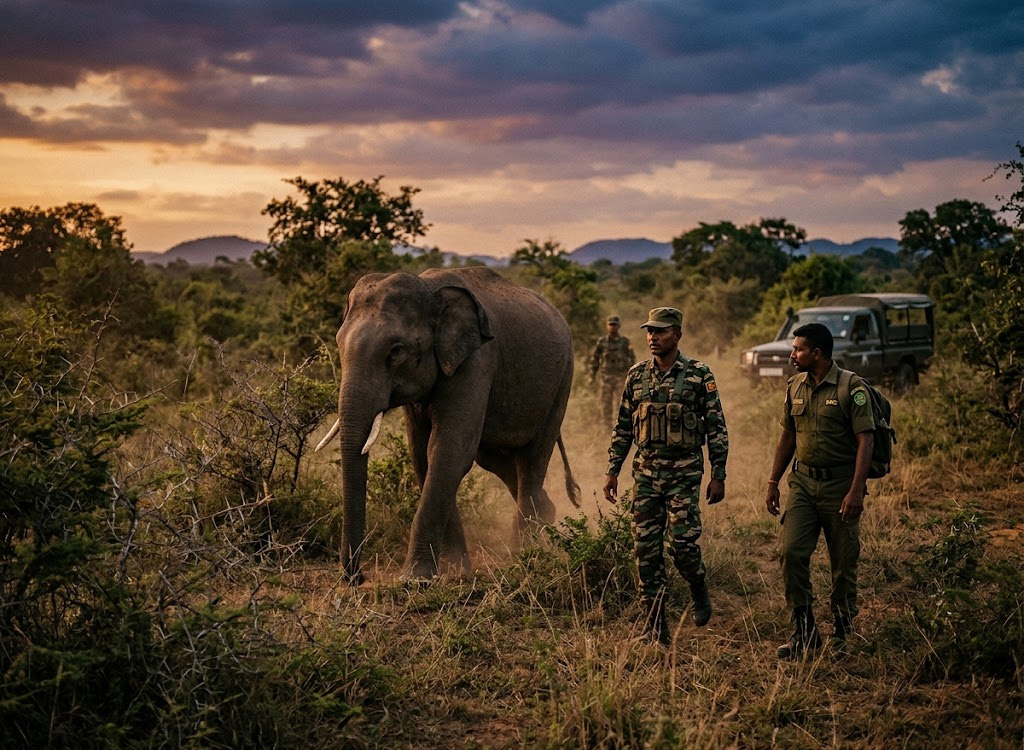
Sri Lanka is preparing to launch a joint operation involving the Department of Wildlife Conservation and the three-armed forces to strengthen the protection of wild elephants and tuskers, prevent wildlife crimes and reduce human-elephant conflict.
The initiative will establish a coordinated mechanism to monitor elephants in high-risk areas, respond to threats against wildlife and strengthen enforcement against illegal activities targeting the country’s elephant population.
The programme was discussed at a special meeting held at the Ministry of Environment, chaired by Environment Minister Dhammika Patabendi and Deputy Minister Anton Jayakody.
Army Commander Lt. Gen. K. V. Nilantha P. Premaratne, senior wildlife officials, military intelligence and drone operations representatives, and environmental organisations, including Wild Tusker, also participated in the discussions.
Under the proposed arrangement, a special operations centre will be established at Army Headquarters to coordinate elephant protection activities, bringing together wildlife officers, veterinarians and personnel from the three-armed forces.
Authorities have also agreed to introduce dedicated security arrangements for identified tuskers roaming in areas considered vulnerable to poaching and other threats.
Special Army units will be deployed to monitor their movements and provide protection in high-risk locations, with particular attention to areas where elephants face threats from illegal activities.
The operation will also focus on preventing elephant killings, the use of explosive bait known as hakka patas, and other offences against wildlife.
Joint emergency raids will be intensified in areas affected by human-elephant conflict, while an intelligence-gathering mechanism will be developed to identify threats and facilitate timely responses.
The involvement of military intelligence and drone operations personnel is expected to strengthen monitoring and coordination, although the operational details of these arrangements have yet to be outlined.
The discussions also addressed the need to control public gatherings around sick or injured elephants, which can complicate rescue and treatment efforts, and to improve public awareness of wildlife conservation.
As part of the programme, military personnel will receive specialised training from the Department of Wildlife Conservation on handling wild animals and conducting field operations.
In return, wildlife officers will be provided with accommodation at military camps and access to facilities required for field research and conservation activities.
To maintain coordination and assess the effectiveness of the initiative, authorities have agreed to conduct weekly reviews of operational data and hold monthly progress meetings involving key stakeholders. These reviews will be used to update operational plans and assess emerging threats.
The Ministry of Environment said the joint programme would be implemented on the ground as soon as possible, with the broader objective of protecting wildlife, safeguarding human lives and reducing human-elephant conflict.
The initiative brings the military into a more structured role in elephant protection, alongside the wildlife authorities responsible for conservation and enforcement. Its effectiveness will depend on coordination between agencies, timely responses to wildlife threats and sustained engagement with communities living in conflict-affected areas.












Leave a comment