
By The Pulseline News Desk
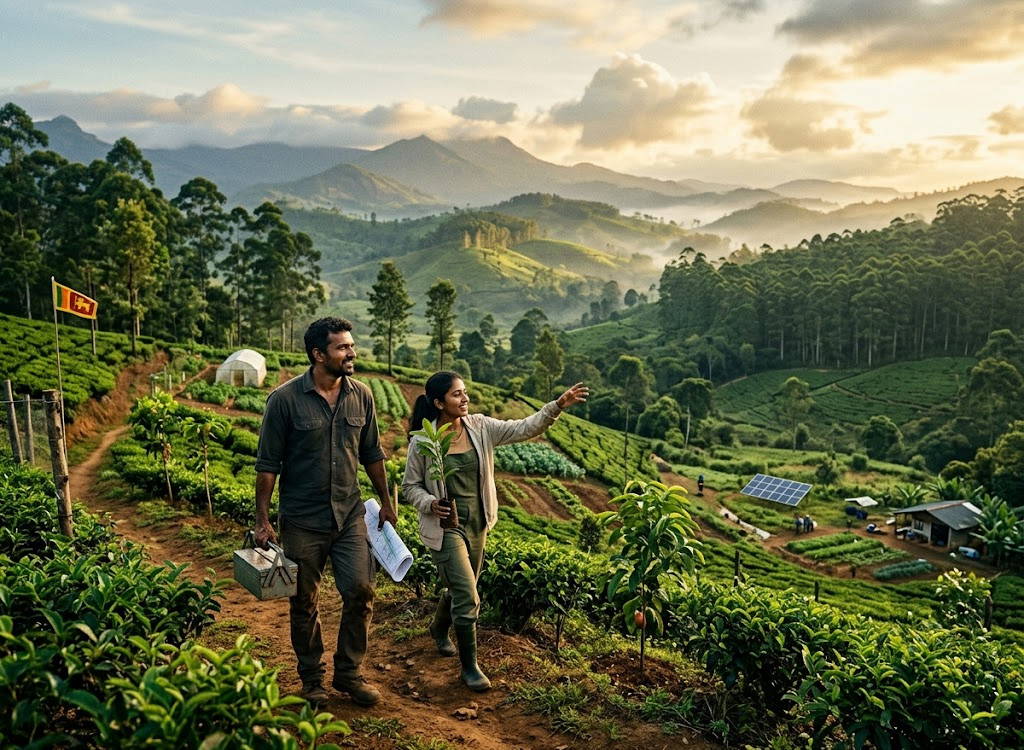
The Government is preparing to open 247 hectares of underutilized State plantation land to returnee migrant workers and young entrepreneurs who have contributed foreign exchange to the country through overseas employment.
The initiative is designed to provide Sri Lankans who have worked abroad and sent remittances home with an opportunity to channel their savings into productive investments, particularly in agriculture, plantations, tourism and renewable energy.
Minister Nalinda Jayatissa said approval had been granted to formulate a structured programme under which selected applicants would receive State land on long-term leases, rather than through outright transfers.
The Government intends to allocate individual plots ranging from one to four hectares, with applicants required to be 50 years of age or below.
Three State plantation entities involved
The land identified for the programme is held by three State-owned plantation companies.
The proposed allocation includes:
- 117 hectares from the Sri Lanka State Plantations Corporation
- 88 hectares from the Janatha Estates Development Board
- 42 hectares from Elkaduwa Plantations Limited
The Government says the land is currently underutilized and could be brought into productive use through carefully selected investments.
Rather than opening the land to unrestricted private acquisition, the programme is expected to operate within a controlled allocation system, with limits placed on the size of individual holdings.
Targeting Lankans who worked overseas
The initiative specifically targets Sri Lankans who have earned foreign exchange through overseas employment.
Priority will reportedly be given to people who have worked abroad for at least three years during the past 10 years, as well as Sri Lankans currently employed overseas who have completed more than three years of foreign employment.
The policy is aimed at people who have accumulated savings through overseas employment and are looking for opportunities to invest those funds in Sri Lanka.
Jayatissa said the programme is intended to create a structured pathway for migrant workers to bring their overseas earnings back into the domestic economy.
“The actual necessity here is to create an opportunity for Sri Lankans who went abroad, worked, and sent remittances to properly invest their money back in Sri Lanka under a structured system,” he said.
Wide range of investment opportunities
The proposed programme is not limited to conventional plantation cultivation.
Eligible investment areas will include agriculture, plantation tourism, livestock, hydroelectricity, solar power, manufacturing, freshwater fisheries and economic innovations.
This potentially allows the land to become a platform for small and medium-scale enterprises rather than simply being used for traditional plantation activities.
The Government expects such investments to generate employment while putting currently underutilized State assets back into productive use.
Preventing large-scale land takeovers
A key feature of the proposal is the Government’s insistence that the programme is aimed at small-scale investors rather than large private-sector land acquisitions.
The individual allocation ceiling of four hectares is intended to prevent large areas of State land from being concentrated in the hands of a limited number of investors.
The controlled approach also seeks to ensure that the scheme remains accessible to the people it is designed to support — including migrant workers returning from countries such as South Korea, Middle Eastern states and European countries.
Turning remittances into investment
Sri Lanka has traditionally relied heavily on migrant-worker remittances as a source of foreign exchange. However, much of the money sent home is used for household consumption, housing and other immediate needs rather than being channelled into income-generating ventures.
The new initiative represents an attempt to shift part of that flow towards productive investment.
By combining access to State land with the savings accumulated by overseas workers, the Government hopes to create new agricultural, industrial, tourism and energy-related ventures while also encouraging skilled migrants to return and participate in the domestic economy.
The success of the programme, however, will depend heavily on how land is selected and allocated, the transparency of the selection process and whether applicants have access to the financing, technical knowledge and infrastructure required to make their projects commercially viable.
For the Government, the broader objective is to transform migrant remittances from a source of foreign exchange used primarily to meet household needs into long-term productive capital capable of generating jobs, businesses and new economic activity within Sri Lanka.
With individual allocations capped at four hectares and the programme restricted to eligible investors, authorities say the initiative is intended to create opportunities for ordinary returnee workers and young entrepreneurs — rather than open another avenue for large-scale private control of State plantation land.












Leave a comment