
By The Pulseline News Desk
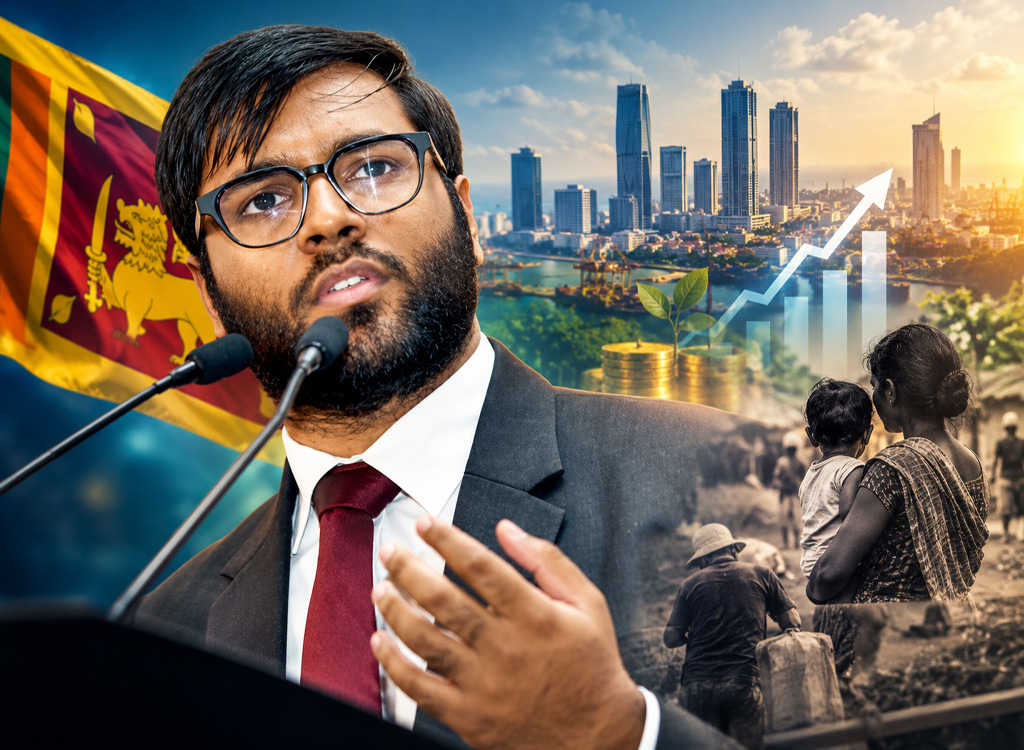
Sri Lanka has three years to translate its macroeconomic recovery into tangible improvements in living standards, with poverty reduction, job creation and real wage growth requiring urgent policy attention, Verité Research Lead Economist Raj Prabu Rajakulendran has warned.
Speaking at a panel discussion organised by the Observer Research Foundation (ORF), Rajakulendran has reportedly said the country had made progress towards key targets under the International Monetary Fund (IMF) programme but had yet to implement sufficient reforms to address the challenges facing households and businesses.
He has stressed that the Government needed to move beyond fiscal indicators and focus on whether economic recovery was improving people’s lives, beginning with the release of updated poverty statistics.
“Time is really running out,” he has said, noting that Sri Lanka had achieved several fiscal targets, including revenue and primary balance objectives, earlier than expected.
However, the country has not had an official poverty estimate based on a new Household Income and Expenditure Survey (HIES) since 2019, leaving policymakers reliant on data that predates the economic crisis.
Rajakulendran has argued that the absence of current data undermined efforts to design policies that respond to the population’s changing economic circumstances. “If you want to solve that problem, you start by measuring it. We have not taken active reforms to help the real economy yet,” he has said.
Outdated poverty data raises concerns
The need for updated poverty statistics has also been raised at the parliamentary Committee on Public Finance (COPF), which recently discussed delays in releasing the HIES findings.
According to a statement issued by Parliament, the committee has highlighted the importance of timely data in identifying changes in economic and social conditions.
The discussions have also examined whether calculations based on outdated data and commodity baskets accurately reflected current living costs and essential household needs.
Sri Lanka’s official poverty rate stood at 11% in 2019, before the economic crisis severely affected household purchasing power and living standards. The World Bank’s 2025 trend estimate placed poverty at 16.9%.
Rajakulendran has cited an estimate suggesting that poverty could still be as high as 30%, although he has acknowledged that this figure had yet to be confirmed through official statistics.
He has cautioned that headline economic indicators could paint an incomplete picture of recovery if households continued to struggle with declining purchasing power, inadequate employment opportunities and lower real incomes.
“All of that doesn’t matter if poverty is still at 30%,” he has said.
He has added that economic recovery would remain incomplete if real wages had not returned to pre-crisis levels or if employment opportunities remained below their pre-crisis levels.
IMF targets versus structural reform
The discussion has also highlighted concerns about the Government’s continued reliance on fiscal consolidation and taxation without sufficient progress on reforms to improve productivity and economic efficiency.
ORF India Senior Fellow Sushant Sareen has said the IMF programme had helped introduce much-needed fiscal discipline but warned against allowing the achievement of fiscal targets to create complacency.
He has argued that progressive taxation alone could not substitute for broader economic reforms needed to improve productivity, efficiency and long-term growth.
“It’s very easy for governments to fall into a complacent attitude through withholding taxes. It obviates the need for the kind of reforms that actually are needed in the economy, so that it becomes much more efficient and productive,” Sareen has said.
He has also questioned whether the IMF’s emphasis on balance-sheet adjustments and fiscal indicators was sufficient to address the wider challenges confronting the economy.
While acknowledging the importance of fiscal stability, the discussion underscored the need to complement it with reforms that directly strengthen economic activity and improve household welfare.
Tax gains must translate into broader benefits
Rajakulendran has said Sri Lanka’s economic policy had remained broadly consistent across successive administrations, although there were indications of a greater emphasis on social welfare within existing fiscal constraints.
With the 2027 Budget approaching, he has pointed to discussions on personal income tax relief and a more targeted approach to welfare as areas requiring closer attention.
He has also acknowledged that withholding tax reforms, despite concerns that they could encourage reliance on tax measures instead of deeper structural changes, had helped expand the country’s taxpayer base.
Sri Lanka has restored its taxpayer numbers to approximately pre-crisis levels, corresponding to 2018–2019, he has said. However, the tax base remained relatively small compared with the size of the economy and those of regional peers.
Rajakulendran has cautioned against treating a return to pre-crisis conditions as sufficient evidence of lasting economic recovery, noting that the pre-crisis economy itself had significant weaknesses.
The challenge, he has said, was to move beyond restoring previous fiscal benchmarks and address the underlying problems that had left the economy vulnerable.
Three years to deliver real recovery
Rajakulendran has said the next three years would be critical in determining whether Sri Lanka could convert its macroeconomic gains into improvements in living standards.
Although revenue collection has recovered, the primary balance has improved, debt-to-GDP has declined and economic growth has resumed, he has argued that these achievements must be assessed alongside poverty, employment and real wage trends.
He has called for a clearer policy framework with measurable poverty reduction and job creation targets, supported by reliable economic data and reforms directed at the real economy.
The central question, he has said, was whether Sri Lanka was moving towards a more productive and inclusive economic model or merely restoring pre-crisis indicators without resolving longstanding structural weaknesses.
For the Government, the challenge is to preserve the fiscal discipline achieved under the IMF programme while ensuring that the benefits of recovery reach households still affected by the economic crisis. Without that transition, improvements in headline economic indicators risk remaining disconnected from the everyday realities of ordinary Sri Lankans.







Leave a comment