
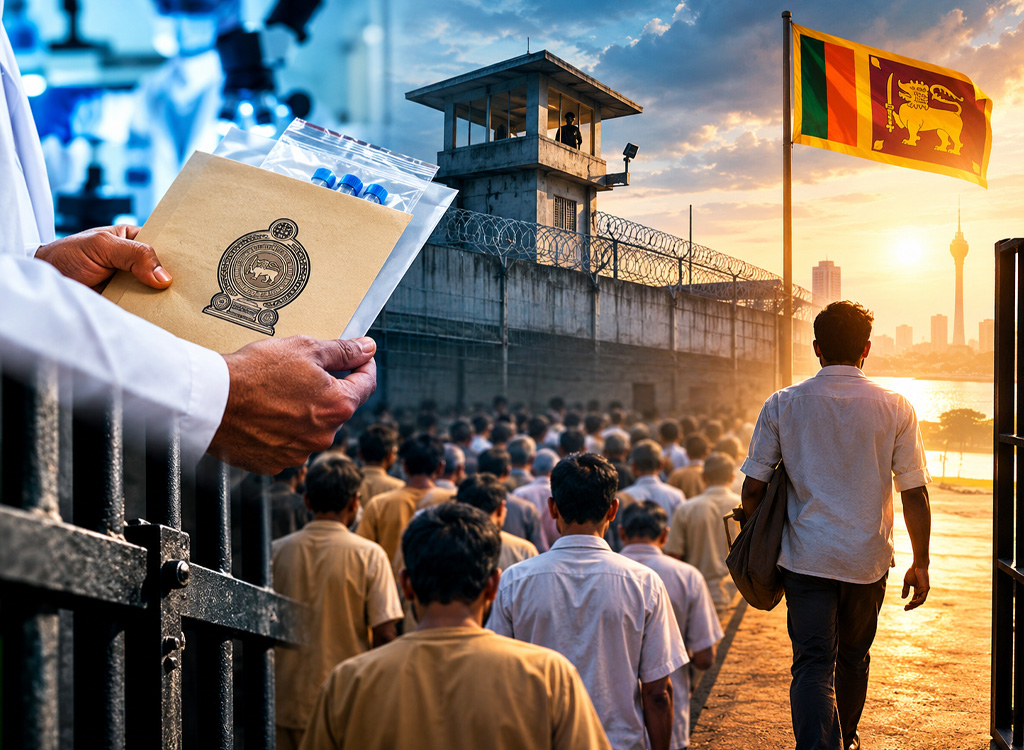
Faster release of Government Analyst reports helps suspects secure bail, but prison population remains more than double the designated capacity
By The Pulseline News Desk
Sri Lanka’s prison population has decreased by approximately 6,000 inmates following the expedited release of Government Analyst reports, which has enabled more suspects held in custody to obtain bail and return home, according to the Department of Prisons.
The reduction comes amid persistent overcrowding in the country’s prison system, where the number of inmates continues to exceed the designated capacity by a substantial margin.
According to the Department of Prisons, facilities across Sri Lanka are designed to accommodate nearly 15,000 inmates. However, approximately 36,000 people are still being held in prisons nationwide.
Despite the recent decline, the prison population remains more than twice the system’s intended capacity, highlighting the continuing pressure on detention facilities.
Faster reports help suspects secure bail
The Department of Prisons has attributed the reduction in the inmate population to the faster release of reports by the Government Analyst’s Department.
Such reports can be important in criminal investigations, particularly in cases involving suspected narcotics, forensic evidence and other material requiring scientific examination.
Delays in obtaining analytical reports can prolong investigations and affect the progress of court proceedings, leaving suspects in custody while awaiting the completion of evidentiary requirements.
The expedited submission of reports has helped some suspects obtain bail, allowing them to leave prison while their cases proceed through the judicial system.
However, the reduction in the prison population does not necessarily indicate that an equivalent number of cases have been concluded. The release of suspects on bail allows them to await further legal proceedings outside prison, subject to the conditions imposed by the courts.
Overcrowding remains a major challenge
The figures underline the scale of overcrowding confronting Sri Lanka’s prison system.
With approximately 36,000 inmates occupying facilities designed for around 15,000, the prison population stands at roughly 2.4 times the designated capacity.
Overcrowding can place considerable pressure on accommodation, sanitation, healthcare, food supplies and other essential services within correctional facilities.
It can also complicate efforts to maintain security, rehabilitate inmates and provide adequate facilities for those serving prison sentences.
The distinction between convicted prisoners and suspects held on remand is important in assessing the problem, as prolonged pre-trial detention can contribute to overcrowding even when cases have yet to reach a final determination.
Reducing pressure on the justice system
The recent decline suggests that improvements in the processing of forensic evidence can help ease pressure on prisons by enabling courts to consider bail applications without some of the delays associated with pending reports.
While the reduction represents a change in the number of people held in custody, the continued presence of many thousands of inmates in a system designed for fewer than half that number indicates that overcrowding remains a significant challenge for Sri Lanka’s criminal justice system.













Leave a comment