
By The Pulseline News Desk
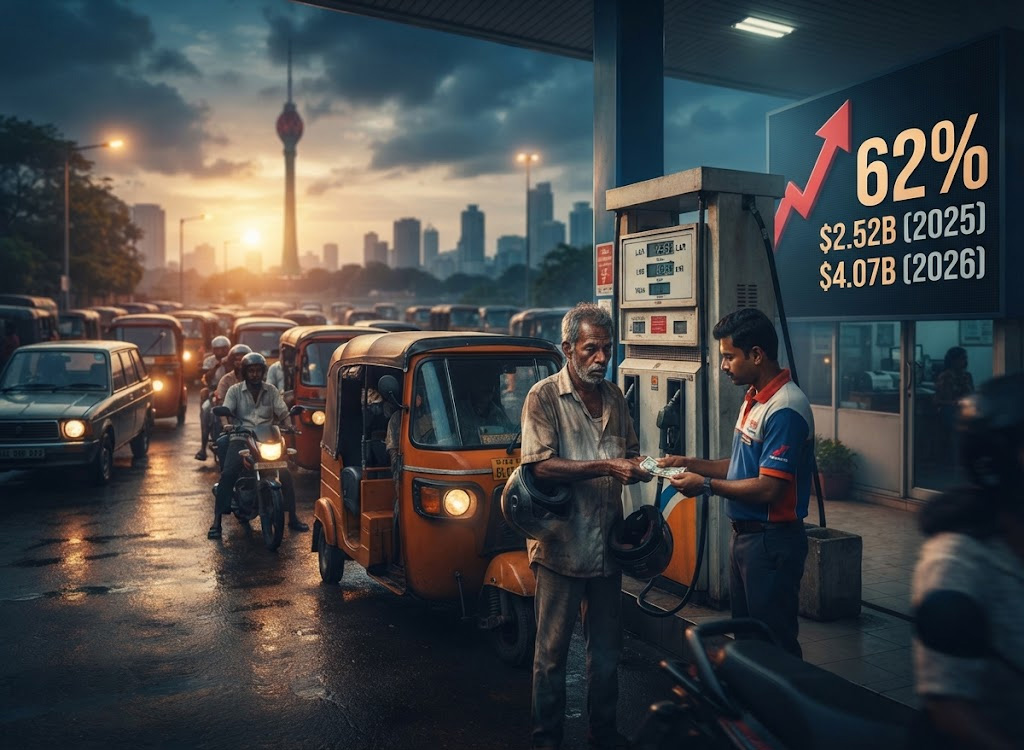
Sri Lanka’s fuel import bill has surged by 61.6% to $4.07 billion during the first eight months of 2026, increasing the country’s foreign exchange outflow on fuel by $1.55 billion compared to the same period last year, according to Central Bank of Sri Lanka (CBSL) data.
Sri Lanka has spent $2.52 billion on fuel imports between January and August 2025. The latest figures show that fuel expenditure has risen sharply despite continued Government efforts to manage fuel consumption and import costs.
The increase has accelerated in recent months, with the fuel import bill for August alone rising 76.5% year-on-year to $450.6 million, compared to $255.2 million in August 2025.
This represents an additional $195.4 million outflow in a single month.
Refined petroleum products have accounted for the largest share of August’s fuel import expenditure. Sri Lanka has spent $321.9 million on refined petroleum imports during the month, up 58.7% from $202.9 million a year earlier.
The $119 million increase in refined petroleum expenditure was the largest contributor to the higher monthly fuel bill.
The latest figures highlight the growing pressure from fuel imports on Sri Lanka’s overall import expenditure and foreign exchange requirements. The country remains heavily dependent on imported fuel to meet domestic transport and energy demand.
With the January-August fuel bill already exceeding $4 billion, Sri Lanka has spent an average of around $509 million per month on fuel imports during the first eight months of the year.
The widening year-on-year gap also comes as Sri Lanka continues to manage its foreign exchange position following the economic crisis and subsequent balance-of-payments pressures.
Higher fuel expenditure can put additional pressure on the country’s external sector by increasing the foreign exchange required to maintain uninterrupted fuel supplies.
The August figures have suggested that the increase in fuel-related import expenditure has gathered pace rather than moderated as the year progressed, making fuel one of the major contributors to Sri Lanka’s rising import bill in 2026.












Leave a comment