
Judicial judgement on political power and media access
By Ranel T. Wijesinha
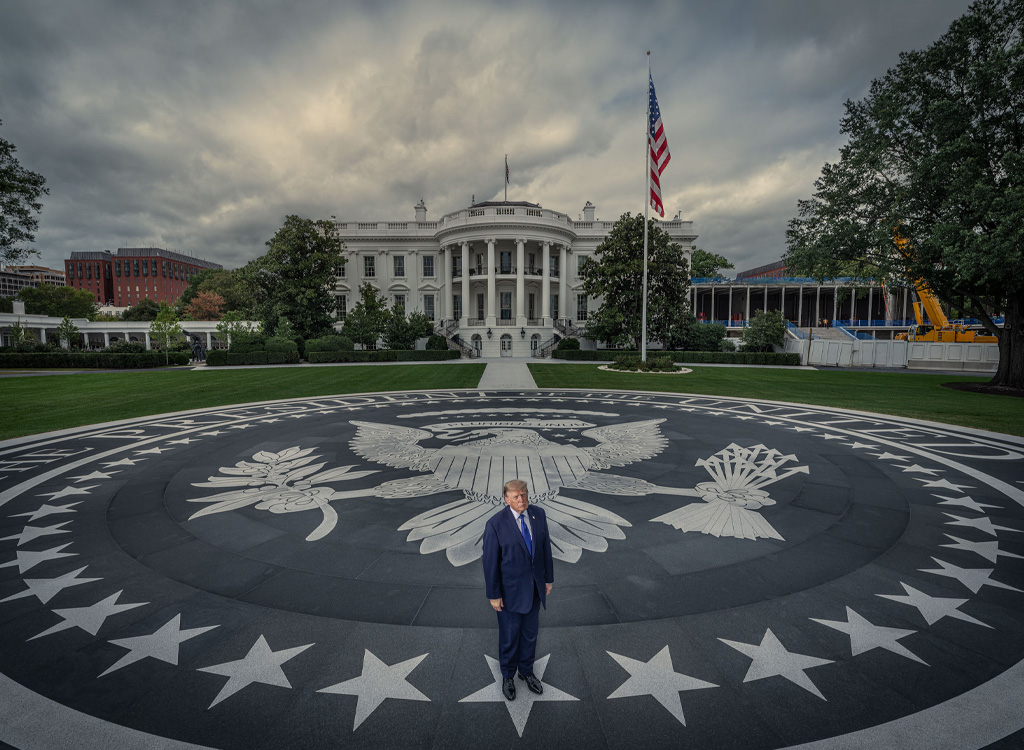
Here is an example of just a week ago, from the White House of the USA – that land of the free and home of the brave that I have considerable affection for. It connects with my recent writings on judicial independence and professional judgement. It is about judicial judgement on political power and media access where a temporary restraining order has been granted but final judgment is awaited. This can serve as a lesson for Sri Lanka and any country of right thinking people, about the abuse of political power we must avoid and independent judicial judgement that we might expect.
The White House – Freedom of speech, press access and due process
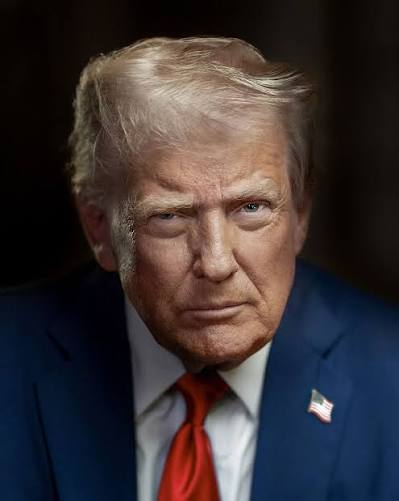
On September 18, 2026, President Donald Trump announced restrictions over access to the White House, on three organisations, criticising their reporting. The organisations,
CNN, MS NOW and Politico, then challenged the withdrawal of their press credentials in court, raising both First Amendment and Fifth Amendment “due-process” arguments. The First Amendment protects freedom of speech and freedom of the press. In this dispute, the media organisations’ argument is essentially that the White House did not merely exclude them for a neutral security or operational reason. Rather, they contend that they were targeted because of what they reported and the viewpoint reflected in their reporting. The Fifth Amendment is principally about process, rather than the ultimate truth or falsity of the relevant journalism. Thus, the federal government may not deprive a person of “life, liberty, or property, without due process of law.” Even if the government has legitimate authority to withdraw a journalist’s White House credentials in appropriate circumstances, whether it followed constitutionally adequate procedures before doing so, including, giving notice and providing an opportunity to be heard, is what the 5th Amendment provides for.
Beyond the White House – Spin cycles and takeovers
Beyond the White House, this dispute raises an immediate question whether, when political power controls access to a key public institution, it will result in influence over the narrative?
This takes my mind to two books in my library, one bought before 9/11 –“Howard Kurtz’s Spin Cycle: Inside the Clinton Propaganda Machine”, published in 1998 and later given the subtitle “How the White House and the Media Manipulate the News.” The other is a book I bought years after 9/11- “Charlie Savage’s Takeover: The Return of the Imperial Presidency and the Subversion of American Democracy” first published in 2007. The latter’s central subject is the expansion of presidential power under George W. Bush, with particular attention to Dick Cheney, executive secrecy, surveillance, detention, and the relationship between the presidency, Congress and the courts.
Trump appointee Judge Kelly’s restraining order
The key reason for this writing, is the fundamentally necessary independence of a judgment demonstrated here, regardless of the open and aggressive expectation of one’s appointing authority. On September 24, 2026, U.S. District Judge Timothy Kelly, a Trump appointee, temporarily ordered the administration to restore their White House hard-pass credentials. His order lasts for 14 days while the litigation proceeds. Judge Kelly found that the plaintiffs had met the demanding threshold for temporary relief and were likely to succeed on their claim that constitutionally adequate procedures had not been followed.
Before Donald Trump – Sherrill v. Knight
Access control not power beyond constitutional discipline
The legal history however, is considerably older than the present administration. In 1977, the U.S. Court of Appeals for the District of Columbia Circuit decided Sherrill v. Knight, a case involving the denial of a White House press pass to journalist Robert Sherrill.
The court did not establish an unlimited right for journalists to enter the White House. The government necessarily has legitimate interests in protecting the President, the President’s family, staff and visitors, and in maintaining the security of presidential premises. What the court addressed was what happens once the government has established press facilities for bona fide journalists. The court held that access could not simply be denied arbitrarily or for less than compelling reasons and required procedural safeguards. The journalist had to be informed of the basis for the denial, given an opportunity to respond, and provided with a final decision. That distinction is fundamental. The principle was not that the press possesses an unrestricted right of entry. It was that governmental control over access does not place that power beyond constitutional discipline.
Jim Acosta and the first Trump presidency
Four decades later, the same principles returned to the White House during President Trump’s first term. In 2018, CNN correspondent Jim Acosta’s White House press pass was suspended following a contentious exchange at a presidential press conference. CNN challenged the decision, and Judge Timothy Kelly — the same judge who has now issued the 2026 order — temporarily restored Acosta’s access. The 2018 decision is sometimes remembered simply as a First Amendment victory for the press. Legally, however, it was more carefully confined. Judge Kelly’s temporary ruling focused on Fifth Amendment due process and did not finally decide CNN’s First Amendment claim. The White House subsequently restored Acosta’s pass and introduced additional rules concerning journalist conduct.
Acosta to Karem: Importance of clear rules:
An elementary principle of fair administration
The issue did not end with Acosta. The subsequent Karem v. Trump litigation again considered the suspension of White House press access and the procedural safeguards surrounding such decisions. The D.C. Circuit’s 2020 decision reinforced the importance of fair notice and meaningful procedural protection. The broader lesson is one familiar to anyone who has worked with regulation, professional standards or institutional governance. A power exercised under vague rules is more difficult to distinguish from arbitrary power. If conduct is prohibited, the person affected should ordinarily know what conduct is prohibited. If access can be withdrawn, the circumstances in which that power can be exercised should be reasonably clear. And where circumstances permit, the affected party should have an opportunity to answer the allegation. This is not special treatment for journalists. It is an elementary principle of fair administration.
The Associated Press dispute – Gulf of “America”!
During President Trump’s second term, the dispute with the Associated Press brought another aspect of the problem into sharper focus. The AP was restricted from certain presidential events after a disagreement concerning the terminology it used for the Gulf of Mexico. Litigation followed, raising questions about whether governmental access could be conditioned on a news organisation adopting a preferred editorial formulation. The courts have also drawn distinctions between different categories of presidential access. An Oval Office event, Air Force One and the broader White House press facilities do not necessarily present identical legal circumstances. That distinction matters because the constitutional question is not simply whether the President can decide who enters a particular room. It is whether, when governmental access is made available to journalists as part of an established press system, the government may withdraw that access because of the journalist’s or organisation’s viewpoint or reporting, and what procedures must accompany such a decision.
National security, sensitive or classified information
The administration has argued that the restrictions are justified by concerns including national security, protection of sensitive or classified information, and professional standards and decorum. The media organisations, meanwhile, argue that the action was connected to their reporting and that their credentials were withdrawn without adequate notice or an opportunity to respond. Both aspects deserve careful consideration. A government cannot be expected to disregard genuine national-security concerns merely because journalists are involved. Equally, a government cannot necessarily transform an ordinary disagreement about reporting into a national-security justification after the fact. That is precisely why evidence and procedure matter.
Due process and scepticism
Judge Kelly’s September 24 order focused particularly on the procedural question. He expressed scepticism about the national-security rationale, given the difference between the President’s original public explanation, which emphasised what he regarded as false or negative reporting, and the national-security justification advanced subsequently in court. Judge Kelly did not finally determine that there was no national-security concern, nor did he finally determine the entire First Amendment dispute. He determined, at this preliminary stage, that the plaintiffs had demonstrated a sufficiently strong case for temporary judicial intervention. The order therefore represents a procedural safeguard while the underlying dispute continues.
Remarkable institutional continuity
There is an important dimension that deserves a second mention. Judge Kelly was nominated to the federal bench by President Trump. Yet in 2018, during Trump’s first presidency, Kelly ordered the temporary restoration of Jim Acosta’s press access. In 2026, during Trump’s second presidency, he has again ordered the restoration of White House access, this time to three news organisations. Judicial independence is not demonstrated merely when a judge agrees with the government. Nor is it demonstrated merely when a judge disagrees with the government. It is demonstrated when the judge applies the governing law and legal precedent without treating the identity of the appointing authority as a determinant of the outcome. In that sense, the episode offers an unusually clear illustration of why institutional independence matters.
Controlling a building or the information environment
The White House necessarily controls its physical premises. Presidential security requires access controls. The President and the administration therefore cannot reasonably be expected to surrender control of the White House simply because journalists wish to enter. But there is a distinction between controlling a secure building and controlling the information environment surrounding the exercise of presidential power. If access to officials, briefings and presidential events become dependent upon favourable coverage, the relationship between access and independent journalism changes. The problem need not involve an explicit instruction. No one needs to say, “Report favourably or lose your credentials.” If journalists reasonably believe that critical reporting may result in exclusion, the possibility itself can influence behaviour.
Media independence, not immunity but responsibility
Media independence however, does not mean media immunity. A journalist can make an error, a news organisation can publish inaccurate information, while incomplete, unverified reporting can be by design or default. A reporter working inside a highly secure government facility is expected to comply with security requirements and professional standards.
Power must have boundaries:
The real lesson – Institutional design
Power must have boundaries. Rules must be sufficiently clear. Reasons should be capable of scrutiny. Affected parties should receive procedural fairness where the circumstances require it. Independent institutions must be able to exercise their professional judgement, and courts must remain capable of reviewing the exercise of public power. None of these principles requires hostility towards government. None requires hostility towards the media. They are safeguards precisely because governments, journalists, regulators, corporations and courts are all human institutions capable of error. The September 24 order is only an interim step. The administration may appeal, and the underlying litigation remains unresolved. The constitutional issues will continue to be tested against the facts, the applicable precedents and the government’s national security arguments. But the case has already given us an important opportunity to reflect.
Parallels in different domains
While for an auditor, independence protects objective assurance, for a regulator, independence protects impartial enforcement, for a doctor, independence protects professional judgement in the interests of the patient, for a journalist, independence protects the integrity of reporting and editorial judgement, and for a judge, independence protects adjudication according to law.
A multi stakeholder responsibility
Towards integrity of the information ecosystem
The person who controls access to power should not, merely by controlling access, acquire the power to control the narrative.
At the same time, however, those who influence the media — locally and globally, and those whose reporting feeds international news organisations and institutions — must themselves be intellectually honest. Those who develop, shape and disseminate narratives through print, electronic and social media must exercise that responsibility in an ethically and legally proper manner, while those who simply forward the forwards, without knowing or checking their source, credibility and veracity, must recognise that they too have a moral responsibility for what they help to circulate. It is about the integrity of the information ecosystem itself — from political interference at one end to irresponsible amplification at the other. Independence without integrity can become another form of influence; freedom without responsibility can become another form of harm.
(Ranel T. Wijesinha (FCA [Sri Lanka], MBA [USA] is a practicing chartered accountant and an international management consultant, who has held senior positions in the profession, in industry, in the private and public sector, locally and overseas, at KPMG, John Keells, Deloitte, and PricewaterhouseCoopers, and more recently as a director of Bank of Ceylon and Chairman of SEC)
Disclaimer: The views and opinions expressed in this article are those of the writer and do not necessarily reflect the official position of this publication.










Leave a comment