
By The Pulseline News Desk
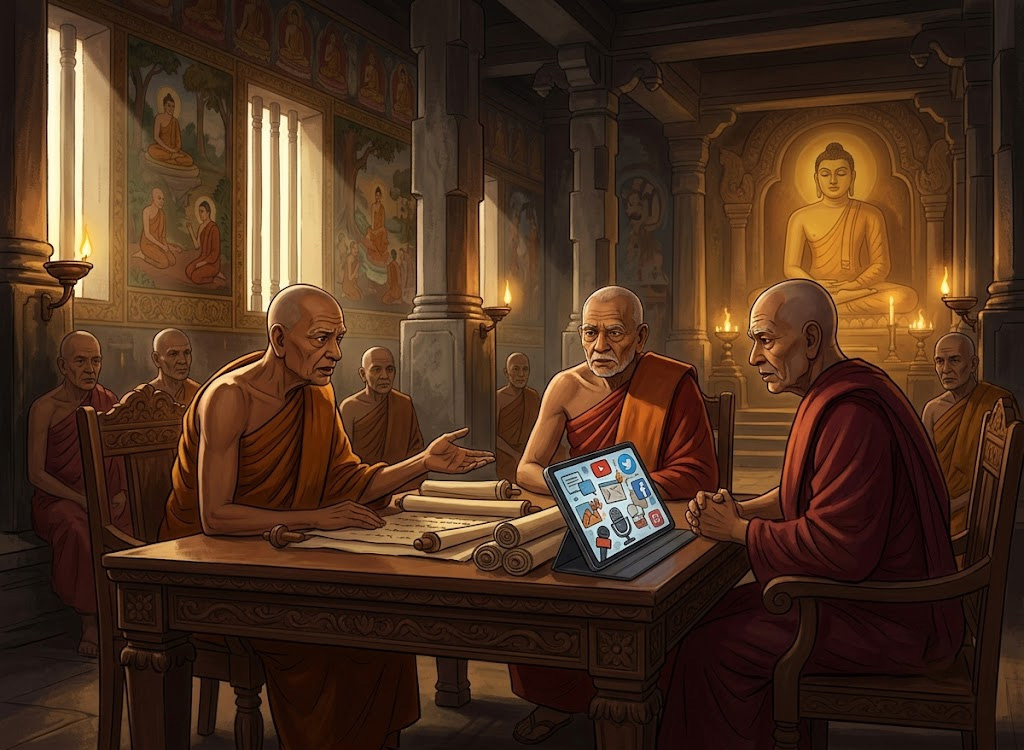
Senior Buddhist monks representing the country’s three main nikayas are preparing to hold a special discussion on what they describe as a growing trend of defamatory and insulting content targeting the Maha Sangha through social media and mainstream media platforms.
The meeting, expected to take place soon after the conclusion of the annual Upasampada Vinaya Karma (higher ordination disciplinary ceremonies) currently being held at the Malwathu and Asgiri Maha Viharas in Kandy, will focus on possible measures to address what the clergy view as increasing attacks on the dignity of the Buddhist monastic order.
Chief Secretary of the Asgiri Chapter, Ven. Medagama Dhammananda Thero, has said all arrangements have been made to convene the discussion once the ordination proceedings conclude.
According to the Thero, the meeting will deliberate on actions that could be taken in response to what he described as attempts by certain groups to subject Buddhist monks to various forms of harassment and controversy while portraying the Sangha in a negative light.
He has said the discussion would also consider decisions aimed at protecting the reputation of the Buddhist clergy and preventing what participants view as efforts to undermine the Buddhist monastic institution through public criticism and media campaigns.
Concerns over online content
The proposed meeting comes amid growing concern among sections of the Buddhist clergy over the rapid spread of content on social media, where allegations, criticism, satire and commentary involving members of the Sangha can quickly gain widespread attention.
In recent years, several incidents involving individual Buddhist monks have generated intense public debate, with allegations ranging from financial misconduct and political involvement to criminal investigations. While many discussions have centred on the conduct of individual monks, senior members of the clergy have argued that such coverage often affects public perception of the Sangha as a whole.
At the same time, civil society groups and advocates of media freedom have maintained that legitimate reporting on alleged wrongdoing and public accountability should not be conflated with defamation, particularly when matters involve public interest. The balance between protecting religious institutions from malicious attacks and safeguarding freedom of expression has therefore remained a subject of ongoing national debate.
The role of the three nikayas
The country’s Buddhist monastic community is primarily organised under three principal nikayas – the Siyam Nikaya, Amarapura Nikaya and Ramanna Nikaya – which collectively represent the vast majority of Buddhist monks in the country. Matters affecting the Sangha or the broader Buddhist community are often discussed collectively by the leadership of these nikayas, particularly when issues are considered to have national or religious significance.
The Malwathu and Asgiri Chapters of the Siyam Nikaya, headquartered in Kandy, are among the country’s oldest and most influential Buddhist institutions. Their annual Upasampada ceremonies, during which novice monks receive higher ordination, are regarded as one of the most important events in the Buddhist ecclesiastical calendar.
Possible outcomes
Although specific proposals have yet to be announced, the forthcoming meeting is expected to examine legal, administrative and institutional measures that could be pursued in response to what senior monks describe as defamatory content targeting the clergy.
The deliberations may also explore ways to strengthen engagement with media organisations, government authorities and digital platforms while reinforcing mechanisms to protect the reputation of the Buddhist monastic order.
The outcome of the discussions is likely to attract significant public attention, particularly as debates continue over the boundaries between protecting religious institutions from abuse, ensuring accountability where misconduct is alleged, and preserving constitutional guarantees relating to freedom of expression and media independence.





Leave a comment