
By Marianne David
Tea has been both a profession and a passion for Lilanka Botejue for more than 16 years. Having worked with leading tea companies and international hospitality groups, she has built a career around understanding, presenting, and celebrating tea, but her journey has always extended beyond the cup. For her, tea is not just a commodity or beverage; it’s a product intertwined with history, culture, communities, politics, landscapes, and global trade. Now, with Tea Herald, Lilanka is bringing a different perspective to Ceylon Tea.
Tea Herald was founded with a simple but compelling philosophy: ‘Tea, Studied & Served’. Moving beyond conventional tea tasting, Tea Herald seeks to make tea an immersive experience and teaches participants how to correctly brew and taste different teas from Sri Lanka while learning to appreciate the differences due to climate, elevation, and manufacture. At the heart of her work is also a desire to preserve and reinterpret Sri Lanka’s tea heritage for a new generation. With
In this interview, Lilanka speaks about building Tea Herald, the stories about Ceylon Tea that deserve greater attention, and why tea deserves to be experienced rather than simply consumed.
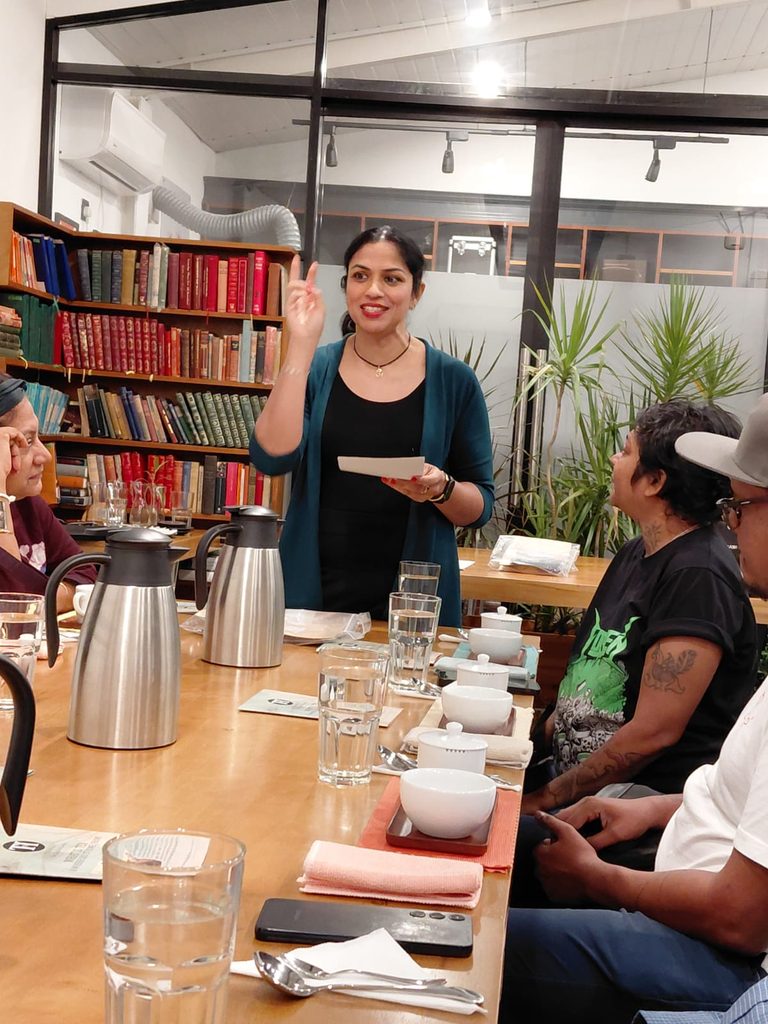
You have over 16 years of experience in the tea industry, having worked with major tea companies and international hospitality groups. What made you decide to start Tea Herald?
I had been toying with the idea of starting my own business for a few years. When you work in a traditional industry like tea, you realise that it’s not a glass ceiling but a glass slab when it comes to women. The thought that we can do much more than secretarial, HR, or finance work is rather alien. Having said that, I am grateful to certain stalwart men of the tea industry who supported me whole heartedly in this venture and encouraged me to do what they see as a missing part in the industry – spreading the knowledge of tea.
Last year was a turning point in my life and I decided to step away from the comfort zone and venture out knowing that I had the knowledge and expertise to do it. I believe I have a calling in tea because it has followed me for over 16 years. Hence, I started Tea Herald this year and it has been quite the rollercoaster so far!
Tea Herald’s philosophy is ‘Tea, Studied & Served’. Could you expand on what that offering entails?
Most people think of tea in a very traditional, boring sense and as a commodity offering. Precious few understand it is a beverage that fuels the engines that run the world.
I know tea is far more exciting than just a cup you drink. Offering an experience is something I have trained hospitality staff overseas in Shangri-La properties, where they present tea as an experience; understanding the history, culture, and story behind the teas while using it as an ingredient in drinks and cuisine. It is this experience that I want to bring through the Tea Herald.
Many offer tea, but Tea Herald offers much more than just a drink or a product with a brand story and tagline. It offers heritage, studied and served in a way that is intriguing.
You have an academic background in archaeology and your MSc research explored tea culture in Sri Lanka from a heritage perspective. How has that research influenced the way you approach tea today?
My research opened my eyes to the cultural and historical impact of tea on Sri Lanka and the world and the thousands of exciting stories around tea. Tea has fuelled wars like the Opium War that ceded Hong Kong to the British and it has been the reason we have a tea drinking habit, railways, and an industry that employs millions today.
The stories behind the teas, the impact it has had on each of us cannot be denied. My approach has been to look at it from all these perspectives, not merely from a socio-economic, political or agricultural point of view.
What stories about Ceylon Tea do you feel are not being told enough?
Why Ceylon Tea is special in terms of its seven tea growing regions across three elevations, the two seasonal teas we produce, and the fact that it is an origin country with its own distinct identity in terms of taste and character. It is only now that we have applied for GI certification for an industry that is over 150 years old.
Ceylon Tea created a tea drinking habit which we never had before, it brought with it the Malaiyagar Tamil community, the planters, their lifestyles, Christianity, language in terms of tea tasting and drinking, and an entire change to the landscape both physical and political of this country.
Yes, we cannot deny the fact that the oppression of the Malaiyagar Tamil community is very real and it is both social and political. However, the answer is not to run down the industry that employs millions of people but to accept the fact that the entire structure needs to be revamped and changed to suit the requirements of today and ensure a fair playing field for all those involved in the industry.
We have to move away from the commodity mindset and focus on value add. This is what will sustain the industry and its people.
How do you balance preserving the heritage of Ceylon Tea with making it relevant and exciting to a modern audience?
People love a good story and the history of tea is filled with exciting stories and interesting facts that few know. Couple this with a modern experience of tea mixology or food pairing where people can explore tea from a new point of view and it makes it something interesting and exciting.
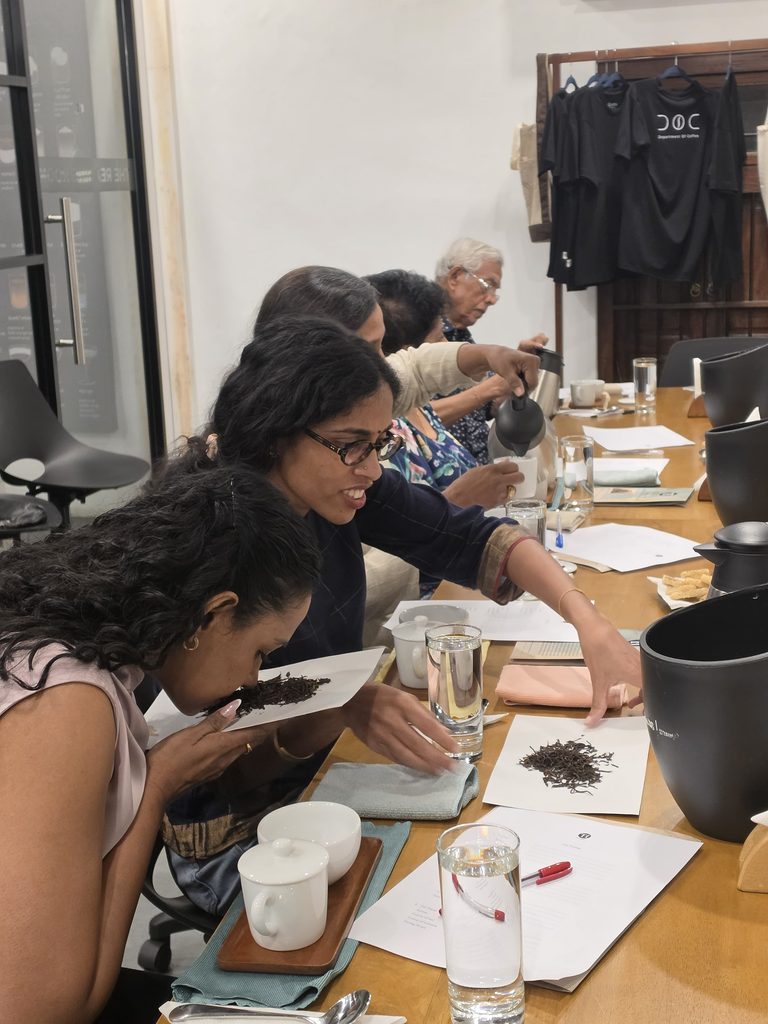
What does a Tea Herald experience entail and what goes into turning a simple tea tasting into an immersive experience?
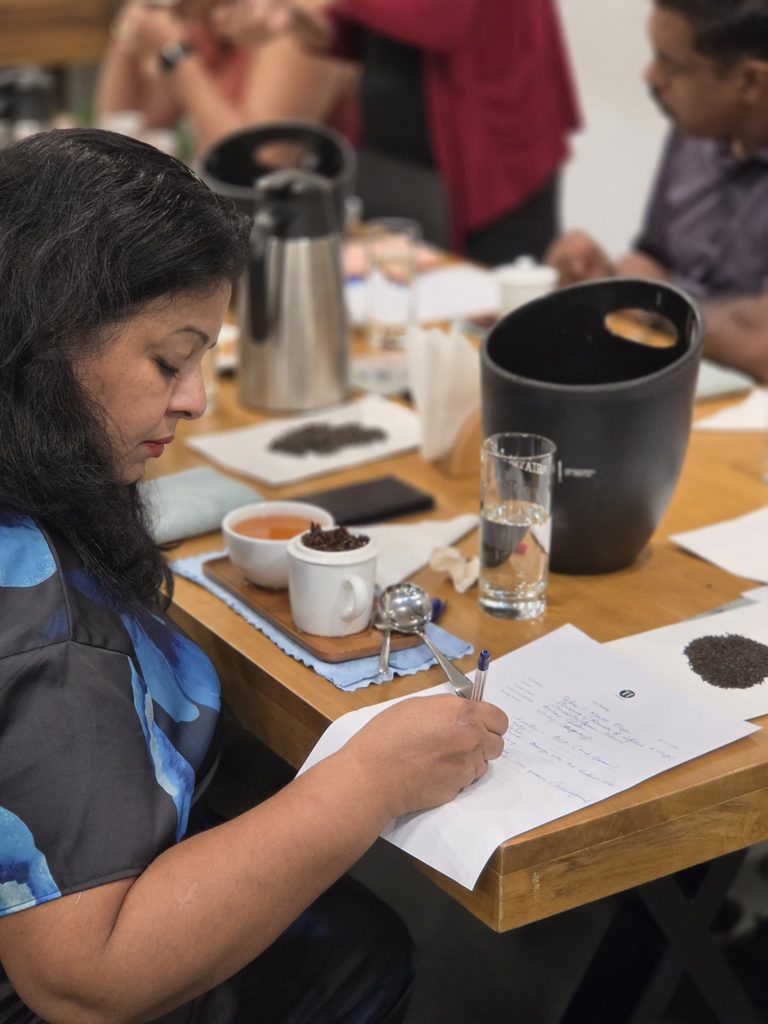
The Tea Herald experience is not just tea tasting which is very technical and can be boring. The aim here is to draw people into the story of the tea – its history, how it was marketed, and how it is made because you will appreciate your cup much more once you realise the effort that goes into making it.
People will blindly pay Rs. 1,000+ for a cup of coffee whose beans they have no clue about but will fuss to pay Rs. 500 for a cup of tea made with so much effort.
The Tea Herald experience teaches participants to correctly brew and taste different teas from Sri Lanka while learning to appreciate how the differences are a result of the climate, the elevation, and manufacture while it is the same plant – Camellia sinensis. We are also planning artisanal Ceylon Tea sessions, Tea and Mixology, and other exciting experiences with tea.
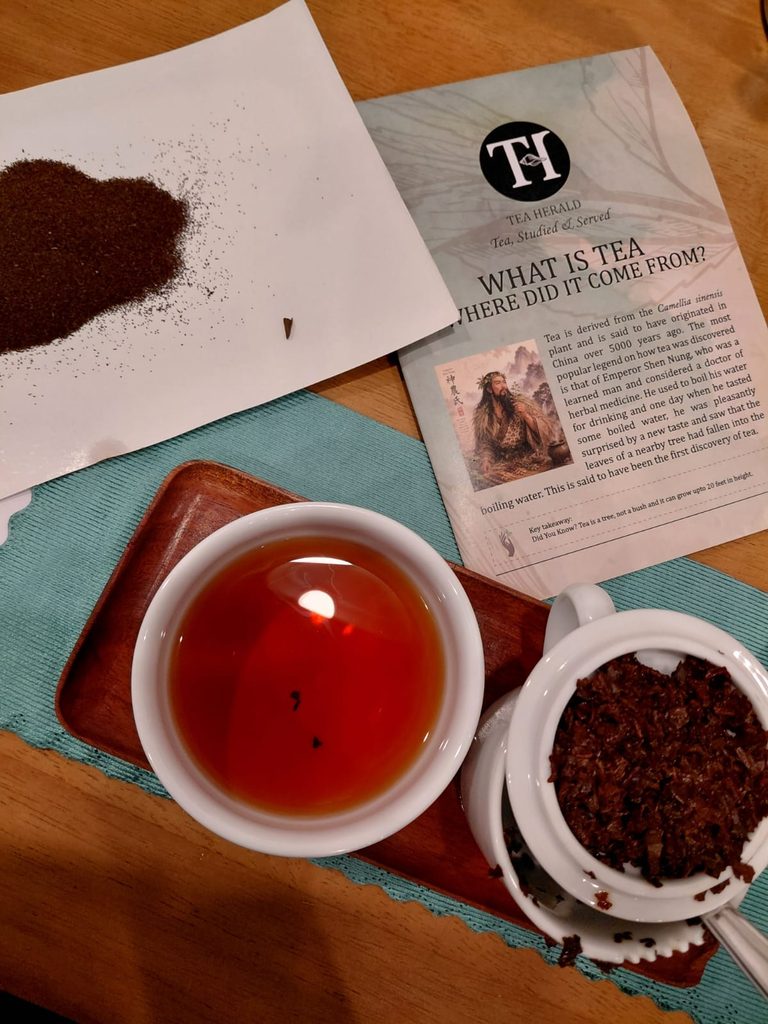
What can participants look forward to at the ‘Sunset Tea Romance at Amari’ event on 30 September?
Participants will learn about the history of tea, its manufacture, and what makes Ceylon Tea special and will learn to properly brew and taste four different teas from the three main tea growing elevations of Sri Lanka, while pairing them with canapés that have been matched to each tea. They will be guided on how to brew, taste, and do the food pairing.
There is also great conversation because it is a small gathering that lends itself to an immersive experience. This will be at Amari’s Club Pahana on the 24th floor which has a beautiful view and will be a lovely setting for enjoying tea beyond a mere cup. Anyone who wishes to participate can contact +94 777192444 to book and the experience is priced at Rs. 6,500 per head. We will be having more events in October and we have tea appreciations at the Department of Coffee in Colombo as well.
How important is food pairing to the way people understand and appreciate tea?
Today most people think of tea and food in terms of a high tea buffet where you stuff yourself with food and wash it down with a cup of tea or, in some cases, iced coffee. Tea and food pairing is something that has been practised in countries like China from ancient times where the flavours complement each other or contrast in a way that heightens certain taste characteristics of the tea and the food.
There is also a focus on textures of the food. This is subjective to the individual palate as each one has different tastes they are used to and what they enjoy. This is why pairing tea with food is an intriguing experience because it opens your eyes to the different types of tastes and how something can complement or heighten elements you did not think it could.
What is the most common misconception about tea that you find yourself correcting during your sessions?
Many Sri Lankans assume we drink ‘dust,’ as in bad tea. Dust is actually a very good grade of tea. What you sometimes get sold in bulk in smaller retail stores are off grades which are not the best quality. But the main tea players offer grades like BOPF and Dust, which are good.
People don’t understand that the grade also determines the strength and taste of the tea. This is why it is important that Sri Lankans learn more about tea than merely assuming things they hear.
Do you see Tea Herald as partly a way of preserving Sri Lanka’s tea heritage for future generations? If so, what would you most like the next generation to understand about Ceylon Tea?
Yes, I see the Tea Herald as one way of preserving Sri Lanka’s tea heritage because if you do not understand the past, you will keep repeating the mistakes from it. I would like the next generation to see Ceylon Tea from all aspects that have created it, not merely the politically charged rhetoric which is very easy to spout without looking at the whole industry.
I often say that tea has the good, the bad, and the ugly as do many colonial industries in the world. The answer is not to stamp it out and run it down but to work towards reforming it. To do this, we must understand what Ceylon Tea is, what makes it special, and how exactly it is produced, sold, and marketed to the world. When you understand the product, its value, and the system, you will understand what needs to be done to reform and rebuild it.
We are losing market value for Ceylon Tea as an origin country and it is therefore very important that people from Sri Lanka be brand ambassadors of the product while working towards policy and system reform.








Leave a comment