
By The Pulseline News Desk
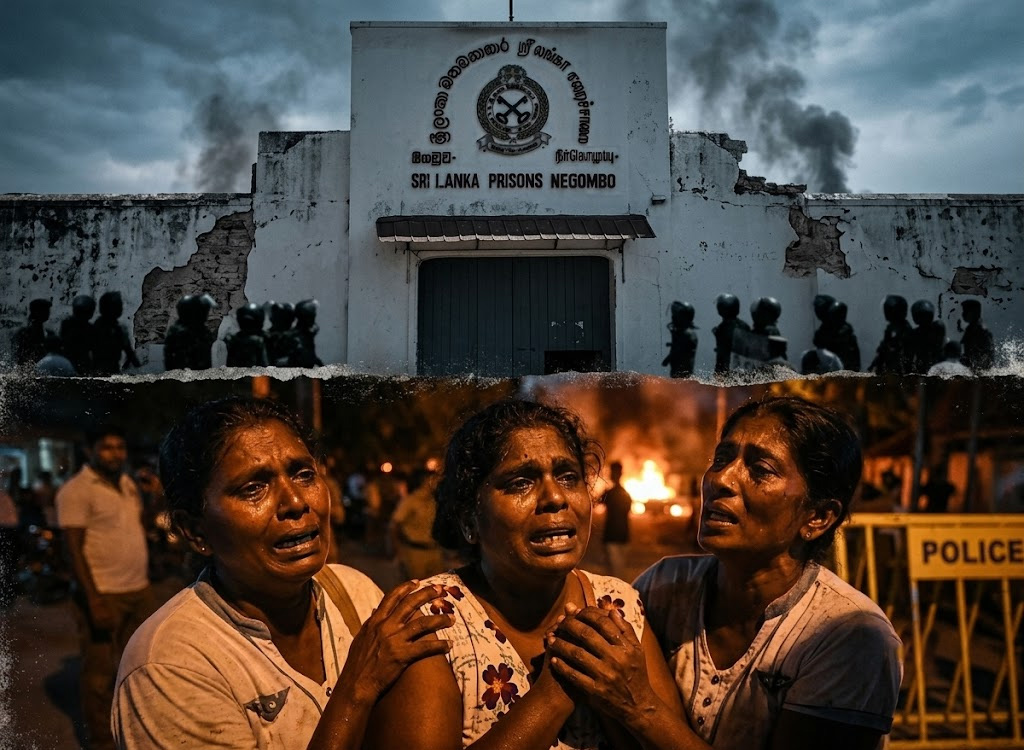
The deadly violence that erupted inside Negombo Prison has left Sri Lanka confronting one of the most serious prison tragedies in recent years. Beyond the loss of lives and destruction of property, the incident has reignited concerns about overcrowding, prison management, drug-related crime, and the treatment of inmates within the country’s correctional system.
Authorities have now launched multiple investigations following the clash, which claimed the lives of 29 people, including eight prison officers and 21 inmates, and injured more than 100 others.
Dual investigations underway
In the aftermath of the violence, the Government has moved to determine both the causes of the confrontation and the extent of the damage caused to prison property.
Prison Media Spokesperson and Prison Commissioner A.C. Gajanayake announced that a committee has been appointed to assess the damage to prison infrastructure, while a separate committee established by the Department of Prisons will investigate how the deadly confrontation unfolded.
Officials have also transferred more than 600 inmates from Negombo Prison to other correctional facilities in an effort to restore order and ease tensions following the incident.
Honouring fallen officers
The Department of Prisons has decided to grant immediate promotions and compensation to the eight prison officers who lost their lives while on duty during the violence.
The officers were among the first responders caught in the confrontation, which reportedly began between two groups of inmates over an alleged drug trafficking dispute before escalating into widespread violence throughout the prison.
A riot with lasting consequences
While investigations continue, preliminary reports indicate that the clash stemmed from tensions linked to illicit drug activities within the prison. What began as a dispute between rival inmate groups rapidly spiralled into one of the deadliest prison disturbances in Sri Lanka’s recent history.
The riot left prison buildings damaged, dozens of inmates and officers injured, and raised serious questions about security measures, intelligence gathering, and the growing influence of organised criminal networks operating behind prison walls.
International concern
The violence has also drawn international attention.
UN Human Rights spokesperson Ravina Shamdasani described the outbreak of deadly violence as “deeply alarming,” particularly in light of reports that inmates transferred to other prisons may have faced reprisals by prison guards.
She stressed that the families of those killed and injured, including both inmates and prison officers, deserve the truth and accountability.
The UN welcomed the Government’s commitment to investigate the incidents but emphasised that any inquiry must be prompt, independent, and transparent to maintain public confidence.
Spotlight on structural problems
The Negombo tragedy has once again highlighted longstanding challenges facing Sri Lanka’s prison system.
According to the UN, chronic overcrowding, prolonged pretrial detention, and inadequate living conditions continue to place immense pressure on correctional facilities. The organisation also noted that a significant proportion of inmates are imprisoned for drug-related offences and argued that many of these cases could be addressed through health-based rehabilitation rather than incarceration.
Human rights advocates have long argued that prison overcrowding creates conditions that increase violence, facilitate criminal activity, and make effective prison management increasingly difficult.
Calls for independent oversight
The UN has urged Sri Lankan authorities to provide the Human Rights Commission of Sri Lanka (HRCSL) with unrestricted access not only to Negombo Prison but also to all detention facilities where transferred inmates are currently being held.
The request follows allegations that some prisoners may have been subjected to torture or other forms of ill-treatment after being relocated.
Independent monitoring, rights groups argue, will be essential in ensuring that investigations remain credible and that any violations occurring after the riot are thoroughly examined.
Beyond the immediate crisis
As investigators work to determine responsibility for the violence, the Negombo Prison riot has become more than an isolated security incident. It has exposed deeper structural weaknesses that have challenged Sri Lanka’s prison system for years – from overcrowding and organised crime to rehabilitation, inmate welfare, and institutional accountability.
Whether the investigations lead only to identifying those responsible for the latest tragedy or serve as a catalyst for broader prison reform may determine how the country responds to one of its darkest correctional crises in recent memory.











Leave a comment