
By The Pulseline News Desk
The parliamentary Committee on Public Finance (COPF) has widened its investigation into the controversial disappearance of a US$ 2.5 million debt repayment intended for an Australian creditor, directing the Central Bank of Sri Lanka (CBSL) to submit a detailed report on the incident.
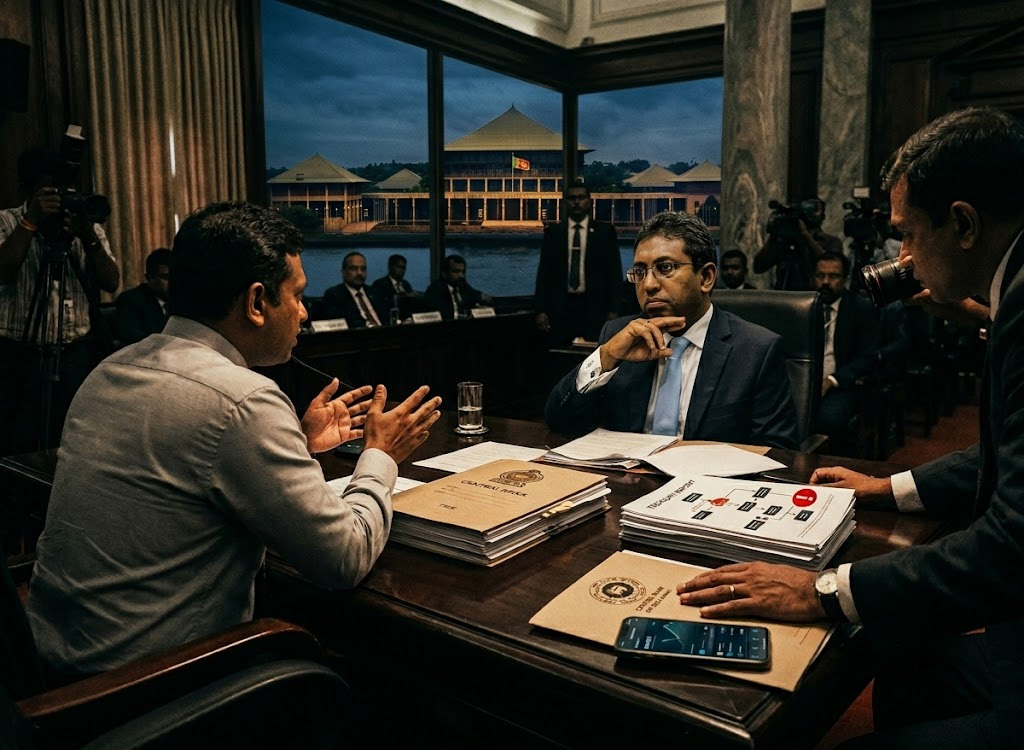
The decision was taken at a special meeting of the committee held at the Parliamentary Complex under the chairmanship of member of parliament (MP) Harsha de Silva, where members had spent more than three hours examining a report submitted by the Treasury on the matter.
The case has emerged as one of the most significant financial governance controversies since Sri Lanka began rebuilding confidence among international creditors following its sovereign debt crisis and subsequent restructuring programme.
Debt payment gone missing
The controversy centres on funds that were due to be paid to an Australian institution as part of Sri Lanka’s external debt obligations. Investigators believe the payment was diverted before reaching the intended recipient, raising serious concerns about the integrity of government financial procedures and cyber-security safeguards.
While authorities have yet to release the full findings of ongoing investigations, preliminary information suggests that fraudulent banking instructions may have been used to redirect the funds to accounts controlled by unknown third parties.
The Treasury has already conducted an internal inquiry into the incident, but parliamentarians are seeking an independent assessment from CBSL to determine whether systemic weaknesses or procedural failures contributed to the loss.
Parliamentary scrutiny intensifies
During the recent meeting, Committee members had questioned Treasury officials regarding the circumstances surrounding the transaction and the measures taken after the irregularity was detected.
Treasury Secretary Harshana Suriyapperuma was among the senior officials who had attended the session and responded to concerns raised by lawmakers.
Following extensive deliberations, the committee had resolved to obtain a separate report from CBSL Governor, believing that an independent review would help establish how the payment process was compromised and whether existing safeguards were adequate.
The move signals growing parliamentary concern over the implications of the incident for Sri Lanka’s public financial management systems.
Questions over oversight
The case has drawn particular attention because it occurred during a period of institutional transition in the management of Sri Lanka’s public debt.
In recent years, responsibilities relating to debt management have been undergoing reforms aimed at strengthening accountability and improving coordination between the Treasury, debt management authorities and the Central Bank.
Financial experts note that sovereign debt repayments typically involve multiple layers of verification, making the apparent diversion of funds especially troubling.
The incident has prompted questions about whether sufficient controls existed to verify payment instructions, monitor communications with foreign creditors and prevent fraudulent alterations to banking details.
International implications
Although the amount involved is relatively small compared with Sri Lanka’s overall external debt obligations, the incident carries significance beyond its monetary value.
The country remains under scrutiny from international lenders, investors and multilateral institutions following its economic crisis and debt restructuring negotiations. Any irregularity involving debt-service payments risks undermining confidence in the government’s financial administration.
Authorities have stressed that the incident appears to be an isolated case and that efforts are underway to strengthen procedures to prevent a recurrence.
Awaiting answers
With the Treasury report already before Parliament and a CBSL assessment now expected, attention is turning to the findings that emerge from the various investigations.
The key questions remain unanswered: How was the payment diverted? Were government systems compromised? Could the funds be recovered? And what reforms are necessary to ensure that a similar breach never occurs again?
For legislators, the issue extends beyond the missing US$ 2.5 million. At stake is the credibility of Sri Lanka’s financial governance framework at a time when restoring international confidence remains central to the country’s economic recovery.
As COPF awaits CBSL’s report, the investigation is likely to remain under intense public and political scrutiny in the weeks ahead.












Leave a comment