
By The Pulseline News Desk
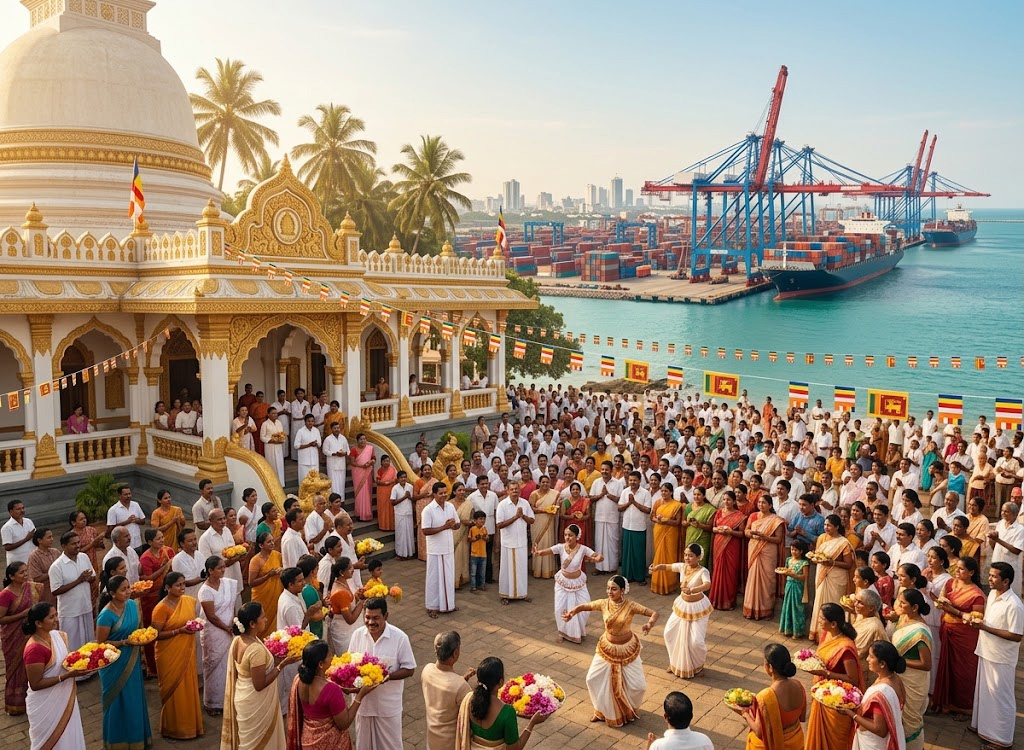
Sri Lanka’s long list of public holidays may offer workers more opportunities to rest, travel and spend, but the country’s position among the world’s most holiday-heavy economies is also raising questions about productivity, business costs and the wider economic impact.
Sri Lanka will observe 25 public holidays in 2026, the third-highest number among 190 UN member states surveyed by the Pew Research Center, behind only Myanmar with 30 and Bangladesh with 29. The global median is just 13 holidays.
The pattern is set to continue. The Government has already gazetted 25 public and bank holidays for 2027, meaning Sri Lanka will once again operate with almost twice the global median number of public holidays.
On the surface, additional holidays can provide a boost to sections of the economy. Tourism, hotels, restaurants, transport operators, retail businesses and recreational industries can benefit when people have more time to travel and spend.
Long weekends, in particular, can generate a short-term surge in domestic tourism, with families travelling to popular destinations and spending on accommodation, food, transport and entertainment.
But the economic equation is less straightforward for the wider productive economy.
For export-oriented manufacturers, construction companies, financial institutions and businesses operating on tight delivery schedules, every additional non-working day can disrupt production and increase operating costs.
The impact is particularly significant for an economy seeking to raise productivity, expand exports and attract investment.
Sri Lanka is attempting to increase export earnings and strengthen its competitiveness while recovering from its recent economic crisis. In that context, the number of working days available to businesses becomes an important consideration.
The issue is not simply the number of holidays, but how they are distributed and whether essential services and private-sector operations can continue without disruption.
The 2027 calendar illustrates both sides of the equation. Nine holidays fall on either a Friday or Monday, creating three-day weekends. Two such long weekends occur in January alone, while similar opportunities arise in March, May, June, August, October and December.
For tourism-dependent businesses, these long weekends could be commercially valuable. For manufacturers and service providers, however, clustered holidays can mean production schedules have to be adjusted, deliveries delayed and overtime incurred to compensate for lost working days.
There is also a wider question of productivity. A high number of holidays does not necessarily make an economy less productive if workers and businesses compensate through longer working hours, efficient processes or flexible arrangements. Conversely, simply reducing holidays would not automatically translate into higher economic growth if underlying productivity remains weak.
For Sri Lanka, therefore, the debate should perhaps move beyond whether the country has “too many holidays” and focus instead on how much economic output is generated per working day.
With the Government attempting to rebuild public finances, increase exports, attract investment and raise living standards, every element affecting productivity deserves closer attention.
The challenge will be to strike a balance between cultural and religious observances, workers’ welfare and the need for a more productive economy.
Sri Lanka’s 25-holiday calendar may be a source of pride for those planning long weekends. But for an economy trying to accelerate its recovery, the bigger question is what happens on the other 340 days.










Leave a comment