
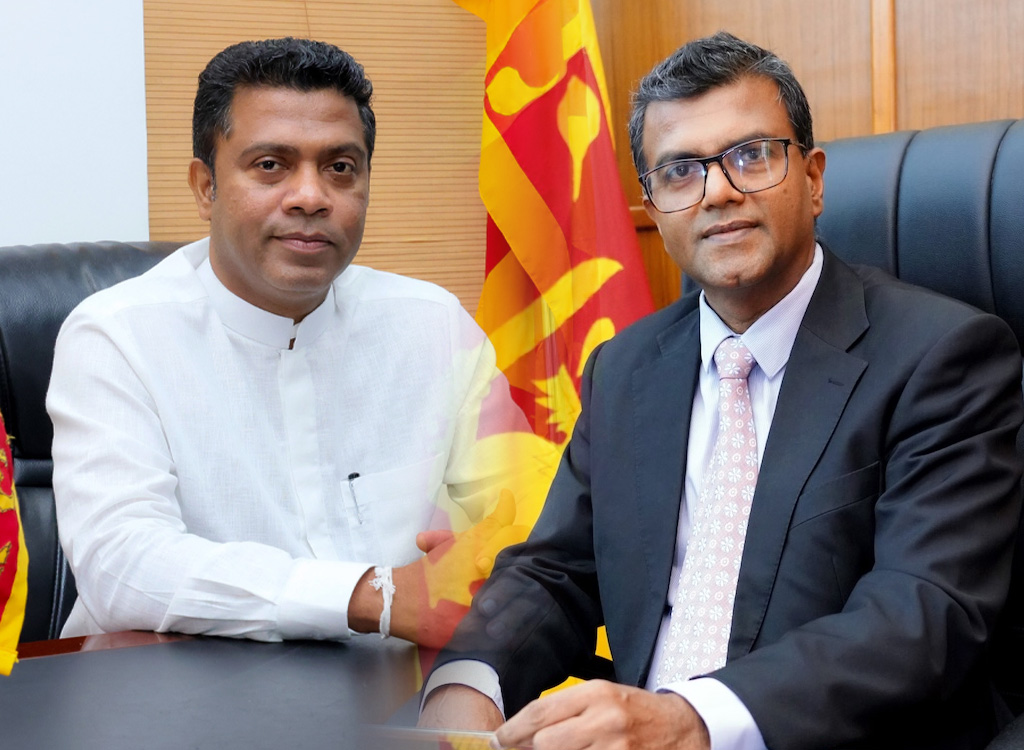
By The Pulseline News Desk
The government’s swift dismissal of allegations surrounding Finance Ministry Secretary Harshana Suriyapperuma and his citizenship status reveals more than just a routine clarification – it highlights the enduring political sensitivity of constitutional compliance in Sri Lanka’s post-2022 landscape.
Cabinet Spokesperson, Minister Nalinda Jayatissa did not hedge his words. His categorical assertion that Suriyapperuma “was not a dual citizen” at any point during his tenure as a member of parliament (MP), Deputy Minister, or Finance Ministry Secretary signals the government’s awareness of how damaging even the perception of ineligibility could be. In a political environment still recalibrating after institutional reforms, ambiguity is a liability.
At the heart of the issue lies the 21st Amendment to the Constitution, a reform born out of public demand for tighter governance standards following the country’s political and economic crises. Among its key provisions is a clear bar on dual citizens entering Parliament, a clause intended to reinforce national accountability and prevent conflicts of allegiance.
The controversy itself is telling. Reports suggesting that Suriyapperuma may have held Australian citizenship or merely applied for its renunciation rather than completing the process, tapped into a broader unease about transparency in public office. In a country where public trust in political institutions has been repeatedly tested, procedural technicalities quickly become matters of legitimacy.
Jayatissa’s defence rests on a legal threshold: if Suriyapperuma had indeed been a dual citizen while holding office, legal consequences would have followed. This framing subtly shifts the debate from speculation to enforceability, implying that the absence of legal action is, in itself, proof of compliance. However, for critics, that may not be sufficient. The demand is not only for legality, but for demonstrable, documented clarity.
Politically, the episode underscores a recurring tension in Sri Lankan governance: the gap between formal compliance and public confidence. Even when rules are followed, the lack of proactive disclosure can fuel suspicion. In that sense, the government’s reactive posture, responding only after reports surfaced, may have amplified the issue rather than contained it.
There is also a broader implication. As Sri Lanka continues to engage with its diaspora and global networks, questions of dual citizenship will not disappear. Many professionals with international ties are potential contributors to governance and economic recovery. The strictures of the 21st Amendment, while rooted in accountability, may increasingly collide with the realities of a globally connected political class.
For now, the government has drawn a firm line: Suriyapperuma was eligible, and the matter should rest there. Whether the public accepts that conclusion, however, will depend less on official assurances and more on the credibility of the system that produces them.
In Sri Lankan politics, legality may close a case, but legitimacy is what ultimately settles it.










Leave a comment