
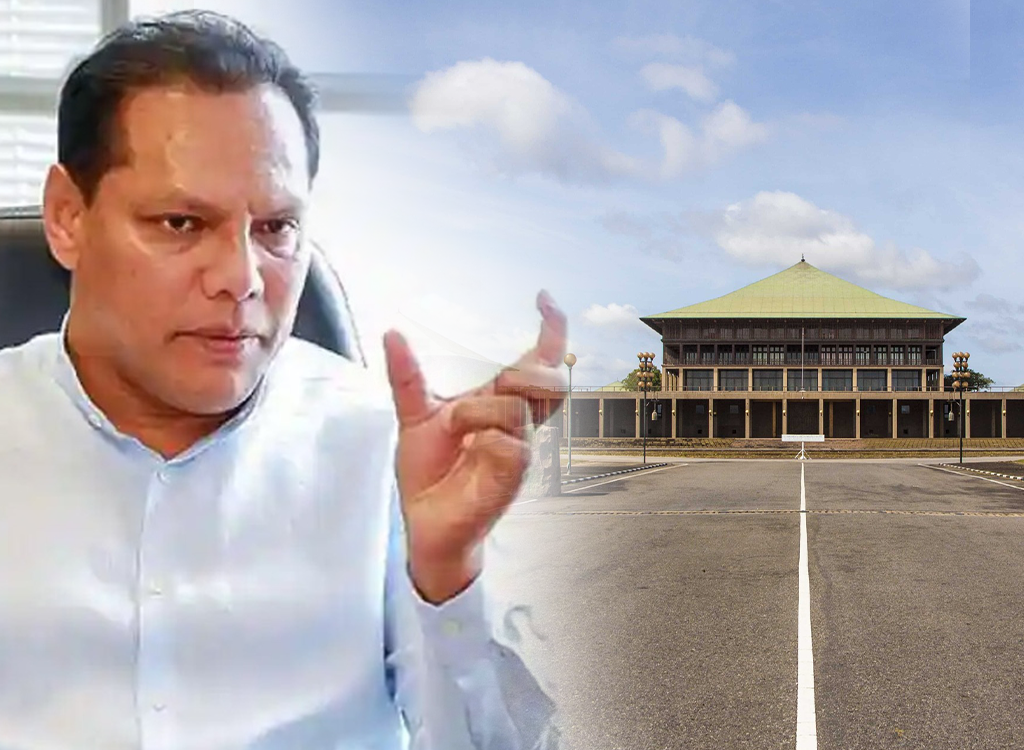
Opposition member of parliament (MP) Dayasiri Jayasekara is expected to raise a privilege issue in Parliament this week over a controversial $2.5 million transaction, alleging serious breaches of financial procedure and accountability within the Treasury.
Jayasekara said he intends to propose that Treasury Secretary Harshana Suriyapperuma be summoned before the Committee on Parliamentary Privileges, claiming the official’s conduct violates established parliamentary norms.
Allegations over public finance procedures
At the center of the dispute is the alleged release of $2.5 million outside standard financial protocols. Jayasekara argues that such a transaction undermines constitutional safeguards governing public funds.
“Power over public finances is vested with Parliament under Article 148 of the Constitution,” he said, emphasising that all state revenues must be credited to the Consolidated Fund and that withdrawals require parliamentary approval.
He further claimed that the Treasury Secretary bears direct responsibility for any deviation from these procedures, stating that the funds in question appear to have been released without the required authorisation.
Failure to disclose information
Jayasekara also accused Suriyapperuma of failing to provide adequate information when he appeared before the Committee on Public Finance last week.
According to the MP, this lack of disclosure constitutes a breach of the Parliamentary Privileges Act, which governs the conduct of individuals appearing before parliamentary bodies.
“With his actions, the Treasury Secretary has violated parliamentary privileges,” Jayasekara said, adding that the matter warrants formal examination by the privileges committee.
Parliamentary showdown expected
The issue is likely to trigger a heated debate in Parliament, as opposition members push for greater transparency and accountability in public finance management.
Raising a privilege issue is a significant procedural step, potentially leading to an inquiry into whether an official has obstructed or misled Parliament. If upheld, it could result in formal censure or further legal consequences.
Broader implications
The controversy comes at a time when Sri Lanka is under increased scrutiny over fiscal discipline and governance, particularly in the wake of recent economic challenges. Ensuring strict adherence to constitutional provisions on public finance has become a central concern for both policymakers and the public.
Analysts note that the outcome of this dispute could have wider implications for the relationship between Parliament and the executive, especially regarding oversight of state funds.
As Parliament prepares to take up the matter, attention will focus on whether the allegations lead to a formal inquiry, and what they reveal about financial governance at the highest levels of government.











Leave a comment