
By Madhusha Thavapalakumar
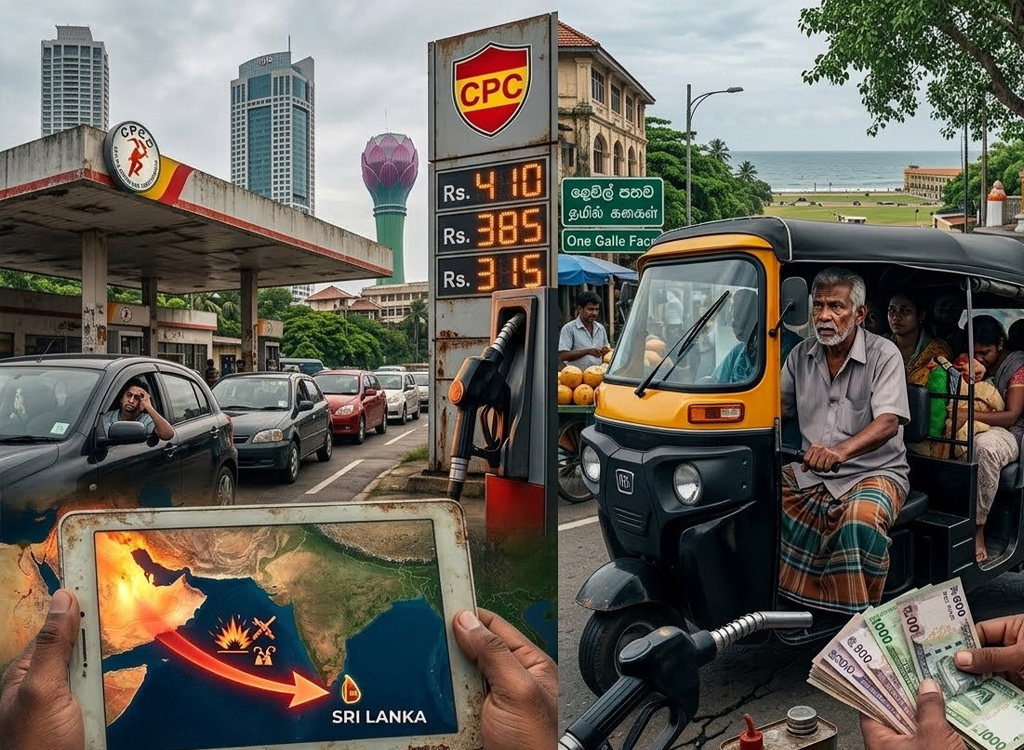
Sri Lanka’s most recent fuel price increase is the latest sign of how global energy shocks continue to reverberate through the island’s economy, where petroleum imports remain key to transport, production and daily consumption. As crude oil prices climb in response to geopolitical tensions in the Middle East, authorities are once again confronting the difficult balance between maintaining fuel supplies, protecting public finances and limiting pressure on households already grappling with a high cost of living.
The Government revised fuel prices with effect from midnight on 9 March, citing rising global oil prices and increased domestic demand. The adjustment follows a sharp increase in international crude prices triggered by the conflict involving Iran and disruptions to energy supply chains, developments that have pushed several countries to reassess their domestic energy policies.
A global price shock reaches local markets
The price revision comes at a time of heightened uncertainty in global energy markets. Since the beginning of March, the price of a barrel of crude oil has increased by more than 40%, according to government estimates.
President Anura Kumara Dissanayake recently described the situation as an external shock affecting the country’s economic stability. Addressing the Chamber of Lankan Entrepreneurs’ annual meeting in Colombo, he noted that the present challenge differs from the crisis Sri Lanka faced in 2022.
According to the President, the Government has established an Economic Monitoring Committee to track developments and is holding discussions with friendly countries to ensure continuity of supply chains.
Domestic fuel demand has also increased in recent weeks. Diesel sales rose from around 4,500 kilolitres on 1 March to approximately 10,500 kilolitres by 3 March, government figures show, suggesting a surge in consumption as global prices began climbing.
Securing supply amid volatile markets
Officials at the CPC say their immediate priority is to maintain fuel supplies while closely tracking developments in international markets. CPC Managing Director Dr. Mayura Neththikumarage said the latest revision was carried out under the existing pricing formula and that, for now, the situation remains manageable.
“Right now we are monitoring the situation, and we believe it is manageable. That is why we increased the price slightly to discourage some consumption and mitigate the risk of additional costs,” he said.
Neththikumarage said there is no immediate need for restrictive measures, although authorities are continuing to watch the situation closely. He said the CPC has generally urged the public to avoid unnecessary travel, but added that no formal restrictions are being considered at present.
He also indicated that if the conflict in the Middle East continues without a clear end, broader responses could come under consideration. Measures such as work-from-home arrangements or other demand-management steps, he said, would have to be decided by the government rather than by the CPC itself.
“Right now our priority is securing the required quantities. We are less concerned about whether prices move up or down in the short-term,” he said.
He added that possible responses to a prolonged escalation, including whether any portion of future price increases could be absorbed instead of being fully passed on to consumers, have been discussed, though no decision has been made. That, he said, is partly because international prices had shown signs of easing slightly at the time of the discussion.
“If prices continue to rise, we will have to assess the situation and decide on the next steps,” he said.
The economic logic behind fuel pricing
The latest price revision has also revived debate about how Sri Lanka should manage fuel pricing during periods of global volatility. Advocata Institute Chief Executive Officer Dhananath Fernando said domestic fuel prices ultimately need to reflect international market conditions.
Sri Lanka imports all of its petroleum requirements, meaning global price increases inevitably affect domestic markets. Attempting to shield consumers entirely through subsidies can place significant strain on public finances.
Fernando noted that such an approach could become particularly risky if the crisis continues for an extended period.
“We do not know how long this crisis will last. If it continues, we will burn through our primary balance and may ultimately have to increase prices anyway.”
He also pointed to the distributional implications of fuel subsidies, arguing that artificially low prices may benefit higher-income households more than lower-income groups.
“We should not forget that 70% of the fuel is being consumed by 30% of the richest.”
In that context, maintaining lower fuel prices across the board may not necessarily provide targeted relief to the most vulnerable segments of the population.
A formula designed for transparency
Sri Lanka’s fuel pricing system was earlier built around a formula introduced in May 2018 by then Finance Minister Mangala Samaraweera. The formula was intended to reduce politically motivated price revisions and introduce a transparent mechanism linking domestic prices to international costs.
The system was also part of the commitments made under Sri Lanka’s International Monetary Fund Extended Fund Facility programme. Under the formula, the maximum retail price of fuel is calculated using four key components: landing cost, processing cost, administrative cost, and taxation.
The landing cost includes the Singapore Platts benchmark price per barrel, weighted premiums paid for cargoes, losses due to evaporation and exchange rate differences. The Singapore Platts benchmark represents the daily average of petroleum trading transactions assessed by Standard and Poor’s Platts.
Processing costs include port charges, local transport expenses, dealer margins and stockholding costs. Administrative costs cover personnel expenses and operational overheads within the fuel supply chain.
The final component consists of taxes, including customs duties, excise duties and other levies imposed by the government.
Under the system introduced in 2018, fuel prices are typically revised around the 10th day of each month. However, the revisions are not based on global oil prices on the day immediately before the adjustment. Instead, authorities calculate an average of international oil prices between the previous revision and the current one.
The intention behind this method is to smooth short-term volatility in global markets and avoid sharp price fluctuations in the domestic market.
The latest revision was also announced around the same time frame, although it remains unclear whether the adjustment strictly followed the same formula-based calculation. CPC said the revision was carried out in accordance with the pricing formula.
Sri Lanka has experimented with fuel pricing formulas several times in the past. A similar system was introduced in 2002 but was abandoned two years later ahead of an election. Another attempt in 2007 lasted only two months before being discontinued.
The 2018 formula was introduced to address those earlier shortcomings and establish a more predictable and cost-reflective pricing mechanism.
Sectoral reactions across the economy
Even so, fuel price increases can quickly filter through other sectors of the economy. Consumer groups have warned that higher fuel costs may lead to increases in the prices of essential goods as transport and logistics expenses rise.
National Consumer Front Chairman Asela Sampath has criticised the latest revision, arguing that it places additional pressure on households. Transport operators have also expressed concern. The Lanka Private Bus Owners’ Association has urged the government to revise the formula used to calculate bus fares, which has remained largely unchanged for nearly 24 years.
Three-wheeler drivers say they face similar difficulties due to the absence of a structured system linking petrol prices to passenger fares. However, the National Transport Commission has indicated that the latest diesel price increase does not warrant a revision of bus fares.
NTC Director General Dr. Nilan Miranda said the existing fare structure will remain unchanged for now. Some sectors have already begun adjusting to the new price environment. The All Ceylon School Children’s Transport Association announced a 5% increase in school transport fees following the diesel price increase. According to the association, a monthly transport fee of Rs. 10,000 would increase by approximately Rs. 500.
Ripple effects in agriculture and industry
Fuel costs also influence several sectors that depend heavily on transportation and logistics.
The National Tea Planters’ Association has warned that smallholder tea farmers are facing increasing difficulties due to rising transport costs, particularly in remote plantation regions where harvested leaves must be transported by truck.
In such industries, higher fuel prices can influence both production costs and export competitiveness.
Bakery owners have indicated that they are not planning immediate price increases for their products. However, industry representatives say adjustments could become necessary if operating costs continue to rise.
Policy debates on relief and fiscal stability
Some economists have suggested that policy tools may exist to reduce the impact of fuel price shocks without undermining fiscal stability.
Verité Research Executive Director Nishan de Mel said the debate over fuel pricing is often framed as a choice between cost recovery and consumer relief, but argued that both objectives can be pursued simultaneously.
Writing on X, de Mel said a refined pricing framework could reduce the shock of applying standard fuel pricing formulas during periods of global price volatility while maintaining fiscal outcomes.
He said the approach involves neutralising the way the current formula amplifies government revenue during price shocks beyond cost recovery and ensuring that price increases remain fiscally neutral through the tax system.
According to de Mel, the framework aims to allow governments to maintain cost recovery while softening the impact of global price shocks on consumers.
Energy dependence and long-term challenges
The current situation has also drawn renewed attention to Sri Lanka’s long-standing dependence on imported fossil fuels. Because the country does not produce crude oil domestically, fluctuations in international prices directly influence domestic economic conditions.
Economists say this structural dependence increases vulnerability to external shocks. Fernando noted that reducing reliance on petroleum would require major investments in renewable energy and grid infrastructure. Fernando said: “They will need a few billion dollars to upgrade the grid.”
Such investments would be necessary to integrate renewable energy sources at a scale capable of reducing reliance on imported fuel. For now, however, petroleum remains central to Sri Lanka’s energy system.
An economy exposed to global markets
The latest fuel price increase illustrates how developments in distant geopolitical theatres can quickly affect domestic economic realities. Higher fuel prices may influence transport costs, agricultural logistics, production expenses and household spending patterns.
At the same time, policymakers must weigh the need to secure fuel supplies against the pressures of rising living costs and fiscal constraints.
Source: The Morning Money










Leave a comment