
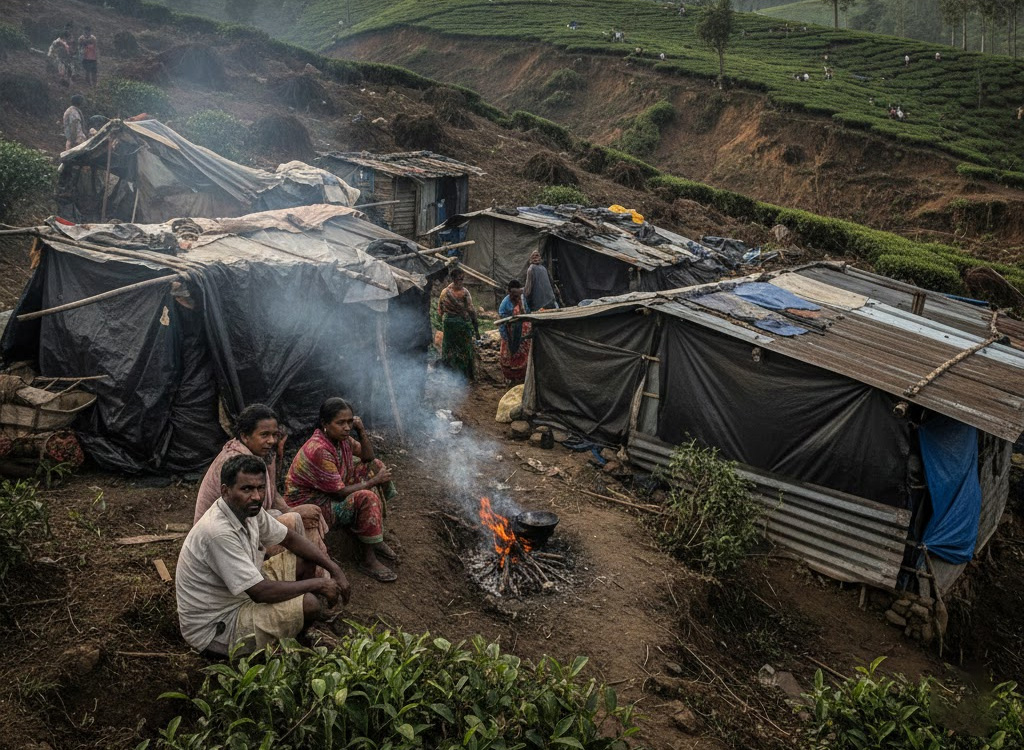
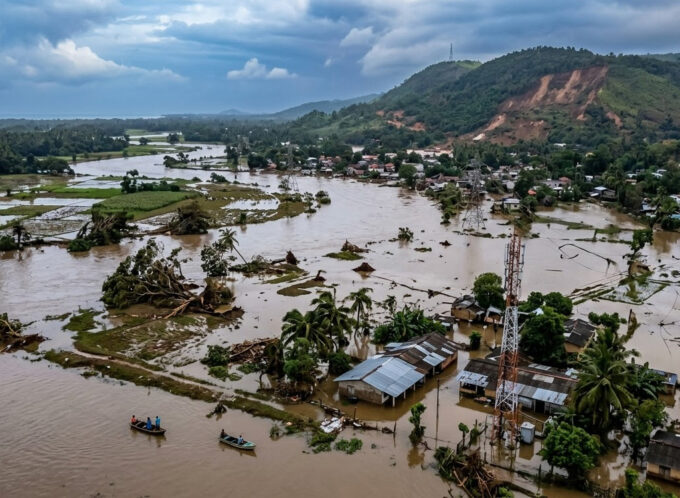
There has been continued focus on the plight of the Malaiyaha community, especially in the aftermath of Cyclone Ditwah.
The Civil Collective for Malaiyaha Reconstruction organisation had met with the United Nations (UN) Resident Coordinator in Sri Lanka, Marc-André Franche on Wednesday (28) to discuss the ongoing struggles of the community in the aftermath of Ditwah.
Convenor of the Collective, Selvaraja Rajasegar has noted that despite discussions with the Plantation and Community Infrastructure Ministry, none of the community’s issues that arose in the wake of Ditwah have been addressed to date.
Rajasegar has outlined to the media the challenges faced by the community, including damaged roads that hinder the transportation of vegetables and goods to the markets. “The farmers in a particular estate produce 5,000 kilograms (kg) of vegetables a day, they can’t bring their goods to the Dambulla market as the road is still broken. These vegetable farmers are not compensated either,” he has noted.
He has also raised concerns about the language barrier, stating that disaster warnings were issued only in Sinhala and English, which many in the Malaiyaha community could not understand. “Most people here don’t read English and in most occasions, they are in Sinhala only,” he has said, adding that the officers from the National Building Research Organisation (NBRO) who were sent to assist spoke only Sinhala, making communication ineffective.
“Even though in the television the government has mentioned about the concessions that will be provided for those who were affected by Ditwah, most people in the Malaiyaha community have not even received the forms to be filled out. We are unclear if they’re even listed in the government’s records,” Rajasegar added.
The organisation has further claimed that it has attempted to communicate with the President, but to no avail and attempts to contact the ministry had also been futile.
Meanwhile, Tamil Progressive Alliance (TPA) Leader, member of parliament (MP) Mano Ganesan has noted that the Ditwah disaster has once again highlighted Sri Lanka’s vulnerability to climate-related crises and the long-standing marginalisation of the Malaiyaha Tamil community in disaster relief, resettlement, and protection.
He had made these observations following a meeting with UN Resident Coordinator in Sri Lanka Franche, where the situation facing affected plantation communities was formally discussed.
Ganesan has noted that while official figures report 643 deaths and 183 missing persons nationwide, plantation communities account for a disproportionately high number of casualties despite representing a small share of the affected population. He has said that many displaced families continue to live in schools and temporary shelters, while some are being compelled to return to identified disaster-prone areas.
“This is not accidental. It is the result of decades of structural neglect and unequal treatment. It reflects an apathetic and discriminatory approach by the State toward the Malaiyaha Tamil community,” Ganesan has added.









Leave a comment