
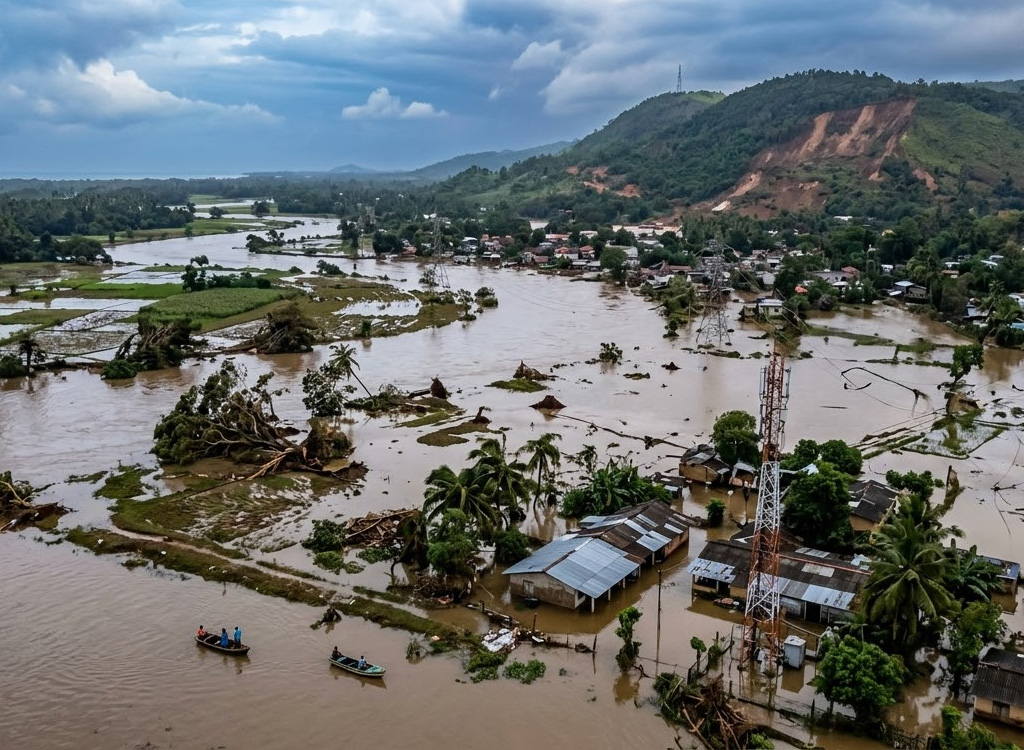
The decisive role of the media in providing accurate information to the public during disaster situations
By Kaushi Jayawardena
“News media do not generate information; what they do is verify information received from official or other sources and disseminate it to society as quickly as possible. In a disaster situation, this task becomes extremely difficult. Due to floods and cyclones, power supplies were disrupted. As a result, even though local journalists collected information, there were many practical difficulties in transmitting it to media organizations. Nevertheless, my view is that media personnel performed remarkably well even under those difficult conditions of journalism.” — Science writer, journalist and development communication specialist, Nalaka Gunawardena
Media plays a unique role in the context of natural disasters. In any crisis situation, the primary responsibility of informing the public and keeping relevant authorities informed falls on the media. However, in recent times, many questions have been raised about whether the media is properly fulfilling this responsibility, especially during a disaster situation.
It is now 100 days since Cyclone Ditwah devastated many parts of the country. Recently, a formal series of discussions was initiated by the Rights Now group on whether the government and citizens are properly carrying out their roles in the post-disaster period as well as focus on the level of prior preparedness for such disasters.
The latest discussion in the “Samabima” (Common Ground) dialogue series was: “The Role of the Media in Disaster Risk Communication and Misinformation Management” where science writer and journalist Nalaka Gunawardena served as the resource person.
One of the biggest challenges facing the world today is natural and human-made disasters. Cyclones, floods, landslides, droughts, epidemics, and similar events continue to cause increasing levels of risks to society. In such situations, receiving accurate, timely, and reliable information becomes a fundamental necessity for saving lives. This has resulted in the concept of “Disaster Risk Communication” now being considered a core component of disaster management. It is an essential communication process that includes raising awareness about risks before a disaster occurs, providing correct guidance during the disaster, as well as successfully facilitating recovery and rebuilding after the disaster. The media bears a huge social responsibility in effectively carrying out this communication process.
Public awareness during disasters
Initiating his discussion, Gunawardena stated, “In disaster situations, people’s behaviour, decisions, and protective actions are largely based on information. Receiving accurate information enables people to gain a correct understanding of the risks and to take necessary protective measures. Therefore, the entire media system — including television, radio, newspapers, and social media — has become a primary channel for raising public awareness about disaster risks. Especially for people living in villages or in high-risk areas, the media plays a very important role in delivering warnings and guidance.”
When looking at the history of disasters in Sri Lanka, there are many examples of such situations. During the 2004 tsunami, the floods and landslides of 2016 and 2017, as well as the global pandemic in 2020, the media played a major role in informing the public. In those instances, the media acted as an intermediary in the quick delivery of warnings and instructions issued by the Disaster Management Centre (DMC) and other state institutions to the people. Timely delivery of such information contributed significantly to saving lives and property.
Satisfactory performance level
Further explaining this point, Gunawardena emphasized that the performance of the media during the Ditwah cyclone and the flood situation the followed was at a satisfactory level.
During the discussion, moderator Sudarshana Gunawardena pointed out that the media faced certain difficulties in carrying out this task due to power outages, disruption of telephone lines, deactivation of mobile networks, etc. When questioned about the measures that could be taken, given that the media operates in a field where existence depends on technological equipment, yet faces challenges in getting messages to the audience, Gunawardena stated, “Broadcast media require electricity and telecommunication services. That is why, internationally, the importance of setting up media institutions in a way that can withstand any disaster situation is recognised. Many of our media institutions have backup renewable power facilities to a certain extent. However, when telecommunication systems collapse, we all face extreme difficulties. Very expensive private internet facilities are not affordable for everyone. Many people depend entirely on mobile phones. Therefore, media institutions should possess the facilities necessary for such disasters.” He noted that all telecom companies should have a method to stabilize infrastructure. “Otherwise, they cannot function during such breakdowns. If that doesn’t happen, very severe instability will occur and cannot be prevented. These are matters that should be regulated by the Telecommunications Regulatory Commission. This is an issue that affects everyone.”
Misinformation and fake reports
However, with the rapid development of information technology, the spread of misinformation and false reports has emerged as a new challenge to the media when disseminating information and to the public when accessing and consuming information. The issues of misinformation and fake reports are mainly witnessed on social media platforms, unverified rumors, fake photos or videos, and fear-inducing reports that spread rapidly, which can create distrust and problems among the public. For example, during disasters, unconfirmed messages such as “another major incident is imminent” or “people in risk areas should evacuate immediately” spreading on social media can create unnecessary panic among the public. Such situations can complicate disaster management efforts and weaken trust between state institutions and the public.
Gunawardena’s views on this matter is that in such situations, the responsibility of the media increases even further. “When reporting information, media institutions must verify truthfulness, use reliable sources, and base reports on scientific and official information. Additionally, identifying misinformation circulating in society, correcting it, and providing the public with true information is also an important responsibility of the media. Responsible journalism is therefore considered an essential part of the process of minimizing disaster risks.”
He further noted that new communication theories on disaster risk communication also emphasize this point. “According to concepts such as “Risk Communication” and “Crisis Communication”, providing the public with an accurate understanding of risks and building a reliable information system is essential for social security. Here, the media should not be seen merely as a simple information transmission tool, but as a social partner that informs society, builds public trust, and strengthens social security.”
Information accuracy and disaster management
According to Gunawardena, ultimately, what becomes clear is that accurate information and communication are essential for successful disaster risk management. Responsible, truth-verified, and public-interest-oriented journalism becomes a powerful force in ensuring the safety of society. “The role played by the media in controlling misinformation and delivering accurate information to society is extremely important in efforts to minimize disaster risks — this discussion further highlighted that point.”
Furthermore, Gunawardena also drew attention to technical and participation-related issues and emphasized global strategies for balancing such situations. He holds a positive stance regarding the performance of Sri Lankan media under such conditions.
However, he concluded that there are areas that need further development and updating.
The Rights Now organization, which initiated this Samabima dialogue series in relation to post-Ditwah disaster management, plans to present a report with recommendations on various aspects of this topic to the authorities following the conclusion of the series.







Leave a comment