
By The Pulseline News Desk
The spectre of another global energy crisis loomed over financial markets on Monday (13) as oil prices surged following a fresh exchange of military strikes between the United States (US) and Iran, reigniting fears of supply disruptions through one of the world’s most strategic maritime chokepoints.
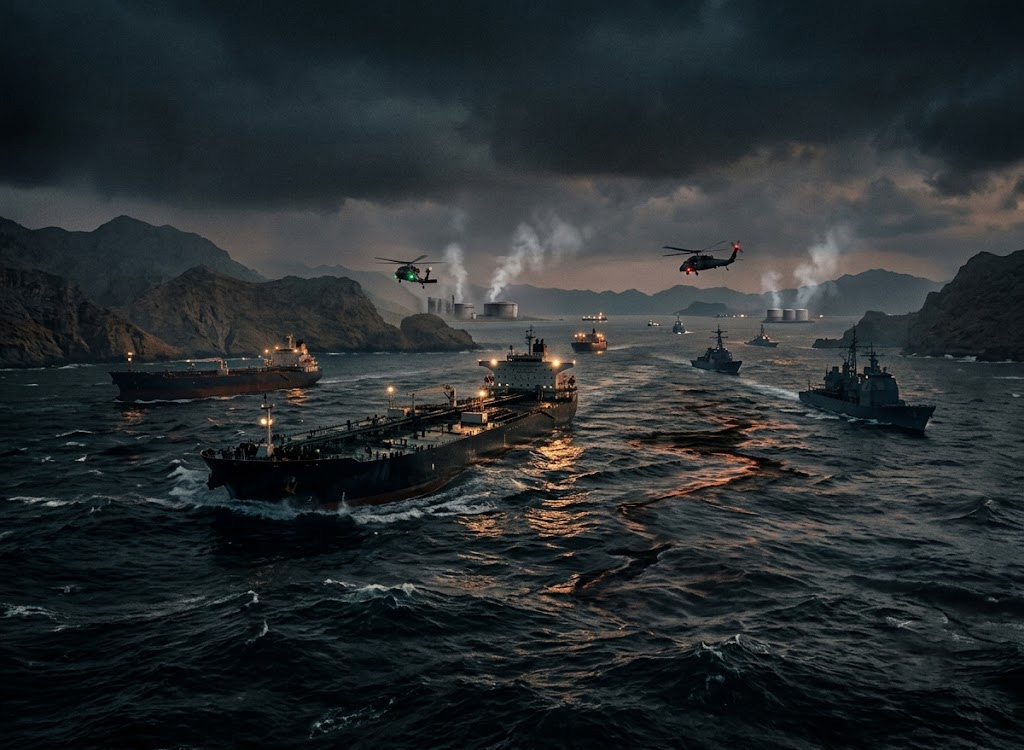
Brent crude climbed sharply while US West Texas Intermediate (WTI) crude also posted strong gains after renewed hostilities raised concerns that shipping through the Strait of Hormuz – a narrow waterway carrying nearly one-fifth of the world’s oil and liquefied natural gas—could once again be severely disrupted.
The latest escalation has rattled investors who had hoped a fragile truce would stabilise the region after months of conflict. Instead, military exchanges have intensified uncertainty, pushing traders to factor a growing geopolitical risk premium into oil prices.
Markets react to renewed conflict
Energy markets are often the first to respond when tensions flare in the Middle East, but analysts say the current situation is particularly sensitive because it threatens a supply corridor that underpins global energy security.
Reports indicate that Iran targeted commercial vessels and US-linked facilities in the Gulf, while Washington responded with strikes against multiple Iranian military targets. Although both sides have made conflicting claims about control of the Strait of Hormuz, the renewed confrontation has renewed fears of interruptions to global shipping.
Oil prices rose by more than three percent during trading, reflecting investor concerns that any prolonged disruption could tighten supplies at a time when global demand remains resilient.
Ripple effects across the world
Higher oil prices rarely remain confined to commodity exchanges.
For consumers, sustained increases in crude prices eventually translate into higher fuel costs, more expensive air travel and rising transportation expenses. Businesses dependent on imported energy face mounting operational costs, while governments may have to contend with renewed inflationary pressures.
Financial markets also reacted cautiously, with investors shifting toward traditional safe-haven assets as geopolitical uncertainty increased. Equity markets weakened while energy companies benefited from stronger crude prices.
Strait of Hormuz back in focus
The Strait of Hormuz has long been regarded as one of the world’s most strategically important waterways. Any disruption there immediately reverberates through global energy markets because millions of barrels of crude oil pass through the narrow channel each day.
Although shipping has not completely stopped, reports indicate vessel movements have slowed significantly amid heightened security concerns and uncertainty over future military activity.
Energy analysts warn that even if physical supplies remain available, uncertainty alone is sufficient to push prices higher as traders anticipate potential shortages.
Diplomatic challenge
The renewed military exchanges also cast doubt over ongoing diplomatic efforts aimed at preventing a broader regional conflict. International mediators continue to urge restraint, warning that prolonged fighting could destabilise not only the Middle East but also the global economy.
For oil-importing nations across Asia, Europe and Africa, the stakes are especially high. Many economies remain vulnerable to fuel price shocks after years of inflation and supply chain disruptions.
Whether the latest spike proves temporary or marks the beginning of another prolonged energy crisis will depend largely on developments in the coming days. For now, markets are watching every military move – and every tanker crossing the Strait of Hormuz – with growing anxiety.
(With input from news agencies)













Leave a comment