
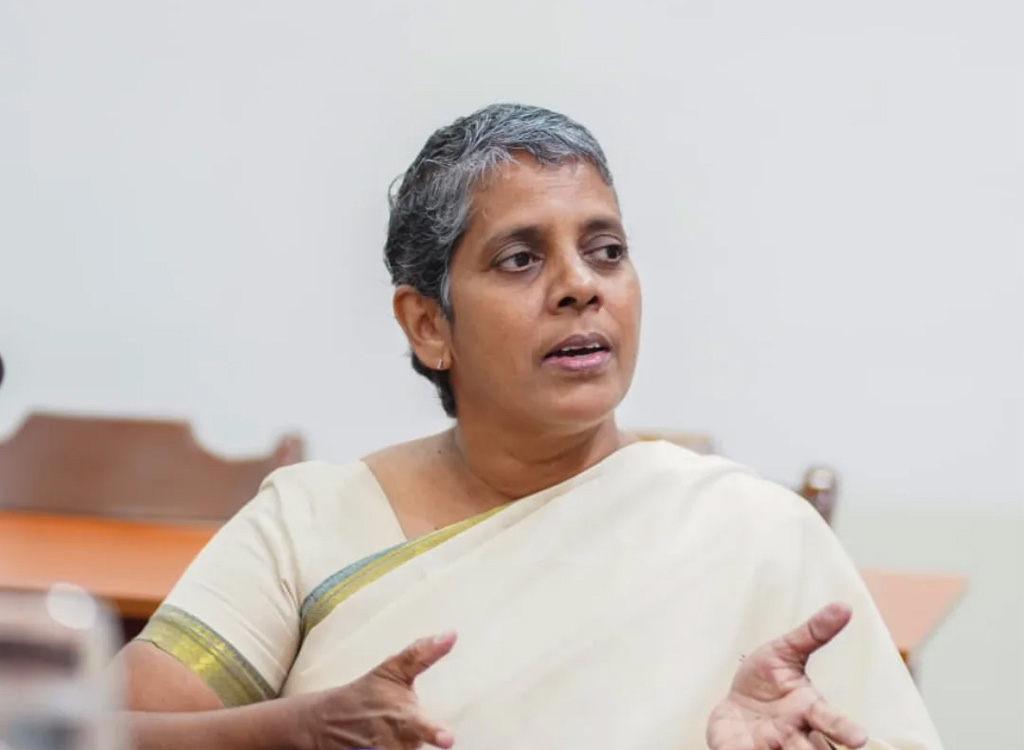
The inaugural National Women’ Commission has been left in limbo due to a lack of communication from the Presidential Secretariat, resources, and institutional support from the Government, with its Chairperson Dr. Ramani Jayasundere resigning amid the continued failure to operationalise the body.
Jayasundere’s resignation just a few months after the formation of the Commission came as a surprise to many.
Her resignation, submitted to President Anura Kumara Dissanayake (AKD), has reportedly cited concerns over the body’s lack of operational independence, marking a significant setback for the country’s efforts to establish an independent institution to safeguard women’s rights.
Jayasundere had confirmed her resignation to the media but had declined to provide further comment.
The resignation follows warnings from Commissioners of the National Women’s Commission that administrative interference is compromising the Commission’s autonomy. They had also claimed that the body, created under the 2024 Women’s Empowerment Act, has been unable to function due to the absence of a dedicated budget, independent premises, and recruited staff — despite government assurances.
Sources familiar with the developments have stated that the Presidential Secretariat had not engaged with the Commission after issuing initial appointment letters to Commissioners in early September of last year (2025). Since then, there has been no direct communication, despite repeated attempts by the Chairperson and other Members/Commissioners to contact the President’s Secretary, Dr. Nandika Sanath Kumanayake and other senior officials.
Sources have further stated that when a citizen wrote to the Presidential Secretariat under the Right to Information Act seeking clarification on the status and budget of the Commission, the Presidential Secretariat responded by referring the matter to the Women’s Affairs Ministry. They added that this is further evidence of efforts to position the Commission within the Ministry, despite its legal status.
The Commission consists of seven Members — five nominated by the Constitutional Council and appointed by the President, and two nominated by the Women Parliamentarians’ Caucus. Sources stated that one of the two Caucus nominees later became a Local Government representative, disqualifying her from serving on the Commission, and the Caucus has yet to nominate a replacement.
Concerns have also escalated with the appointment of an Executive Director, a former Secretary to the Ministry of Women’s Affairs, who had continued operating from ministry offices. Proposals to integrate the National Women’s Commission into the Ministry and use its staff were seen by Commissioners and activists as a direct violation of the Commission’s statutory independence.
Activists and members have argued that such moves undermine the Commission’s mandate and could reduce it to a symbolic entity under ministerial control.
They have also alleged pressure tactics aimed at forcing resignations to allow new appointments aligned with ministry interests, the report revealed citing sources.
Prime Minister Harini Amarasuriya told Parliament that the Commission had been formally established, and appointments had been made weeks prior, including Shreen Saroor and Janaha Selvarasa as full-time members, along with Dhammika Somaratne, Dr. Kalana Senarathna, Dr. Padma Sriyani Gunaratne, and Jayanthi Kuru-Utumpala.
“The Commission is the result of hard-fought battles by many women of our time. You as the Executive President responsible for appointing the Commission violate your Constitutional mandate by deliberately leaving the National Women’s Commission inoperative. As a result, you also become responsible for enabling the culture of misogyny and sexism to further spread in our society without legal protections for victims. As women and as victims of gender based violence, we find this conduct of yours unconscionable. We demand that you enable the National Women’s Commission to function by allocating it sufficient finances, resources and an independent office space. We further demand that the National Women’s Commission be given the political and financial space and means to function independent of the Ministry of Women’s Affairs. We further demand that you provide a timeline as to when these measures will be taken and when the Commission will become fully operative. We look forward to your response at the earliest,” civil society members stated in a letter to President AKD on 13 January 2026.













Leave a comment