
By The Pulseline News Desk
Sri Lanka’s state-owned fuel retailer, the Ceylon Petroleum Corporation (CPC), has seen its monthly oil import bill rise sharply to US$ 521 million in May, compared to US$ 152 million in December last year, according to Deputy Finance Minister Anil Jayantha Fernando.
The increase has been attributed to soaring global oil prices triggered by the escalating conflict in the Middle East. Sri Lanka, which lacks sufficient storage capacity to maintain large reserves of fuel and crude oil, remains highly exposed to sudden international price fluctuations.
Global oil prices have climbed significantly since the start of the US-Israel military strikes on Iran in February 2028, placing additional pressure on Sri Lanka’s fragile economy.
Minister Jayantha said the CPC’s import costs are expected to ease slightly in the coming months, with the bill projected to decline to US$ 332 million in June and US$ 241 million in July.
A Central Bank of Sri Lanka (CBSL) official has stated that the CPC spent nearly US$ 1 billion on oil imports during the first four months of this year, compared to US$ 1.5 billion spent throughout the whole of 2025.
The sharp escalation of tensions in the Middle East earlier this year severely disrupted Sri Lanka’s post-default economic recovery by exposing the country’s vulnerability to global energy shocks.
The closure of the strategic Strait of Hormuz on March 2, 2026, a key maritime route handling around 20 percent of global oil trade, pushed global crude oil prices above US$100 per barrel for the first time in four years.
The resulting surge in energy costs significantly strained Sri Lanka’s external finances, with combined fuel imports by CPC and the island’s other fuel retailers reaching US$ 1.28 billion in the first quarter alone. Energy imports accounted for nearly 20 percent of the country’s total import expenditure, rapidly depleting foreign exchange reserves.
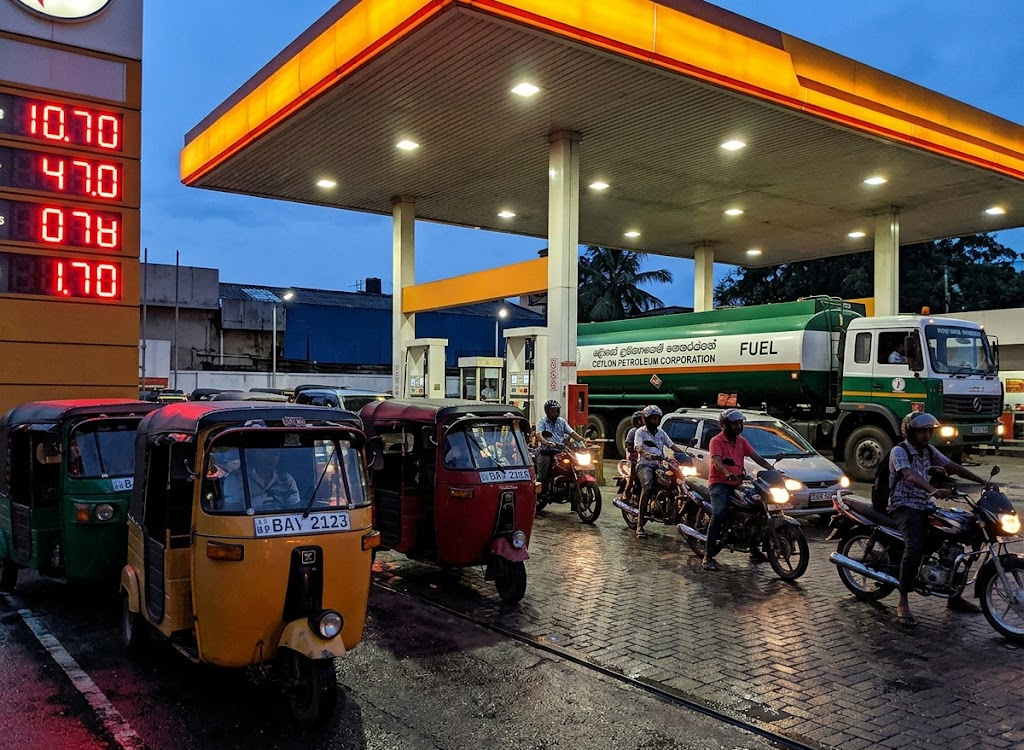
Despite government assurances over fuel availability, fears of a repeat of the 2022 economic crisis have led to panic buying and hoarding in several parts of Colombo. Authorities have responded by restricting fuel container sales and temporarily reintroducing a weekly QR code-based fuel rationing system.
To reduce dependence on traditional Persian Gulf suppliers and stabilise domestic fuel supplies, the Ministry of Energy has pursued alternative procurement arrangements, including emergency crude oil imports from Russia beginning in mid-April.
Government officials have maintained that Sri Lanka will continue to ensure uninterrupted fuel and electricity supplies despite the increased costs caused by elevated global oil prices.












Leave a comment