
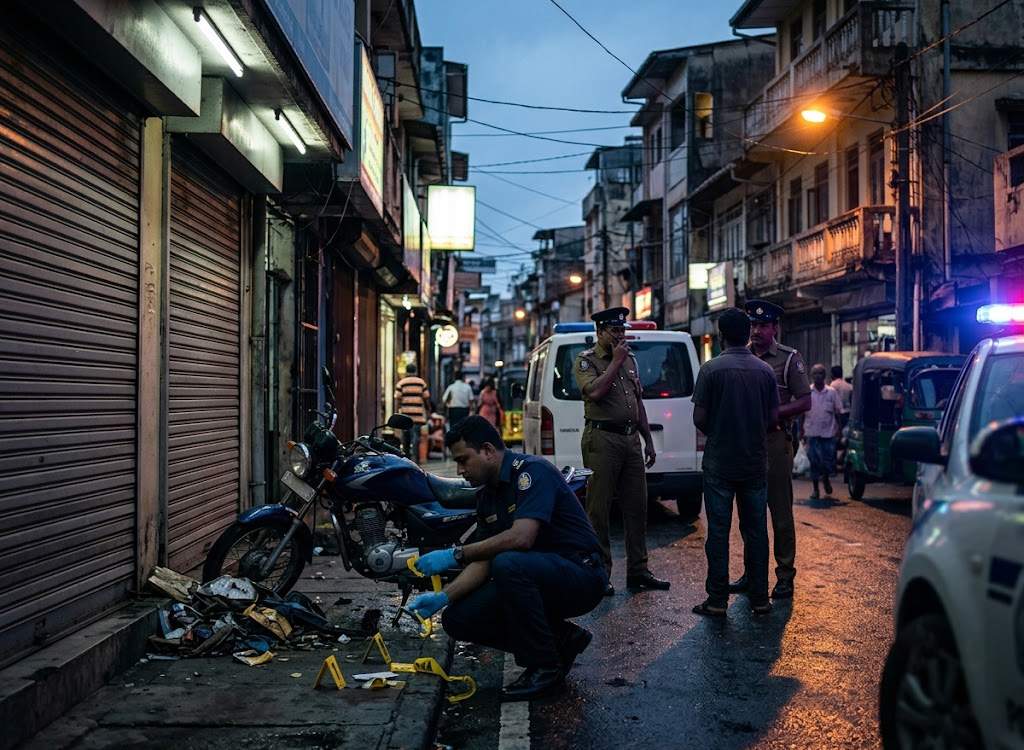
Drug offences and property crimes dominate the statistics, while crime patterns highlight the role of urban environments, opportunity and policing intensity
By The Pulseline News Desk
Sri Lanka has recorded a steady increase in reported grave crimes during the first five months of 2026, with May emerging as the most challenging month for law enforcement as the number of reported incidents climbed while the rate of cases solved by police showed a downward trend.
According to the Police Department’s latest monthly crime statistics, reported grave crimes have increased from 3,999 cases in January to 4,355 cases in May, despite a temporary decline recorded in February.
The figures show that February had reported the lowest number of grave crimes during the period, with 3,327 cases. However, incidents have risen sharply in March, reaching 4,294 cases, and had remained above the 4,000 mark in both April and May.
The increase has placed renewed focus on the nature of crime in Sri Lanka — where high-volume offences linked to drugs and property continue to account for a significant share of reported cases, while violent crimes, although fewer in number, remain a major public concern.
Drugs and property crimes drive the numbers
Among the categories recorded as grave crimes, possession of dangerous drugs had remained the most frequently reported offence during the five-month period.
Police statistics have recorded 6,094 cases involving dangerous drug possession, making it the single largest category of reported grave crime.
Property-related offences have also contributed heavily to the overall figures. Cases involving lurking house trespass, house-breaking and related offences had totalled 4,228 during the period.
Meanwhile, violent offences including murder, grievous hurt and kidnapping had accounted for 2,307 reported cases.
Sexual violence offences had also remained a serious concern, with 1,075 cases reported. This included 77 cases involving cruelty to children and abandonment of children.
The data suggest that while violent crimes often dominate public discussion due to their severity and social impact, a large proportion of reported grave crimes arise from recurring offences linked to drugs and property.
Understanding crime through the environment
Crime analysts have noted that the pattern of offences recorded during the period reflects the importance of the environments in which crimes occur.
From the perspective of environmental criminology, offences such as housebreaking and trespassing are closely connected to opportunities created by physical and social surroundings.
Neighbourhood design, lighting, surveillance, population movement, cleanliness, and the presence of people capable of intervening can influence whether a location becomes attractive for offending.
Rather than occurring randomly, many property crimes emerge when offenders encounter suitable opportunities – such as unprotected properties, limited observation and predictable routines.
This perspective shifts attention from only looking at offenders to examining the places and circumstances that allow crimes to take place.
Drug cases: A reflection of crime or enforcement?
The high number of drug possession cases requires careful interpretation.
Unlike crimes such as robbery or assault, recorded drug possession figures are influenced not only by criminal behaviour but also by police enforcement strategies.
An increase in reported drug possession cases may indicate greater availability of drugs, but it may also reflect intensified police searches, raids and targeted operations.
Therefore, the figures represent both a measure of offending patterns and the level of enforcement activity taking place across communities.
Colombo North records highest number of cases
Geographically, Colombo North has recorded the highest number of reported grave crimes during the first five months of 2026, with 1,118 cases.
The concentration of offences in the area highlights the relationship between crime and urban conditions.
Densely populated neighbourhoods, commercial activity, transport networks and constant movement of people can create environments where offenders and potential victims are more likely to come into contact.
Urban crime patterns are often shaped by these everyday interactions – where people live, work, travel and gather.
The challenge ahead
The rise in reported grave crimes presents challenges not only for policing but also for prevention strategies.
While increasing police operations may help address immediate threats, crime prevention experts have emphasised the need to understand why certain offences occur repeatedly in particular locations.
Reducing opportunities for crime may require a broader approach involving safer urban design, stronger community engagement, improved surveillance and targeted interventions in high-risk areas.
The latest figures provide a snapshot of Sri Lanka’s crime landscape during the first months of 2026. Beyond the numbers, they reveal a more complex picture – one where crime is shaped not only by individuals, but also by environments, routines and the systems designed to prevent it.












Leave a comment