
By The Pulseline News Desk
Sri Lanka’s vehicle market is bracing for another price shock after authorities removed the 15 percent valuation reduction previously applied when calculating Customs values for imported used vehicles, a move industry representatives warn will significantly increase costs for consumers.
The Vehicle Importers Association of Sri Lanka (VIASL) says the decision will lead to steep price hikes across several popular vehicle categories, potentially undermining efforts to revive the country’s vehicle import sector following years of restrictions.
Addressing the media, VIASL Vice President and spokesperson Arosha Rodrigo said the impact of the revised valuation methodology would be felt immediately in the market.
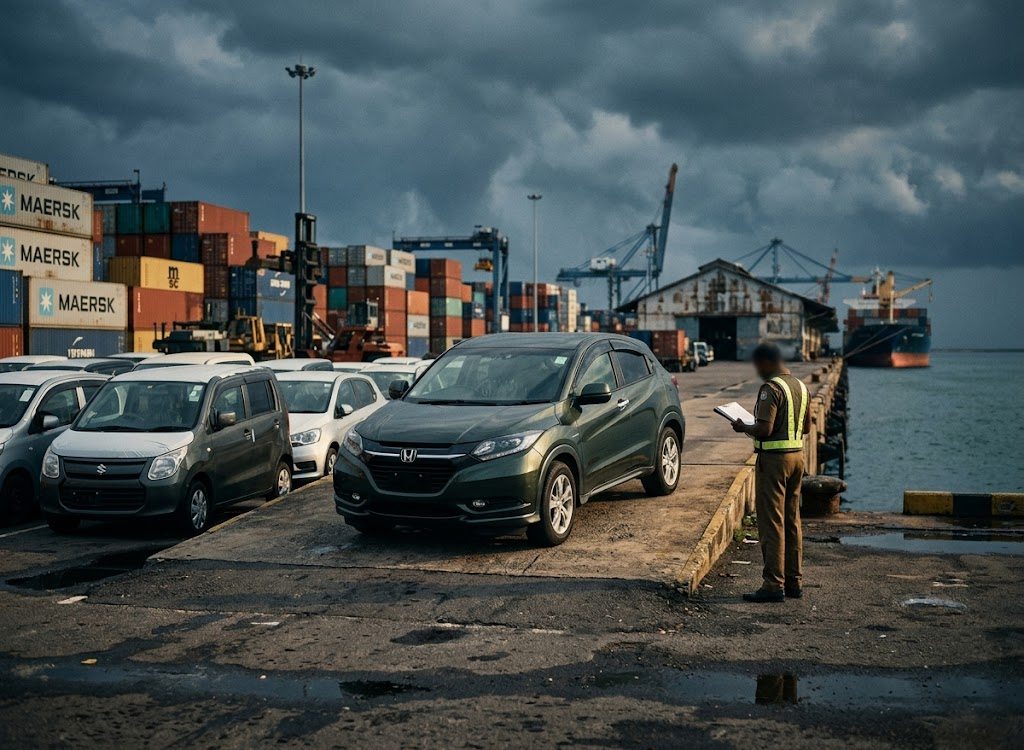
According to Rodrigo, a Honda Vezel Z Play SUV could see its price increase by around Rs. 2 million, while a Suzuki Wagon R may become approximately Rs. 700,000 more expensive.
“The increase in Customs valuations will inevitably translate into higher taxes and duties, which will ultimately be passed on to consumers,” he said.
At the centre of the debate is the methodology used to determine the Customs value of imported vehicles. Under Gazette Extraordinary No. 1971/10 dated June 14, 2016, two valuation methods were introduced. Section 1(A) applies to brand-new vehicles, while Section 1(B) governs all other vehicles, including used imports.
Authorities have maintained that the 15 percent reduction effectively functioned as a concession, allowing vehicles initially registered overseas as new vehicles to later qualify as used imports at a lower Customs value. Officials argue that this practice reduced potential government revenue by lowering the tax base on imported vehicles.
However, VIASL disputes that interpretation, insisting that the reduction was never intended as a tax concession.
The Association argues that the adjustment was introduced by the Ministry of Finance to ensure Customs valuations more accurately reflected the actual transaction values paid by importers rather than retail market prices.
According to VIASL, retail prices in exporting countries often include dealer profit margins, local taxes, showroom costs, and other overheads that do not represent the true purchase price paid in international trade. Importers frequently benefit from bulk purchasing arrangements, negotiated discounts, and wholesale rates that result in significantly lower acquisition costs.
As such, the Association contends that the 15 percent adjustment served as a practical mechanism to bridge the gap between retail-listed prices and the actual cost of procurement, ensuring that Customs valuations were based on realistic market transactions.
Industry stakeholders warn that removing the reduction will substantially increase the assessed value of imported vehicles, thereby raising import duties, excise taxes, and other charges calculated on the Customs value.
The development comes at a sensitive time for Sri Lanka’s automotive sector, which is gradually recovering after years of import restrictions imposed to preserve foreign exchange reserves during the economic crisis. While the reopening of vehicle imports has generated optimism among dealers and consumers alike, the latest valuation change is expected to dampen affordability and slow demand.
Economists note that higher vehicle prices could have wider implications beyond the automotive sector. Increased acquisition costs may lead to larger leasing requirements, higher insurance premiums, and elevated transportation-related expenses, affecting both households and businesses.
For consumers, the timing is particularly challenging. Vehicle prices remain significantly above pre-crisis levels, and many prospective buyers are already struggling with high financing costs and limited purchasing power.
VIASL has urged authorities to reconsider the decision, warning that higher Customs valuations risk making vehicle ownership increasingly inaccessible while placing additional strain on a market that is only beginning to recover.













Leave a comment