
By The Pulseline News Desk
A fresh controversy over the government’s proposed Value Added Tax (VAT) revisions on financial services has triggered a broader debate on taxation, economic recovery, and the burden placed on ordinary citizens.
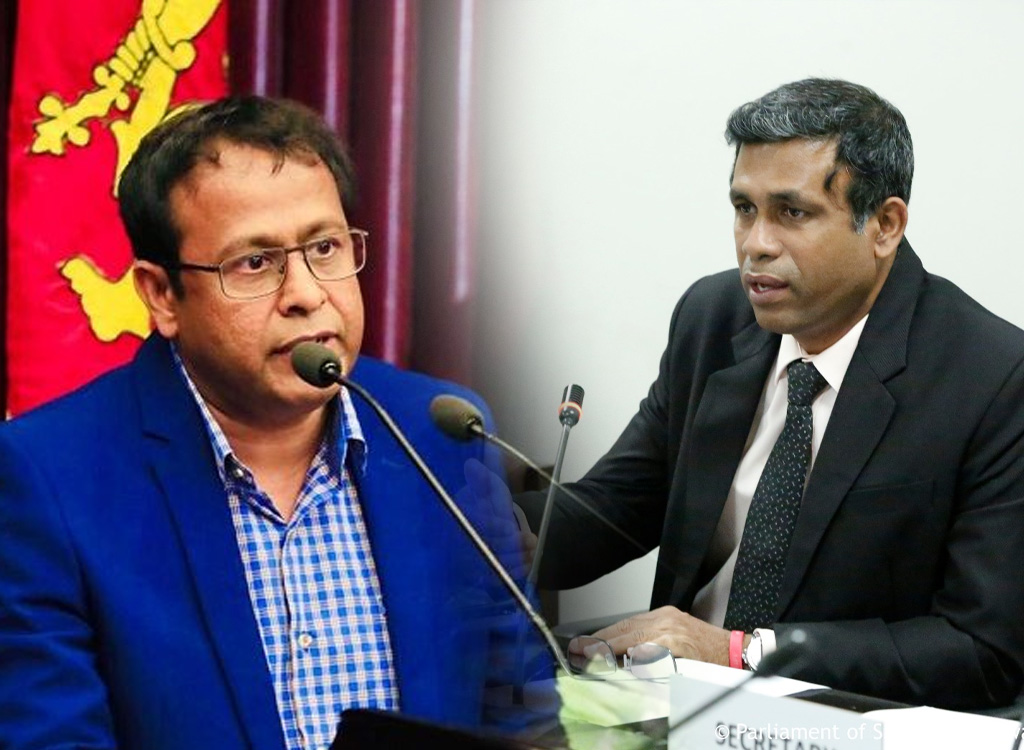
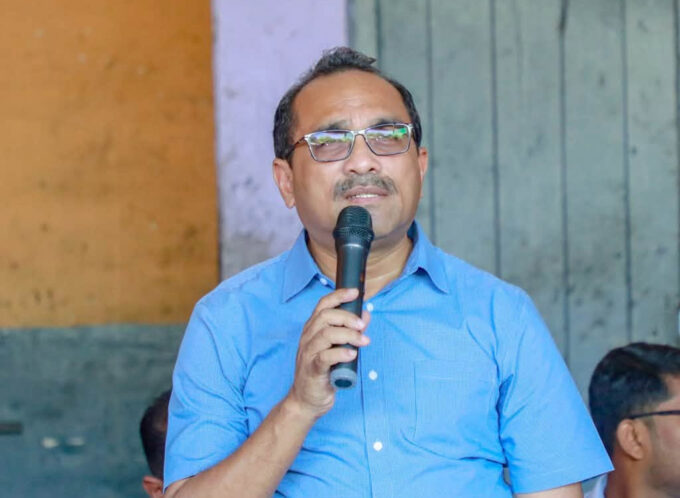
The discussion intensified after Committee on Public Enterprises (COPE) chairman Nishantha Samaraweera defended the government’s move to revise the VAT structure, arguing that stronger tax collection is essential to stabilise state finances and sustain public services, adding that the proposed VAT revision has not been increased but is a combination of the existing 18% VAT and Social Security Contribution Levy (SSCL) of 2.5%. His remarks, however, have been challenged by senior economist Prof. Prasanna Perera, who warned that increasing indirect taxes could deepen financial hardships for consumers and weaken domestic economic activity. Perera explained that the SSCL is a hybrid tax that includes both direct as well as indirect taxes and was mostly applied on letters of guarantees. “Therefore, despite the existence of a 2.5% SSCL in theory, it was not practically implemented in full by commercial banks and other financial services institutions,” Perera noted, reaffirming that the VAT rate will witness a definite increase by the government’s latest proposal.
The exchange reflects a larger national conversation over how Sri Lanka should rebuild its economy after the country’s worst financial crisis in decades.
Why VAT matters
VAT remains one of the government’s largest sources of revenue. The tax is imposed on goods and services at different stages of production and sale, with the cost ultimately borne by consumers.
Sri Lanka sharply increased its dependence on VAT following the 2022 economic collapse, when state revenue fell to critically low levels amid foreign exchange shortages, debt default, and soaring inflation. International lenders, including the International Monetary Fund (IMF), repeatedly stressed the need for stronger tax administration and broader revenue collection as part of fiscal reforms.
According to the Inland Revenue Department (IRD), VAT registration thresholds, collection procedures, and compliance systems have undergone multiple revisions in recent years as the government attempted to expand the tax base.
Government officials argue that without stronger tax revenue, the state cannot maintain public spending, debt repayments, or social welfare programmes.
Samaraweera’s defence of the proposal
Defending the proposed VAT revisions, Samaraweera reportedly stated that Sri Lanka can no longer sustain weak tax collection practices that allow large portions of the economy to remain outside the formal revenue system.
Supporters of the reforms argue that broadening VAT coverage is necessary to reduce the budget deficit and restore international confidence in Sri Lanka’s economy. They maintain that many businesses previously operating outside the VAT network must now contribute to state revenue.
The government has also linked the reforms to ongoing economic restructuring measures aimed at improving fiscal discipline and modernising revenue administration.
Finance sector analysts aligned with the reforms argue that Sri Lanka historically suffered from low tax-to-GDP ratios compared with regional economies, limiting the government’s ability to fund development and social protection.
Economist raises red flags
Perera, however, challenged that position, arguing that overreliance on indirect taxation disproportionately harms low- and middle-income groups.
Unlike income taxes, VAT affects consumers equally at the point of purchase regardless of earnings. Economists critical of VAT-heavy policies say this means poorer households spend a greater percentage of their income on taxation.
Perera reportedly warned that expanding VAT obligations for businesses could trigger higher prices for goods and services at a time when households are still recovering from inflation shocks experienced during the economic crisis.
He also questioned whether the government’s expected revenue gains would compensate for potential declines in consumer spending and reduced purchasing power.
According to critics, small and medium-sized enterprises could face additional administrative and operational burdens if more businesses are brought into the VAT system.
Historical context
Sri Lanka’s tax policy has undergone dramatic shifts over the past decade.
In 2019, sweeping tax cuts introduced by the then-government significantly reduced VAT rates and removed many taxpayers from the system. Economists later identified those reductions as one of several factors that weakened state revenue ahead of the financial crisis.
After the 2022 collapse, authorities reversed course, reintroducing higher VAT rates and broadening tax collection under IMF-backed reform programmes.
The debate surrounding the latest VAT proposal therefore reflects deeper political divisions over how economic recovery should be managed, whether through aggressive revenue generation or through policies focused more heavily on consumer relief and growth stimulation.
Political and social implications
The controversy has also become politically sensitive because VAT directly affects the cost of living.
Consumer organisations and trade groups have repeatedly warned that tax increases eventually translate into higher retail prices, affecting food, transport, healthcare, and essential services.
Government supporters counter that without stable revenue, Sri Lanka risks returning to severe fiscal instability, currency pressure, and shortages experienced during the crisis years.
Analysts say the challenge for policymakers lies in balancing fiscal consolidation with economic recovery – a difficult task for any administration attempting to rebuild public finances while protecting vulnerable groups.
What happens next
The proposed VAT amendments are expected to be debated further in Parliament in the coming weeks. The outcome could influence not only government revenue targets but also broader public confidence in the country’s economic recovery programme.
As policymakers, economists, and business groups continue to clash over the issue, the VAT debate is rapidly evolving into a wider test of Sri Lanka’s post-crisis economic strategy.









Leave a comment