
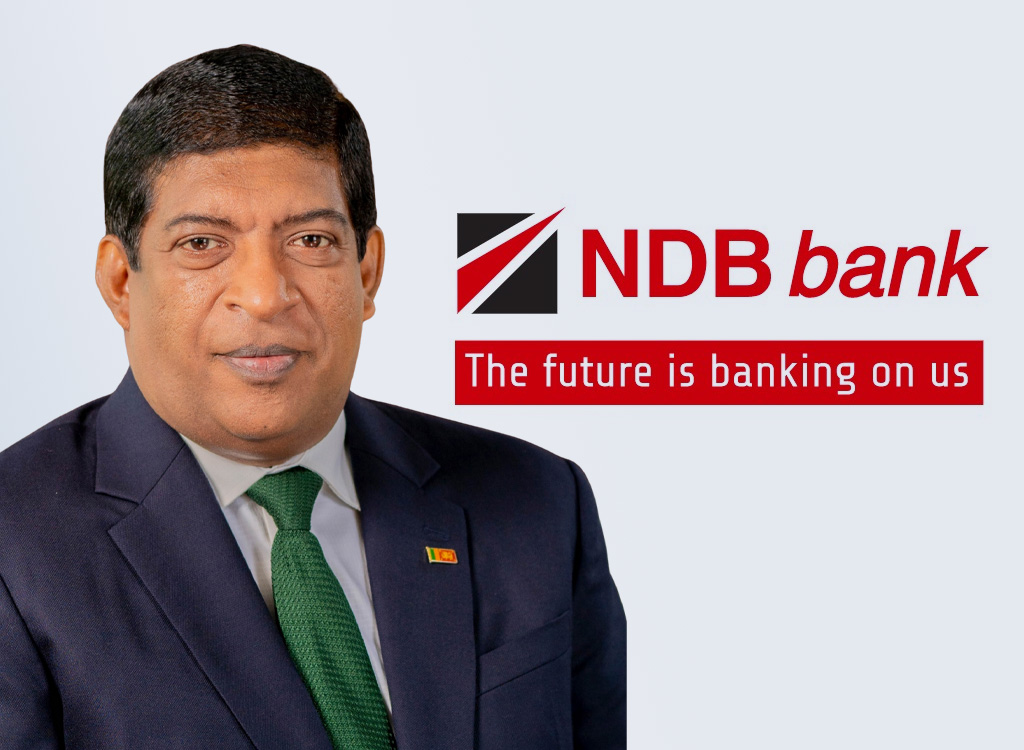
A major alleged financial fraud involving Rs. 13.2 billion at NDB Bank has sparked fresh political scrutiny, with opposition member of parliament (MP) Ravi Karunanayake raising concerns in Parliament over what he described as prolonged regulatory failure and weak financial oversight.
Calling the issue one of “grave national importance,” Karunanayake questioned how such a large-scale irregularity could go undetected for over three years, warning that the matter raises serious doubts about the integrity of Sri Lanka’s financial system.
Questions over regulatory oversight
At the center of the criticism is the Central Bank of Sri Lanka (CBSL), particularly its Bank Supervision Department. Karunanayake asked why regulators failed to detect or act on warning signs despite their statutory responsibilities.
He revealed that at least two banks had reportedly flagged suspicious transactions to the Financial Intelligence Unit (FIU) nearly 16 months before the fraud became public. However, he questioned why those alerts were not acknowledged or acted upon under Anti-Money Laundering and Countering the Financing of Terrorism frameworks.
Payment system under scrutiny
The MP also raised alarm over the reported volume of transactions, more than 2,700 conducted via the Common Electronic Fund Transfer system. He questioned whether national payment infrastructure, including LankaPay, failed to trigger red flags.
His concerns point to a broader issue: whether real-time monitoring and reconciliation systems were functioning effectively, or whether critical safeguards were bypassed.
Wider financial exposure
Karunanayake called for clarity on whether other banks or non-bank financial institutions were exposed, and what the total systemic risk might be. He also pressed for answers on whether any funds had been transferred overseas or converted into cryptocurrency, raising questions about exchange control compliance and recovery efforts.
The potential fallout extends beyond the banking sector. The MP sought details on dividend losses and their impact on major institutional stakeholders, including the Employees’ Provident Fund, the Employees’ Trust Fund, and the Sri Lanka Insurance Corporation.
Market impact and fiscal concerns
The disclosure of the alleged fraud has also raised concerns about investor confidence. Karunanayake questioned the decline in the bank’s share price and overall market capitalisation, asking authorities to quantify the total loss in market value.
He further urged the government to estimate the broader fiscal impact, including potential tax losses and issues related to recovery or non-collectability of funds.
Background: A test for financial governance
Sri Lanka’s banking sector has long been regarded as relatively stable, even amid economic turbulence. However, the scale and duration of the alleged fraud at NDB Bank threatens to undermine that perception.
The case comes at a time when the country is still rebuilding confidence following its economic crisis, with regulators under pressure to strengthen compliance, transparency, and risk management frameworks.
Financial crimes involving digital transactions and complex fund flows have become increasingly difficult to detect without robust real-time oversight. Experts note that effective coordination between banks, regulators, and intelligence units is critical to preventing such incidents.
A defining moment
Karunanayake’s intervention has intensified pressure on authorities to provide answers, not only about how the alleged fraud occurred, but also about whether systemic weaknesses allowed it to persist.
As investigations continue, the case is shaping up to be more than a single banking scandal. It is emerging as a broader test of accountability, regulatory effectiveness, and the resilience of Sri Lanka’s financial system.













Leave a comment