
By Rohan Samarajiva
Mangala Samaraweera passed away in 2021. Had he lived, he’d be 70 on the 21st of April.
What is the measure of a politician? What people say at the funeral and in eulogies that only highlight positives? It seems that what would matter more is what they’d say years later. Would they still remember? Would there be anything to talk about five or ten years later?
Not having conducted a survey, I only have anecdotal evidence about Mangala. On Monday, I was talking to a colleague about the serious quality of service problems in our telecom networks. It’s not simply about call drops and poor sound or data quality. It’s also about the networks going down for days after Ditwah, when people needed to communicate the most. Good things that happened when Mangala was Minister of Telecom were mentioned.
But so was the pernicious tower tax that was imposed during his tenure as Minister of Finance. I recall criticizing it when the budget was presented in 2017:
The tower levy is unlikely to result in the quick consolidation of antennas to fewer towers because tower sharing is already in happening and in most cases, mounting additional antenna on existing towers is not practical because of the weight they (or the underlying structures) are designed to carry. So all that will happen is the shutting down of marginal towers harming quality of service in the cities and loss of service in some rural areas.
I was hoping that good sense would prevail and the proposal would die a quiet death like most budget proposals. But they went ahead and implemented it.
I was proved right by the children climbing trees to catch a signal during the COVID 19 lockdowns. But it took the preparations for the loans being taken from the ADB and the World Bank to prod the government (the third since Mangala served as Minister of Finance) to partially roll back this tax. That was the second mention of Mangala. One who gets things done (including new taxes), gets some things wrong. They’ll talk about the good things as well as the mistakes.
A do-nothing politician would not be talked about. One who does nothing makes no mistakes.
So many times, Mangala’s name was mentioned repeatedly in the course of getting the Sri Lankan economy out of the crisis it was pushed into by the tax cuts promised in the Gotabaya Rajapaksa manifesto and implemented post-haste. The day the manifesto was made public in October 2019, he called a press conference and sent out this memorable tweet:
Gota’s tax plan wants to set #SriLanka on an Express Train to bankruptcy, default and a Greek style debt-crisis. VAT change alone equivalent to Health, Defence or Pensions budgets. #LKA certainly doesn’t need advice from a PR agency conjured ‘business community’.
No one talks now about how wrong he was to slow down the economy by enforcing fiscal discipline and producing a primary account surplus after many years. As the IMF said:
Historically, Sri Lanka has only had a primary surplus on three occasions, and never for more than two years; and fiscal consolidation efforts in Sri Lanka’s past IMF-supported programs were quickly reversed after the program.
The Viyath Maga pundits who lambasted Mangala have gone quiet on the aftermath of the crisis they created. Now, there is widespread agreement about the necessity of taxes and maintaining a primary surplus. Unless there is a primary surplus the debt will continue to grow. One could give Mangala some credit for taking the punishment for pushing this eminently reasonable proposition in a country where reasonableness is punished and profligacy is rewarded.
I believe that the time has passed for the fuel-price-setting formula after entry to the fuel distribution market was liberalized. But it was needed when Ceypetco was the dominant firm and LIOC was meekly following the market leader’s pricing.
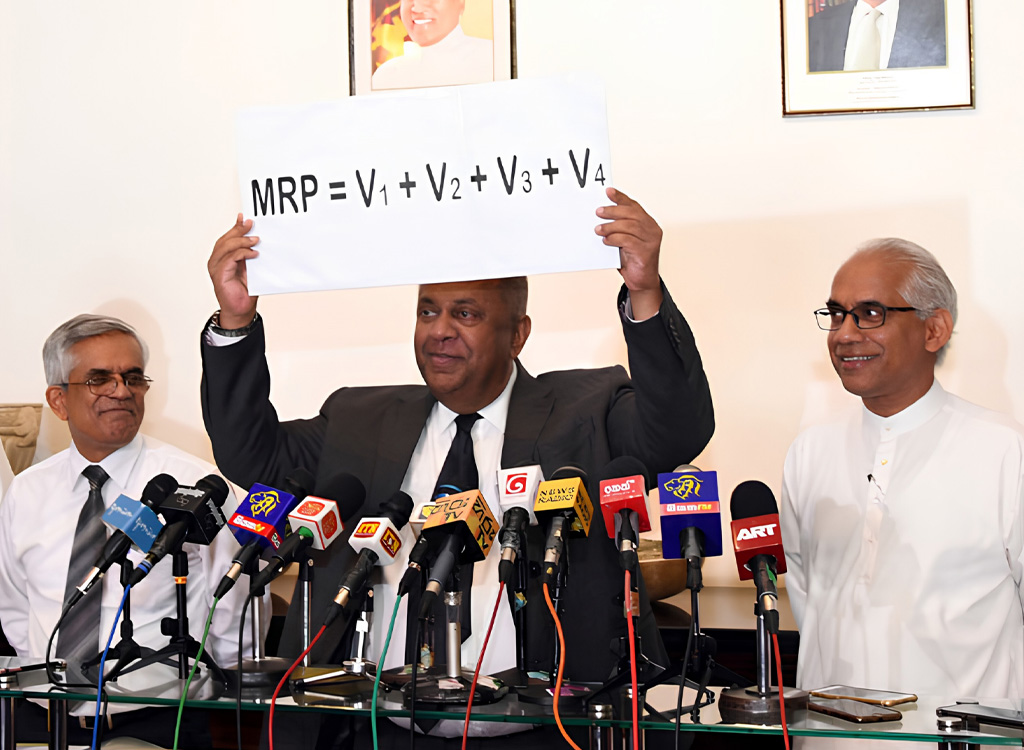
The fuel-price formula was a campaign promise of the Common Candidate who defeated Mahinda Rajapaksa in 2015. Yet it took Mangala to implement it. The image of him holding up a banner with the formula lives in people’s minds.
He was derided then, but now there is considerable support for the formula. It was an essential instrument in bringing government expenditures under control. Even as the market is liberalized, it is important to ensure that Ceypetco does not sell below what it pays when importing fuel.
So, it can be seen that Mangala Samaraweera mattered. He was the kind of politician Sri Lanka needs in these bleak times. He is remembered and missed.
Disclaimer: The views and opinions expressed in this article are those of the writer and do not necessarily reflect the official position of this publication.









Leave a comment