
By Chanakya
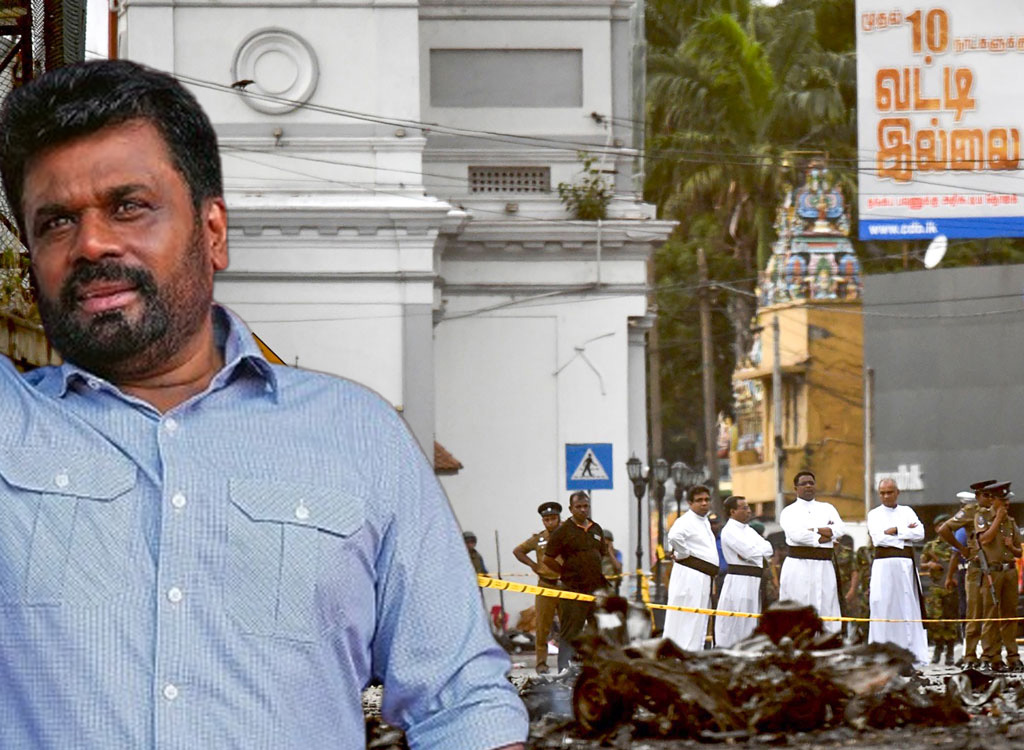
Seven years after the horror of the Easter Sunday attacks, Sri Lanka finds itself caught between remembrance and reckoning. The coordinated bombings that tore through churches and hotels on that April morning in 2019 were not only acts of terror — they were an assault on the nation’s conscience. Yet, as another anniversary passes, the deeper wound lies in what has not followed: justice that is credible, complete, and convincing.
For the families of the victims, time has not healed; it has hardened questions. Investigations have come and gone, commissions have produced reports, and officials have made assurances. But the central demand — accountability that reaches beyond the foot soldiers of terror to those responsible for the failures that enabled it — remains unmet. The result is a lingering sense that the truth has been approached, but never fully confronted.
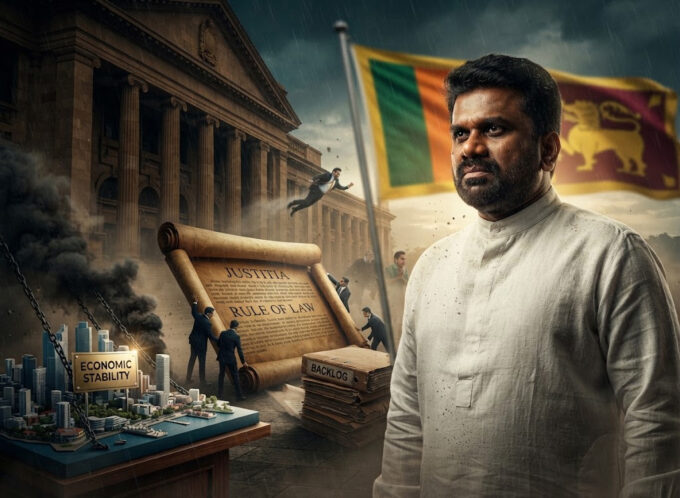
This unresolved reality is now placing growing pressure on the current administration led by President Anura Kumara Dissanayake (AKD) and his Janatha Vimukthi Peramuna (JVP)-led National People’s Power (NPP) government. Having come to power on a platform that emphasized transparency, accountability, and a break from the evasions of the past, the government now faces a defining test: whether it can translate its pledges into action on one of the country’s most painful chapters.
The expectations are not abstract. They are grounded in explicit promises to revisit unresolved investigations, pursue those who may have evaded scrutiny, and ensure that political influence does not obstruct justice. In many ways, the credibility of the present government is now intertwined with its handling of the Easter Sunday attacks. Failure to deliver would not simply be another instance of institutional delay — it would risk reinforcing the very culture of impunity the administration claims to oppose.
At the same time, the government faces a complex landscape. The case itself is layered with intelligence failures, contested narratives, and allegations that reach into sensitive political territory. Pursuing accountability in such an environment demands not only political will but institutional independence and public transparency. Anything less risks deepening skepticism rather than restoring trust.
The stakes extend beyond the immediate question of justice. The Easter attacks were intended to fracture Sri Lanka along religious and communal lines. While the country has shown resilience, the absence of accountability continues to cast a shadow over that unity. Justice, in this context, is not only about punishing wrongdoing — it is about reaffirming a national commitment to truth, fairness, and coexistence.
Seven years after the carnage of the Easter Sunday attacks, one voice has remained unwavering in its demand for truth and accountability: that of Malcolm Ranjith and the Catholic Church in Sri Lanka. While governments have shifted, investigations have stalled, and public attention has ebbed and flowed, the Church’s position has not softened. If anything, it has sharpened with time.
From the outset, Cardinal Ranjith has framed justice not as a political bargaining chip but as a moral imperative. His calls have gone beyond the prosecution of those who carried out the barbaric attacks; they have consistently pointed to the need to uncover the full chain of responsibility — those who planned, enabled, or failed to prevent the tragedy. In doing so, he has articulated what many victims’ families have long felt: that the truth remains incomplete, and that partial accountability is no accountability at all.
This sustained pressure has kept the issue alive in the national consciousness. In a political culture where crises are often overtaken by new controversies, the Church has refused to allow the Easter Sunday attacks to fade into the background. Commemorations have become more than acts of remembrance; they are platforms for renewed demands, reminders that justice delayed is justice denied.
For the Cardinal and the Church, this is not a matter of political allegiance. Their stance has been consistent across administrations, critical of any government that appears to fall short of genuine accountability. This consistency has lent their demands a degree of moral authority that is difficult for any ruling party to dismiss. It also raises the stakes for the present leadership: failure to act decisively risks not only political criticism but a deeper erosion of public trust.
Seven years is long enough for grief to demand answers. The passage of time can no longer be an excuse for inaction. For the victims and their families, justice delayed has already been justice diminished. For the government, the moment is one of decision: to honour its promises and confront the past with clarity, or to allow yet another anniversary to pass with unfulfilled words.
Sri Lanka cannot afford the latter.
Disclaimer: The views and opinions expressed in this article are those of the writer and do not necessarily reflect the official position of this publication.










Leave a comment