
By Dinesh Weerakkody
On 4 July 2026, the United States (US) commemorates a remarkable milestone: 250 years as a constitutional republic. For Sri Lanka – a civilization with more than two millennia of recorded history – this may seem a relatively youthful tenure. Yet in just 2.5 centuries, the United States has risen to become the world’s largest economy and the pre-eminent hub of innovation, entrepreneurship, and higher education, setting the global benchmark for opportunity.
This trajectory is not accidental. It is the product of a deliberate national creed—one that prizes individual liberty, rewards risk-taking, and attracts the world’s brightest minds. America’s genius lies not merely in its scale, but in its openness: millions of immigrants, drawn by the promise of self-determination, have fuelled an economic engine unmatched in modern history.
From Silicon Valley to Wall Street, from biotechnology to aerospace to AI, and from Harvard to Stanford, American institutions and enterprises have not only shaped industries but also redefined the boundaries of human progress. It is telling that the United States has produced more billionaires than any other nation. Yet the deeper measure of its success lies in the ecosystem that sustains this wealth: world-class research universities, deep and liquid capital markets, a culture that normalises failure as a stepping stone to success, and sustained public investment in research and development – often treated as a bipartisan priority. Together, these elements form the infrastructure of enduring competitive advantage.
US -Sri Lanka relations
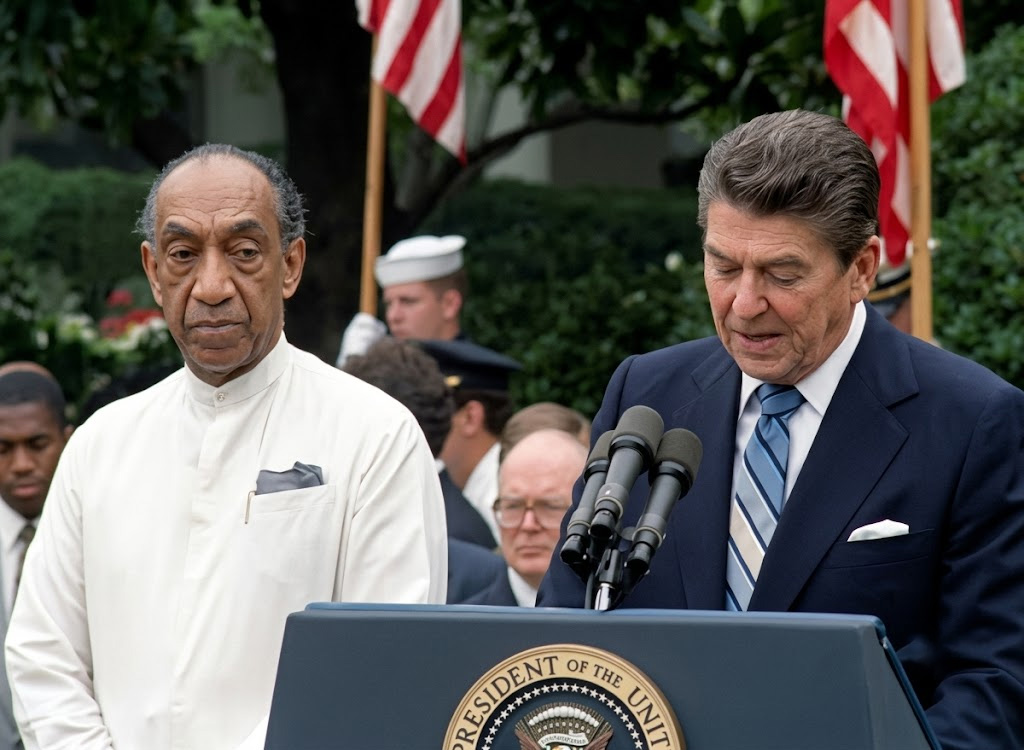
Sri Lanka’s diplomatic engagement with the United States spans more than seven decades – a partnership that has steadily matured across trade, education, development cooperation, and people-to-people exchanges. High-level political engagement has given the relationship added depth and texture. President J.R. Jayewardene’s (JRJ’s) historic visit to the White House remains a defining moment, symbolising mutual respect and goodwill, and is often remembered for the memorable occasion when Frank Sinatra sang “My Way” in his honour at a White House State Dinner. President JRJs 1984 visit was particularly significant, marking the first official State Dinner attended by a Sri Lankan Head of State. During discussions with President Ronald Reagan, the two leaders reaffirmed shared democratic values and explored avenues for strengthened cooperation, including investment-related understandings. More recently, President Ranil Wickremesinghe’s two visits to the White House have underscored the continuing importance of sustained high-level dialogue between the two countries. Today, the United States stands as Sri Lanka’s largest export destination, sustaining hundreds of thousands of livelihoods – particularly in the apparel sector – and anchoring a commercial relationship that delivers clear and tangible mutual benefit. Yet the horizon offers even greater potential for deepening this partnership with Technology exports and services.
Diplomats who strengthened the relationship
Several distinguished ambassadors on both sides have helped shape and sustain Sri Lanka-United States relations over the decades. On the Sri Lankan side, Sir Claude Corea and Neville Kanakaratne brought intellectual depth and steady diplomacy during the 1970s, strengthening engagement at a time of significant global geopolitical shifts. In more recent years, Mahinda Samarasinghe, a senior political leader and former minister, added strong political weight and direct access at the highest levels of the U.S. Government. Earlier, career diplomats such as Dr Ananda Guruge and Dr Jayantha Dhanapala further reinforced Sri Lanka’s multilateral engagement and continuity in bilateral diplomacy.
On the United States side, ambassadors such as James William Spain and Robert O. Blake Jr. played particularly influential roles, focusing on democratic governance, economic ties, and development cooperation during periods of complex political transition in Sri Lanka. They were followed by other key envoys, including Michele J. Sison, Atul Keshap, and Julie Chung, who in particular helped expand commercial, developmental, and strategic cooperation during a very challenging period for Sri Lanka. Collectively, these ambassadors have been central to deepening trust, managing challenges, and steadily expanding a partnership that remains anchored in trade, development, and long-standing political engagement.
Opportunities
A comprehensive Free Trade Agreement (FTA) between Colombo and Washington warrants serious consideration. Such an accord could deepen market access, catalyse foreign direct investment, diversify supply chains, and accelerate technology transfer – while reinforcing Sri Lanka’s competitiveness in a fragmenting global order. It would also signal Sri Lanka’s commitment to high-standard, rules-based trade at a time when such commitments are increasingly under pressure. As the United States marks its semiquincentennial, it reaffirms the values that have defined its ascent: innovation, enterprise, freedom, openness, and resilience. For Sri Lanka, this anniversary is not merely ceremonial – it is an invitation to recalibrate and elevate a partnership of strategic consequence. Seven decades of friendship provides a strong foundation for the next chapter. That chapter must be grounded in deeper economic integration and shared ambition, promising to be even more rewarding for both nations. Looking ahead, the United States will also need to continuously renew its sources of competitiveness to maintain its global leadership, even as China and India advance strongly across multiple domains in which the United States has long set the benchmark.
References
- https://www.state.gov/u-s-relations-with-sri-lanka/
- https://www.presidency.ucsb.edu/documents/toasts-president-reagan-and-president-jr-jayewardene-sri-lanka-the-state-dinner
- .: https://www.isas.nus.edu.sg/papers/human-rights-geopolitics-and-national-priorities-managing-fluctuations-in-us-sri-lanka-relations/
- https://www.ft.lk/columns/Julie-Chung-made-diplomacy-meaningful/4-786749
Disclaimer: The views and opinions expressed in this article are those of the writer and do not necessarily reflect the official position of this publication.









Leave a comment