
By Rehana Thowfeek
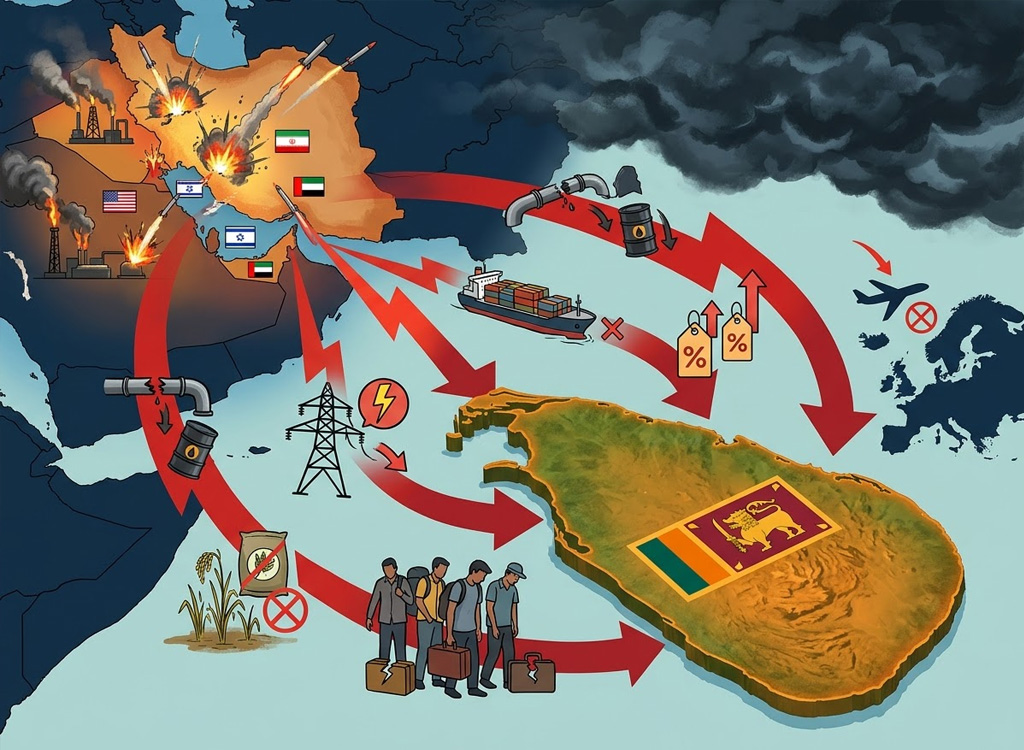
The depth and persistence of any impact will depend on how long the war will go on for and how much it will escalate in terms of regions. However, there is a significant impact on global supply chains due to the war and the closure of the Strait of Hormuz, a critical maritime chokepoint (about 38% of crude oil, 29% of LPG and 19% of LNG pass through the strait). The impact on Sri Lanka also depends on where we are sourcing our imports. I put together the top five import source markets (based on 2025 import data) for oil, coal, gas and fertilizer to get an idea of the potential impact on Sri Lanka.
Fuel
38% of oil is imported from UAE. There will be a significant impact on supply as UAE has reduced its production of oil and are also unable to get any shipments of oil out due to the closure of strait. 2 of UAE’s oil terminals have been affected by bombardments. Supply chain disruptions increased oil prices to record highs. Sri Lanka’s CPC says we have 1 month of stocks in storage.
Electricity
In Feb 2026, about 20% of electricity was generated from thermal oil – so electricity prices and generation will also be affected. One good thing is that we will be going into our monsoon season in May, and we tend to generate more from hydropower during this season. About 31% of electricity is generated from thermal coal, and we buy 93% of coal products from Russia. It is not directly in the conflict zone, however, there will be a surge in demand for coal as a substitute for oil, affecting prices.
53% of our gas is imported from Oman, 17% from UAE and 11% from Saudi Arabia. While Oman is not facing direct attacks and they have ports which do not need to cross the Strait, they are geographically close to the war and their ability to get their shipments out may be affected. Prices will also be affected due to the supply shortage and higher insurance premiums. Another 30% of gas comes to SL from Iraq, which cannot pass the Strait of Hormuz if the closure persists, so we may face a supply crunch. We are already facing a bit of shortage of gas due to reasons unrelated to the war.
Food prices
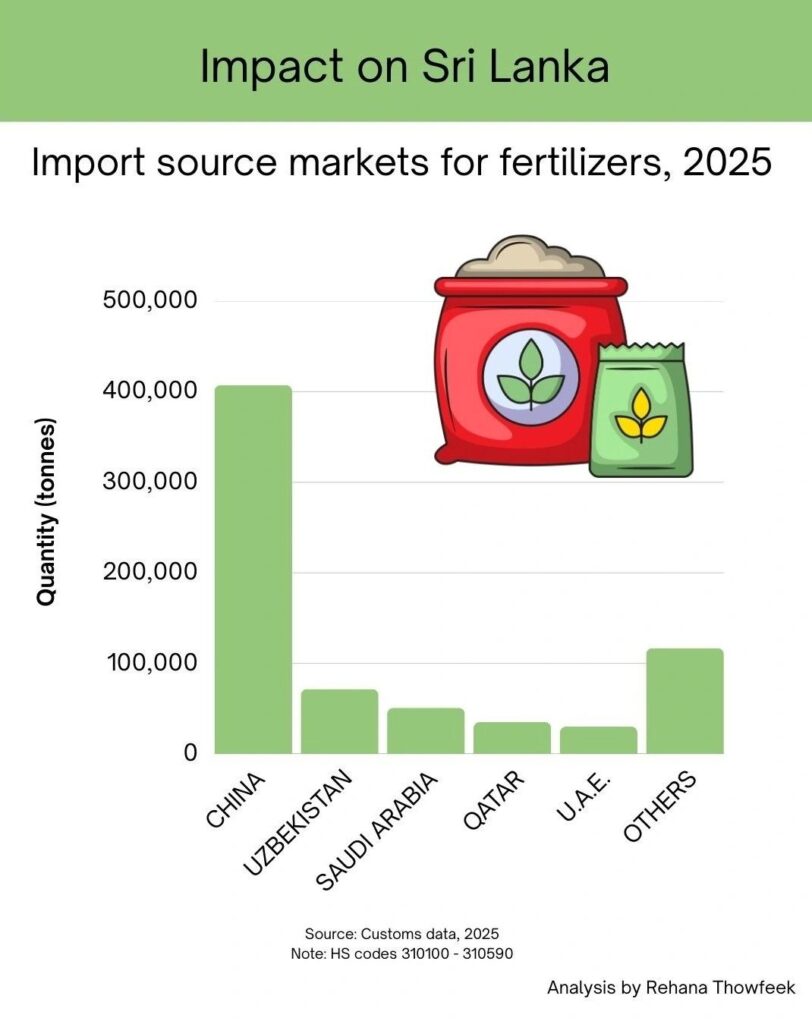
Typically, when gas prices go up, food prices also go up. 57% of fertilizer brought to Sri Lanka is imported from China, 10% from Uzbekistan – they are not in the direct zone of conflict. But 22% of fertilizers coming to Sri Lanka are from the Middle East nations. Again, however, due to supply chain disruptions, there will be an effect on prices which will have a cascading impact on food supply and price levels.
Worker remittances are a top source of forex inflows into the country. Kuwait, Saudi Arabia, UAE and Qatar are among the top five sources of worker remittance inflows – in 2025 they accounted for 38% of total worker remittance inflows. Tourism earnings will also face adversity due to flight cancellations and the closure of airspaces and the general heightened risk of travelling – especially from the EU markets.
Inflation
Inflation has been relatively low in Sri Lanka for the past two years, under 2% and sometimes even going into negative territory. However, given the major supply chain disruptions and the rising prices of oil and gas, there will be cascading effect on prices and the cost of living. The persistence of the impact will depend on the length and intensity of the war. Although we are facing low inflation at the moment, we are also still experiencing the domestic supply shock caused by Cyclone Ditwah (food production and prices). I think we must take proactive measures to mitigate this major impact we are seeing on global supply chains. We can’t be blindly optimistic; it is better to be prepared rather than to be caught off-guard.
Disclaimer: This post is not meant to cause panic, but merely to lay down the data to inform better decision making. This is also a personal opinion.






Leave a comment