
By Vox Civis
The other day Cabinet Spokesman Nalinda Jayatissa made what he described as a plea to the political class and the public alike. This, he said, was not the time to settle political scores, nor the time for political jokes. It was an appeal for restraint at a moment when the global environment is growing increasingly volatile. Yet the uncomfortable truth is that appeals for restraint are seldom effective when the conduct of those in power invites suspicion, confusion, and speculation.
The reality confronting the government today is that the manner in which it has handled the unfolding situation has itself created the conditions for rumours, doubts, and political confrontation to flourish. When governments appear uncertain about their own policies, when international agreements are reportedly signed in secrecy, and when requests for transparency through institutions such as the Right to Information Commission are ignored or refused, it becomes difficult to expect silence or unquestioning patience from the public.
Opposition voices argue that the government appears to be navigating events without a coherent plan or clear policy direction. According to them, even senior figures within the administration seem to possess limited knowledge of agreements that have been signed with foreign powers behind closed doors. In a democracy that has only recently emerged from one of the most traumatic economic crises in its history, such opacity is bound to be dangerous.
Public trust
Before calling upon citizens to behave responsibly, the opposition argues, it would be wise for the government to demonstrate responsibility in its own dealings with the people. Public trust cannot be commanded; it must be earned through transparency, accountability, and honesty.
Ironically, the current discomfort with political satire and criticism carries a certain historical irony. For decades, the very political movement now calling for restraint – the Janatha Vimukthi Peramuna (JVP) – was among the most enthusiastic practitioners of political ridicule in Sri Lanka. Its rallies, pamphlets, and political campaigns frequently relied on sharp satire directed at its opponents. Today, when ordinary citizens employ the same tools of mockery and criticism against those now in power, the response has been one of visible irritation.
Politics, however, rarely allows selective sensitivity. Those who spend years sharpening the tools of political ridicule cannot reasonably complain when those tools are turned against them.
There is also a deeper memory that many Sri Lankans have not forgotten. During some of the most difficult moments in recent economic history such as when the country’s financial system was collapsing and foreign exchange reserves were vanishing, voices within the JVP openly called upon Sri Lankans living abroad to refrain from sending dollars back home. The argument then was political; the consequences, however, were economic and national.
Today, when the same political actors lament the fragile state of the economy and warn of external threats, many citizens cannot help recalling those earlier calls that risked accelerating the financial collapse of the state. Yet dwelling on past grievances may serve little purpose now. The consequences of those political choices are already embedded in the present with Sri Lanka still struggling to rebuild the economy that nearly imploded in 2022.
It is precisely at such a vulnerable moment that the island finds itself drawn into the geopolitical tremors of a rapidly expanding conflict in the Middle East. For Sri Lanka, this is not a distant war playing out on television screens. The island sits strategically along one of the most important maritime arteries in the world; the shipping corridor linking Europe, the Middle East, and East Asia. A significant portion of the world’s oil trade passes through waters not far from Sri Lanka’s shores. Geography alone ensures that the island cannot remain entirely insulated from global conflict.
A delicate and complicated situation
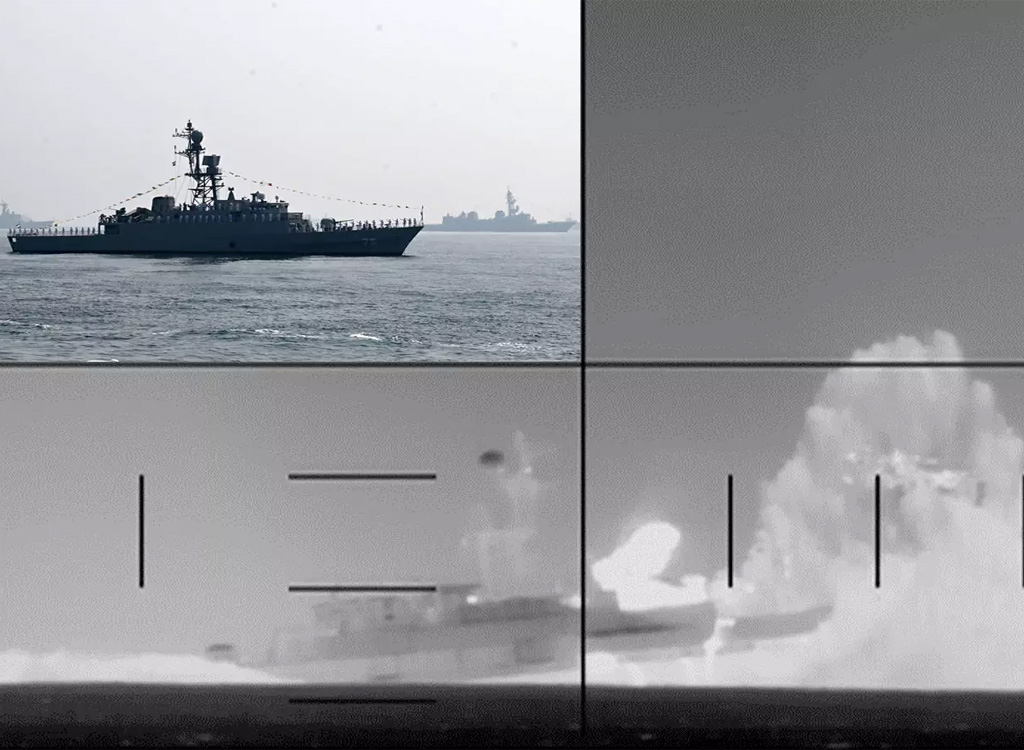
The situation has become particularly complicated following the sinking of an Iranian naval vessel within Sri Lanka’s Exclusive Economic Zone after an attack by a United States submarine. The incident has placed Colombo in an extraordinarily delicate diplomatic position.
Sri Lanka maintains cordial relations with all the principal actors in the unfolding drama. It has longstanding ties with Iran, a relationship historically strengthened through energy cooperation and the well-known “fuel for tea” arrangement. It maintains strategic partnerships with India, China, and the United States, each of whom now occupies a prominent place in the widening geopolitical contest across the Indian Ocean. When a military incident involving two of those powers occurs within the maritime zone associated with Sri Lanka, the consequences are inevitable.
The opposition has already begun raising uncomfortable questions in Parliament, the thrust being that military activity within Sri Lanka’s Exclusive Economic Zone raises serious questions about national sovereignty. An EEZ exists primarily for economic activity, not as a theatre for military confrontation, it was pointed out
The United National Party (UNP) has also asked whether Washington informed Colombo before carrying out the operation that sank the Iranian vessel. If the government had prior knowledge, the public deserves to know. If it did not, the implications for Sri Lanka’s sovereignty are equally troubling.
Former Foreign Secretary Ravinatha Aryasinha offered a sobering perspective during the launch of the National Security Strategy for Sri Lanka 2026. Reflecting on earlier debates about signing a Status of Forces Agreement (SOFA) with the United States, he remarked that the country should be grateful that such an agreement was never concluded. A SOFA, he reminded audiences, would have granted foreign military personnel significant legal privileges within Sri Lankan territory. In the context of recent events, that restraint now appears prudent.
Former Indian Foreign Secretary Kanwal Sibal has suggested that the Iranian vessel targeted in the attack would not even have been present in these waters had it not been invited to participate in India’s MILAN naval exercise. That revelation raises uncomfortable questions about how a multinational military exercise could become entangled in a much larger geopolitical conflict.
The Iranian Foreign Minister Abbas Araghchi has insisted that the vessel was unarmed and carrying training personnel. According to Iranian statements, the attack therefore constitutes a violation of international law and could amount to a war crime. Meanwhile Sri Lanka’s own Foreign Minister Vijitha Herath has reportedly spoken directly with his Iranian counterpart, expressing concern over the escalation and emphasizing the importance of diplomatic dialogue.
Importance of non-alignment
The diplomatic tightrope Colombo must now walk is extremely narrow. On one side lies the need to maintain good relations with powerful partners such as the United States and India. On the other lies the obligation to respect international law and preserve Sri Lanka’s longstanding tradition of non-alignment.
History offers an important lesson here. Small states rarely survive by choosing sides in great power conflicts. Their security lies in prudence, neutrality, and careful diplomacy. Sri Lanka has neither the military power nor the economic resilience to withstand the consequences of entanglement in a geopolitical confrontation between major powers. The wiser course is therefore clear: stay out of the fight. That principle is not merely diplomatic theory but economic necessity.
The economic shockwaves of the expanding conflict are already reaching Sri Lanka’s shores. Global oil prices have risen sharply following disruptions to energy markets. Any prolonged closure of strategic waterways such as the Strait of Hormuz would send fuel prices soaring worldwide – an outcome that Sri Lanka, with its fragile foreign exchange position, can ill afford.
Tourism, one of the country’s most vital sources of foreign currency, is also at risk. A significant proportion of visitors travel to Sri Lanka through Middle Eastern transit hubs such as Dubai and Doha. Even a temporary closure of regional airspace can result in massive losses in tourism revenue.
The tea industry faces a similar threat. More than half of Sri Lanka’s tea exports are destined for markets in the Middle East and North Africa. If the conflict disrupts trade routes or financial transactions, the consequences for rural livelihoods could be severe.
Remittances from Sri Lankan workers in the Gulf region represent another critical pillar of the economy. Any instability affecting those labour markets would directly reduce foreign currency inflows.
Shipping insurance costs are already expected to rise following the naval incident near Sri Lanka. Increased insurance premiums translate into higher shipping costs, which in turn raise the price of imported goods. Ultimately, it is the ordinary consumer who bears the burden through a higher cost of living. These economic realities underline the fact that Sri Lanka cannot afford strategic miscalculations.
Difficult times ahead
The government must therefore approach the situation with foresight and transparency. Difficult decisions may have to be taken in the months ahead. Energy procurement strategies may need revision. Alternative markets for exports may need to be explored. Contingency plans for tourism and remittance disruptions must be developed. Above all, the government must take the public into its confidence.
One of the central lessons of the 2022 economic collapse was the danger of secrecy and delayed decision-making. Policies were concealed, warnings ignored, and corrective action postponed until the crisis became unavoidable. Sri Lanka cannot afford to repeat those mistakes.
If agreements have been signed with global powers such as India, China, or the United States that could influence the country’s strategic position in the current conflict, their contents should be made public. Transparency is not merely a democratic virtue; it is also a tool for building national consensus during moments of uncertainty. For a small island state struggling to rebuild after financial collapse, the priority must remain clear: protect the national interest.
That interest lies neither in ideological alignment nor in geopolitical theatrics. It lies in economic stability, diplomatic neutrality, and the safeguarding of sovereignty. Sri Lanka must avoid becoming an arena for proxy rivalries among larger powers. It must resist the temptation of rhetorical posturing that may satisfy domestic audiences but provoke international consequences.
The government’s task at this critical moment is therefore not to defend its political image or engage in arguments with the opposition. Its responsibility is far greater: to steer the nation safely through a period of geopolitical uncertainty while protecting the fragile recovery of the economy. Blaming political opponents for criticism will not solve the problem. What is required is leadership; calm, pragmatic, and transparent.
In today’s highly militarised maritime environment, decisions about port access are no longer routine administrative matters. They are geopolitical calculations. Granting refuge to a vessel belonging to a state currently under attack could easily be interpreted as a political signal, particularly when the attacking party is a major global power.
The situation is further complicated by the role of India. The Iranian vessel had reportedly arrived in the region as a guest of India, participating in a naval exercise organised by New Delhi. Once the ship departed Indian waters, however, India’s formal responsibility ended. At least that is the legal position.
The attack itself has also sparked a wider debate about the legality and morality of the strike. According to reports, the Iranian frigate was operating under the protocols established during the multinational naval exercise, which required participating vessels to function without live ammunition. The torpedo fired by the American submarine reportedly ripped through the vessel’s hull, killing dozens of sailors instantly. Sri Lanka’s navy ultimately stepped in to rescue the survivors who were left drifting in the Indian Ocean.
Erosion of norms in modern warfare
This sequence of events has raised serious questions among international legal scholars and military analysts. The Second Geneva Convention, which governs conduct during naval warfare, requires belligerents to take all possible measures to search for and rescue shipwrecked personnel following an engagement at sea. The allegation that survivors were left in the water without immediate assistance has therefore triggered debate about whether the attacking party fulfilled its legal obligations. Beyond the legal arguments lies a deeper moral question. If a ship participating in a multinational exercise operating under peacetime protocols, can be destroyed without warning while returning home, what does that say about the erosion of norms in modern warfare?
For Sri Lanka, however, the debate about legality is only one part of the problem. The more immediate concern lies in the geopolitical consequences now unfolding across the region.
The wider war between the United States, Israel and Iran has already begun reshaping alliances and exposing the transactional nature of many international relationships. For years Iran has been portrayed as part of a powerful anti-Western bloc alongside Russia and China. Yet as the conflict escalated and Iranian military infrastructure came under sustained attack, neither Moscow nor Beijing moved beyond carefully worded diplomatic statements calling for restraint.
This response has forced many observers to reassess the nature of those relationships. Russia has long supplied Iran with military hardware ranging from tanks and aircraft to missile defence systems, but such transactions were always driven by strategic interests rather than ideological solidarity. China’s engagement with Iran has been even more pragmatic, largely centered on energy imports and trade.
When the missiles began flying, both powers appeared to conduct a familiar geopolitical calculation: the cost of direct confrontation with the United States far outweighed the benefits of defending a trading partner. In that moment Iran discovered a reality that many smaller nations have learned before that alliances in international politics are rarely about loyalty. They are about interests.
For Sri Lanka, this lesson carries particular relevance. The nation has spent much of the past two decades navigating between competing global powers China, India, the United States and others while attempting to preserve a delicate strategic balance. The events unfolding in the Indian Ocean demonstrate how precarious that balancing act can be.
In this environment Sri Lanka’s leadership faces an extraordinarily delicate diplomatic challenge. That task requires maturity, clarity and strategic discipline. Unfortunately, Sri Lanka enters this moment with one of the least experienced political leaderships the country has seen since independence. Navigating the complexities of great-power rivalry is never easy, even for seasoned statesmen. For a relatively inexperienced administration, the challenge is even greater.
High stakes diplomacy
Yet the stakes leave no room for hesitation or miscalculation. Sri Lanka cannot afford to become collateral damage in a conflict unfolding thousands of kilometers away. The government must engage in proactive diplomacy with regional partners, international maritime organisations and global powers to ensure that the island is not unfairly branded as a conflict zone.
Equally important is the need to reaffirm Sri Lanka’s long-standing commitment to neutrality in global conflicts. The country’s geographic position in the Indian Ocean makes it strategically valuable to many competing powers. That reality will not change. What Sri Lanka can control, however, is the clarity with which it communicates its position as a non-aligned state committed to peaceful maritime cooperation.
The crossroads at which Sri Lanka now stands is unambiguous. One path leads toward careful diplomacy, economic prudence, and national unity. The other leads toward confusion, secrecy, and the risk of being drawn into conflicts far beyond the island’s control. For Sri Lanka’s sake, one can only hope that wisdom prevails.
Disclaimer: The views and opinions expressed in this article are those of the writer and do not necessarily reflect the official position of this publication.






Leave a comment