
By Marianne David
Colombo is set to become a meeting point for an exciting exchange of ideas as Monsoon Salons arrives in Sri Lanka for its inaugural edition, ‘What the Ocean Carries,’ from 4–6 December. Bringing together writers, artists, historians, architects, ecologists, and practitioners from across the Indian Ocean region, the three-day programme seeks to explore the connections and contemporary questions that bind us.
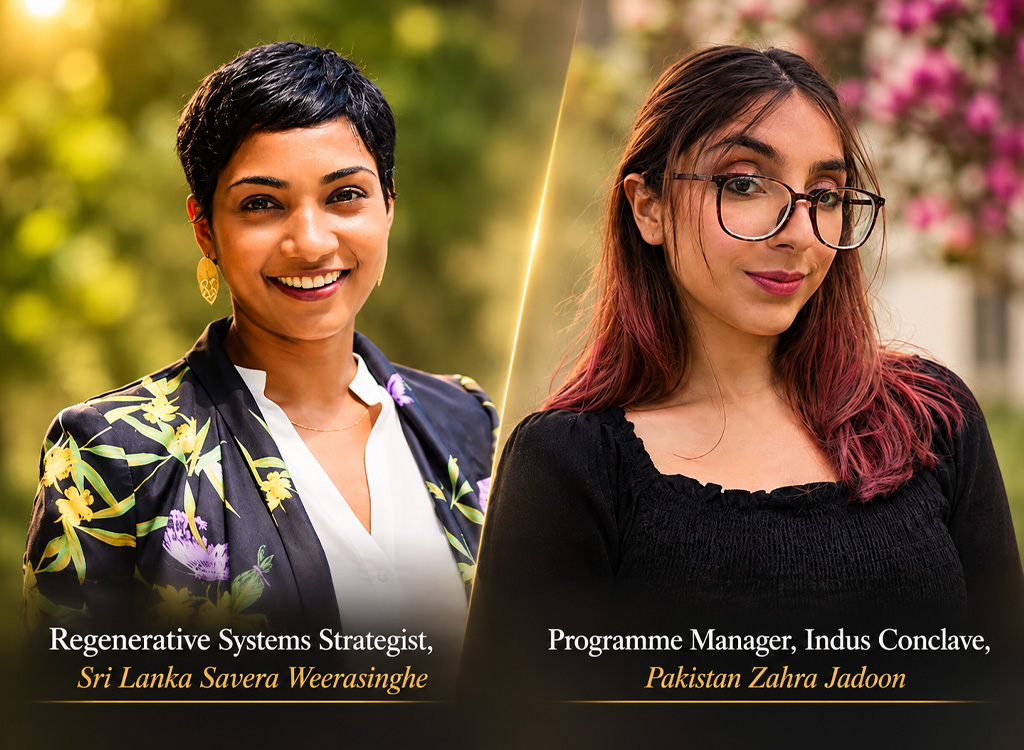
“Monsoon Salons is a three-day gathering in Colombo that convenes scholars and practitioners: from architects, authors, and botanists to foraging chefs, food sculptors, and historians whose work is grounded in the Global South. It is a container to hold the conversations we find vital to these most uncertain times, to remind, inspire, understand, and imagine,” said Regenerative Systems Strategist, Sri Lanka Savera Weerasinghe, in this interview with Pulse Line.
“Colombo provides a particularly rich vantage point for the inaugural edition of Monsoon Salons as it sits at the meeting point of the histories we seek to examine. Sri Lanka’s position along routes linking the Arabian Sea and the Bay of Bengal made the island an important place of passage, settlement, and exchange,” added Programme Manager, Indus Conclave, Pakistan Zahra Jadoon.
Here, Weerasinghe and Jadoon speak to Pulse Line about the thinking behind Monsoon Salons, why Colombo was chosen, and what audiences can look forward to.
Monsoon Salons is coming to Colombo for the first time, bringing with it a fascinating mix of writers, artists, historians, architects and thinkers. What is Monsoon Salons all about and how did the initiative come about?
Savera Weerasinghe: Monsoon Salons is a three-day gathering in Colombo that convenes scholars and practitioners: from architects, authors, and botanists to foraging chefs, food sculptors, and historians whose work is grounded in the Global South. It is a container to hold the conversations we find vital to these most uncertain times, to remind, inspire, understand, and imagine. Conceived as a platform for public scholarship, it honors our shared cultures, where the best conversations are anchored by a shared meal and a colorful range of perspectives.
It is an initiative of Indus Conclave, developed with the curation team in Colombo and Black Cat Café in Colombo. The first edition, ‘What the Ocean Carries,’ examines how colonialism reorganised the movement of people, resources, and knowledge, severing our relationships with the land and across the Indian Ocean, and how that reorganisation continues to govern life in the region.
What was the vision behind bringing it to Colombo? What is it about Sri Lanka’s history and geography that makes a meaningful place to host these conversations?
Zahra Jadoon: Colombo offers a unique gathering place within South Asia where people whose histories remain entangled, but whose routes to one another are politically constricted, can meet in person. Conversations that are often routed through London, Dubai, or Singapore can take place within the Indian Ocean world itself.
Colombo carries its own histories of civil war, majoritarian nationalism, displacement, and contested development, so it offers no escape from politics. It offers a serious location from which to think regionally.
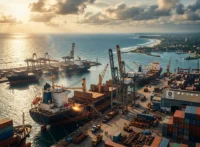
Colombo provides a particularly rich vantage point for the inaugural edition of Monsoon Salons as it sits at the meeting point of the histories we seek to examine. Sri Lanka’s position along routes linking the Arabian Sea and the Bay of Bengal made the island an important place of passage, settlement, and exchange. The city also bears the material traces of Portuguese, Dutch, and British rule, alongside the labour and environmental transformation involved in constructing a modern harbour on a wetland coast. Here, the history of oceanic connection is materially entangled with colonial infrastructure and environmental change.
The inaugural edition is titled ‘What the Ocean Carries’. Could you explain the thinking behind this theme?
Zahra Jadoon: National histories often make our countries appear to belong to separate stories, but an oceanic orientation follows the routes through which those places became intelligible to one another.
Long before the modern nation-state divided the region into fixed territories, monsoon winds drew its shores into recurring contact. Seasonal winds and currents determined when a vessel could sail, where travellers waited, and when a port filled again with familiar languages and goods. Waiting became part of movement. Merchants established households, scholars entered new intellectual communities, and religious traditions acquired new languages and forms as they travelled. It is this historical fabric which connected – and continues to connect – Karachi to Colombo, Colombo to Chennai, Galle to Zanzibar, Kochi to Malacca.
The first edition, ‘What the Ocean Carries,’ takes the monsoon as its starting point. For centuries its winds linked Karachi to Colombo, Colombo to Chennai, Galle to Zanzibar, and Kochi to Malacca, moving people, goods, food, and ideas across the Indian Ocean. It is in tracing these connections and nodes that will enable, and hopefully inspire us to look to build a shared future through, remembering, understanding, and visioning together.
The programme brings together people from diverse disciplines and countries, including historians, ecologists, urban planners, architects, artists, and food practitioners. Why this particular combination and what happens when these different perspectives come together around a shared theme?
Savera Weerasinghe: We have been working on the curation for the past six months along with the Indus Conclave team in Lahore. We had fascinating brainstorming sessions, where we deliberated on the kind of dynamic and expansive conversations we wanted to have. We would then suggest people we had either worked with, read, heard about, or followed; Incredibly, through the collective ecosystem, we were able to reach out and get them to say yes.
The programme has a strong focus on the Global South, examining the legacies of colonialism and the environment and the climate challenges we face today. How do you see the past influencing the way we experience environment- and climate-related issues today?
Savera Weerasinghe: The programme looks at how colonial rule broke up those connections, and how that history still shapes the region’s borders, cities, and climate today.
In these times of colossal upheaval and transition, it seems vital to remember not just what we have lost, but also to what we must hold on to. It is about reclaiming and strengthening shared ecologies, and tracing our polycultural ways of being that were stamped out by monocultures that extracted, boxed, and standardised how we grow, harvest, design, build, eat, and exchange.
This is also a moment when a shared colonial past is being divided into increasingly sealed national accounts, even as rivers, coastlines, and weather systems continue across them. Direct intellectual exchange within the region has become harder to sustain. Monsoon Salons creates time for historical comparison before the language of emergency narrows what can be imagined. It asks how repair might alter the arrangements that produced unequal exposure, and how knowledge might travel within the region on less extractive terms.
The Indian Ocean is already living through a climate crisis shaped by history. Monsoon rain reaches hillsides cleared for plantations, rivers confined by engineering works and cities spread across reclaimed wetlands; rising seas meet coasts transformed for ports, tourism, and real estate. Who is flooded, displaced, or protected is still shaped by land ownership, wealth, and political power. Climate responses can reproduce the same inequalities when conservation removes communities from their land or new infrastructure protects one district by transferring risk elsewhere.
We feel that these collective conversations, with carefully curated thought leaders, are much needed reminders and catalysts to help us find our footing in such uncertain times.
Food, art, and film also feature in the programme. Why was the programme structured in this manner to include these aspects as well?
Savera Weerasinghe: Culture has the ability to shift society and shape how we behave. Throughout history, stories, conversations, gatherings, and meals have shifted boundaries, ideals, and perspectives. Culture has an indelible push and pull on the way we eat, the way we consume, and the way we express. We want people to question where these influences come from, to honour the shared roots of our culture and feast on conversation that has washed up on our shores, brought by monsoon winds and trade currents.
What can someone attending the inaugural edition in Colombo expect over the three days, from 4–6 December? Are there particular experiences or conversations you are especially looking forward to?
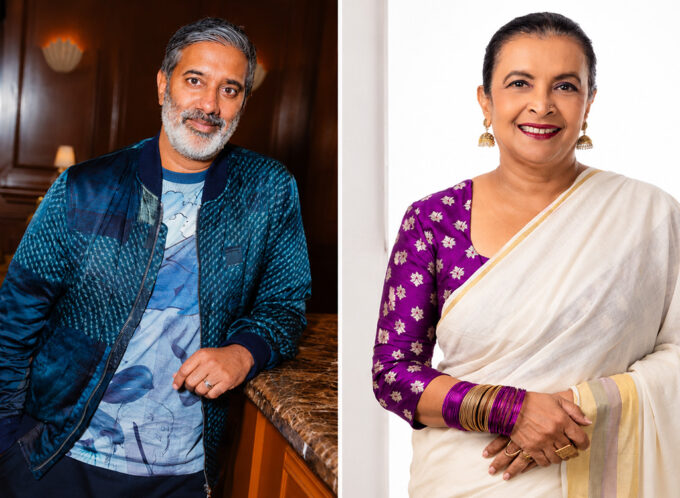
Savera Weerasinghe: Personally, I am looking forward to the keynote panel, the concept of a grand storyteller on Saturday, by none other than Sujit Sivasundaram and the food installation dinner with Nahla Tabba and Asag Monga. Oh, and the screenings – all films I am dying to watch.
Beyond the inaugural edition, what would you like Monsoon Salons to become? Is the intention to establish Colombo as an ongoing meeting point for these kinds of regional and international exchanges?
Savera Weerasinghe: Hopefully it is a replicable series of gathering and conversations that shape the way we think collectively across the region
What do you hope people will take away from Monsoon Salons, not just intellectually, but in the way they see the world around them?
Savera Weerasinghe: We want them to examine the status quo, we want them to question what we have accepted as conventions – from the way we gather to the way we eat. Where did it really come from? Why did we adopt them? We want them to explore their own understanding of regional and national identity, the winds and currents that feed our culture, and what a world extricated from monocultures looks and feels like. Is it familiar or is it foreign?
Finally, why should Colombo audiences make time for Monsoon Salons? What makes this an experience worth being part of?
Savera Weerasinghe: Expect to be fed – in a truly south Asian way. We hope to feed your belly and your mind, and offer alternate and stimulating perspectives.






Leave a comment