
By Marianne David
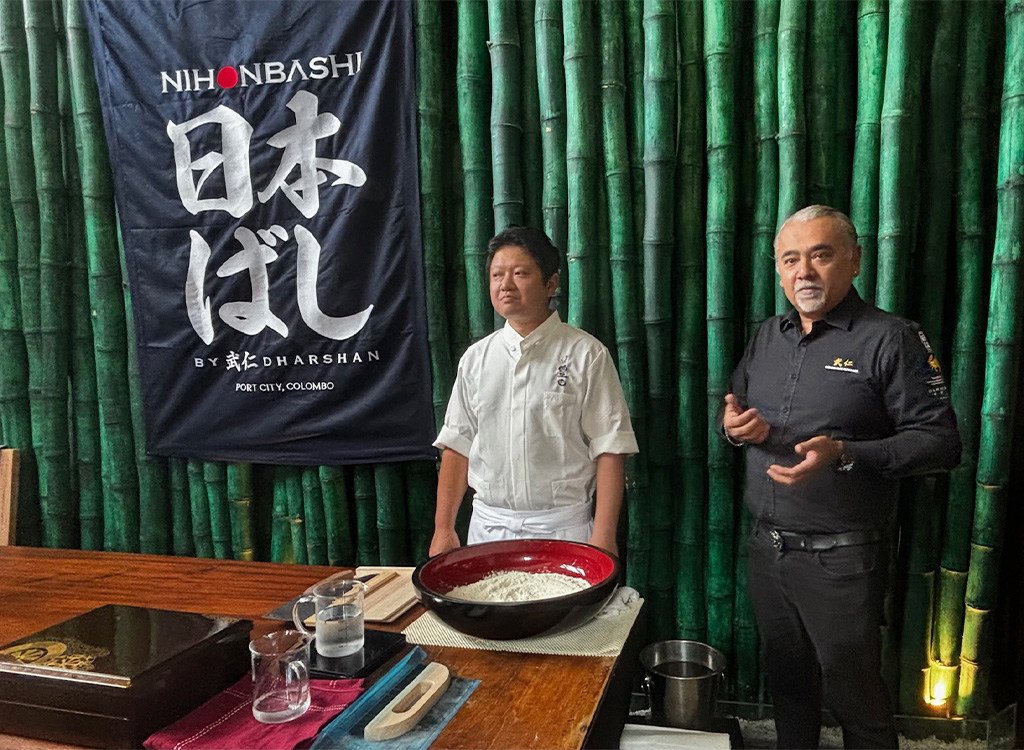
Ever witnessed the art of traditional Japanese soba-making up close? It’s not something we’ve experienced in Sri Lanka before and now that’s changed with the Soba Festival at Nihonbashi by Dharshan, which brings to Colombo the art of Teuchi soba – traditional handmade Japanese buckwheat noodles.
Taking place from 19 to 21 November, the festival features live demonstrations by Chef Masahisa Toyoda, a celebrated soba master from Japan, whose expertise in the painstaking art of handcrafting buckwheat noodles has been honed over more than a dozen years. Now leading the art of soba-making at Soba Suoh in Japan, Chef Toyoda brings with him a craft that exemplifies precision and patience.
Made with 80% buckwheat flour, the thin-cut soba is prepared with an uncompromising emphasis on the quality of its ingredients. Nihonbashi uses carefully selected Japanese buckwheat flour, chosen according to the season to ensure that it is at its very best.
For Nihonbashi, which has been introducing Sri Lankans to the finer nuances of Japanese cuisine for over three decades, the festival is yet another opportunity to offer diners something truly special. The intimate nature of the festival, which is limited to just 10 guests at a time, allows everyone to observe the process at close quarters before enjoying the fruits of the chef’s labour.
A centuries-old Japanese culinary tradition
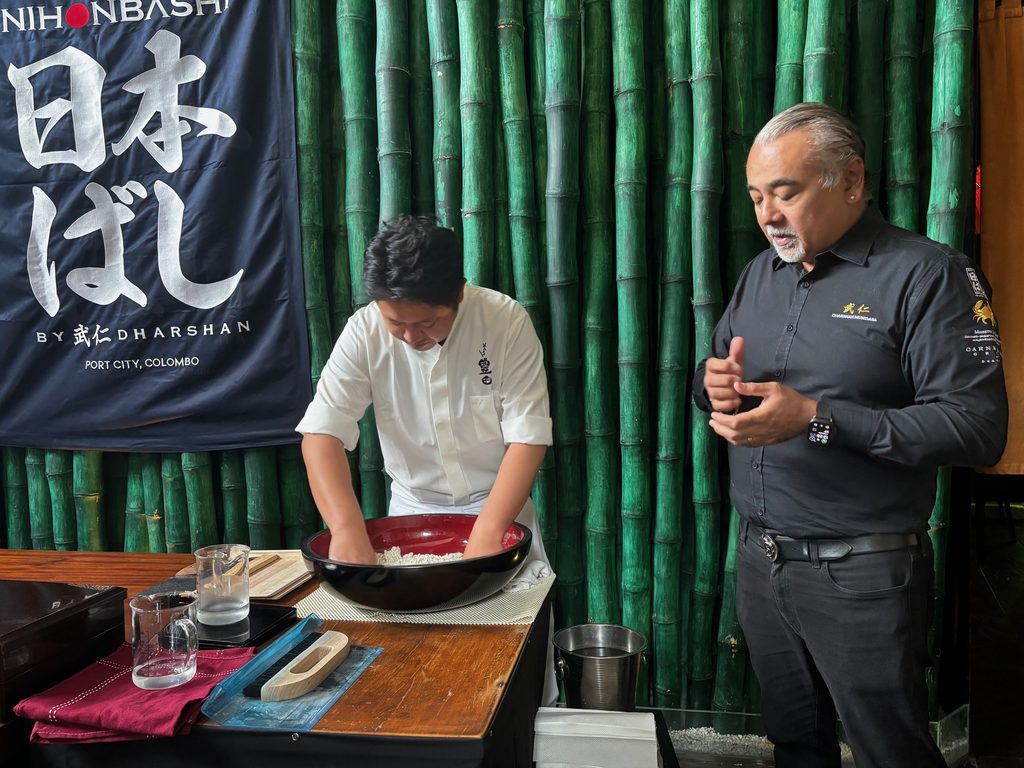
Acclaimed chef and restaurateur Dharshan Munidasa himself took on the role of translator during the demonstration I attended, as Chef Toyoda set about preparing the soba before an audience captivated by every movement.
From kneading and stretching the dough to the final hand-cutting of the noodles, each stage revealed the extraordinary precision and craftsmanship behind this centuries-old Japanese culinary tradition.
“Welcome to the first soba event at Nihonbashi. Soba is a buckwheat noodle that’s very special and I would say this is the most artisan soba that you can find. This is the first time we’ve invited a soba chef to come to Sri Lanka, bringing something new for Sri Lankans to experience,” Dharshan explained as the demonstration got underway.
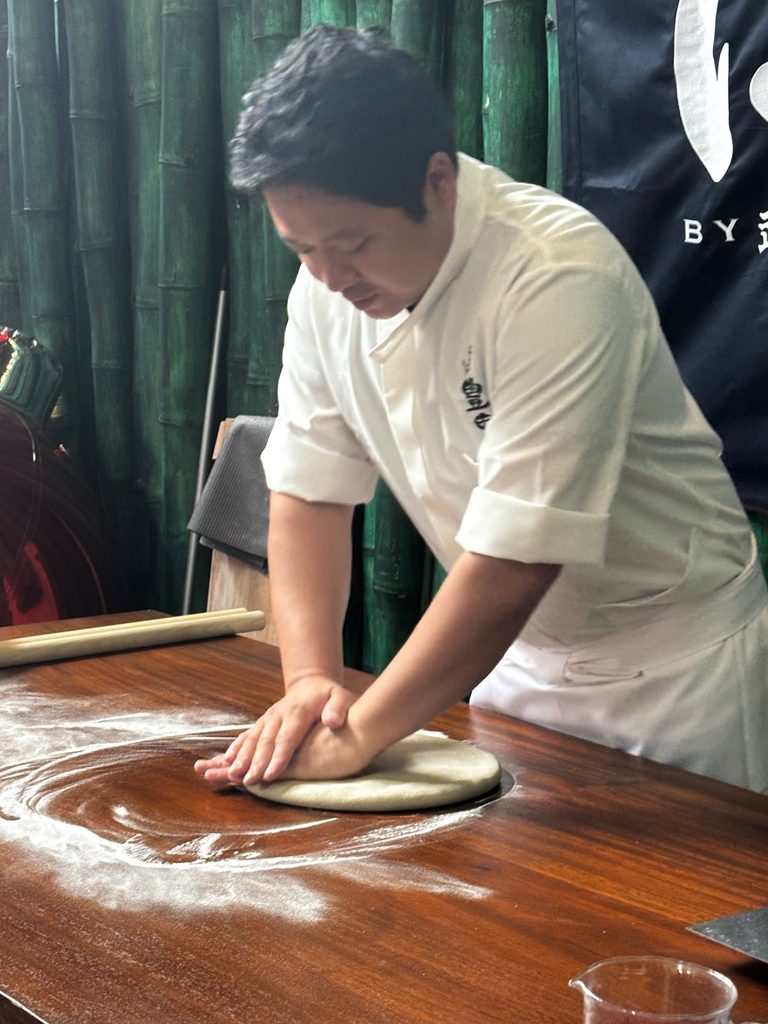
Kiku-neri, or chrysanthemum kneading
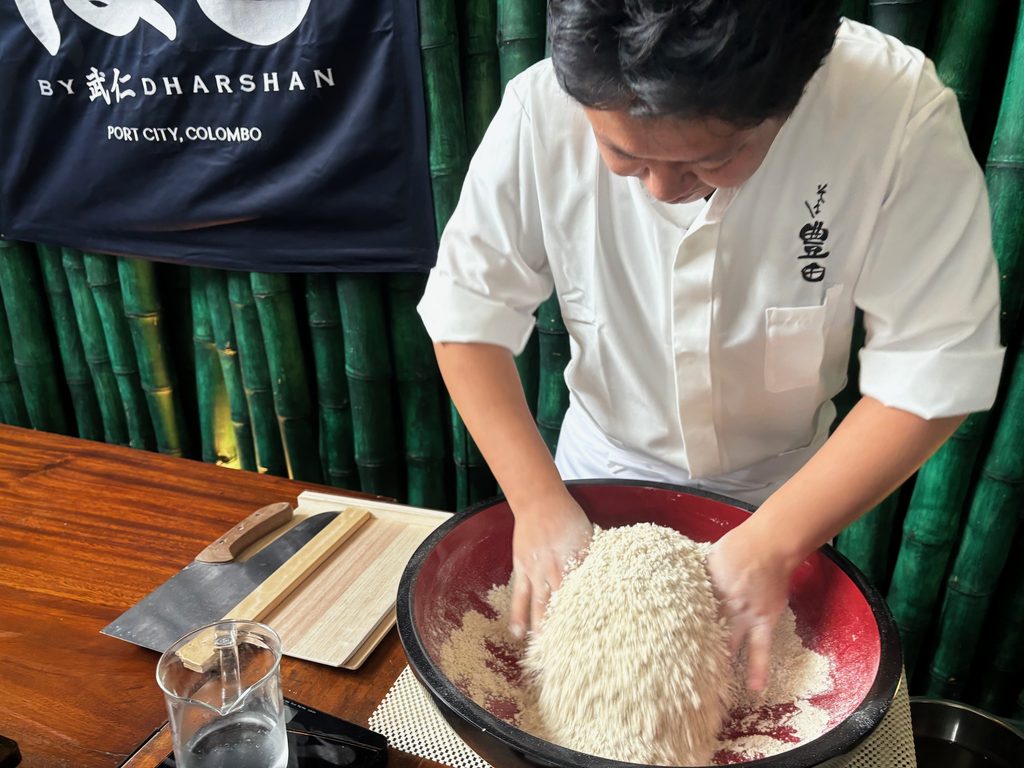
The process begins with the gradual addition of water to the flour, in three stages. The mixing alone takes approximately 10 minutes, during which the transformation is fascinating to watch. Initially, the dough is almost white, with relatively large granules. As the water is incorporated, it gradually darkens and the granules begin to disappear.
“This kneading process is what makes the water get evenly distributed in the flour and is the most important step in the whole process,” Dharshan explained.
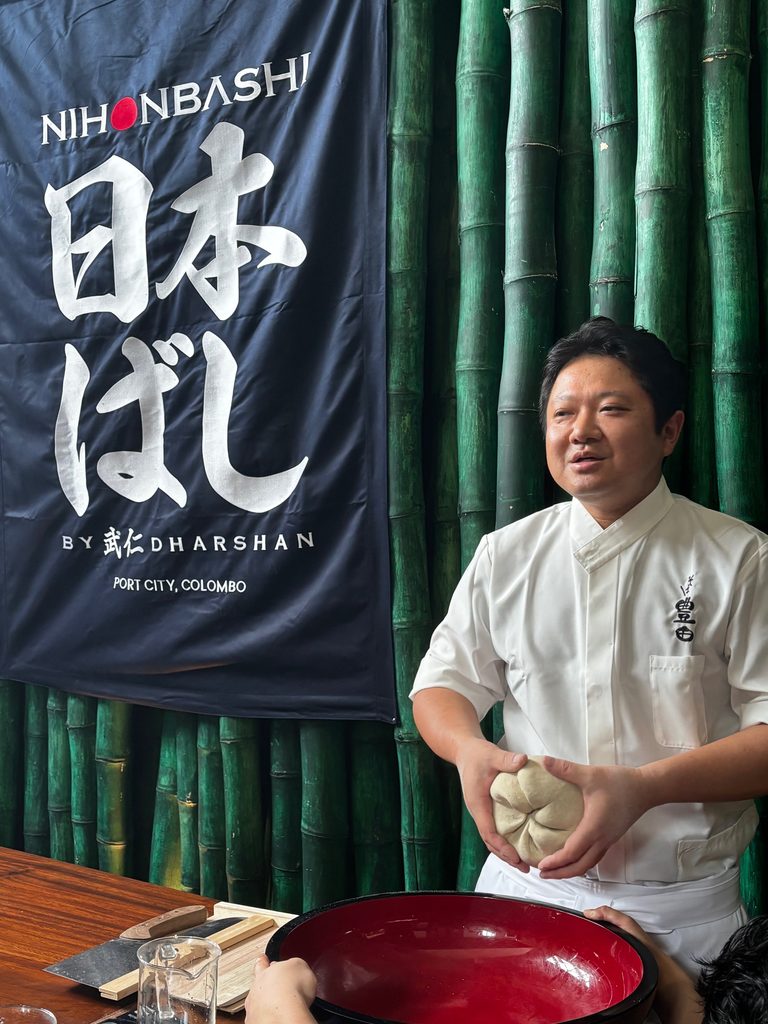
As Chef Toyoda continues to work the mixture, the texture changes, eventually becoming rough, rather like the skin of an elephant. The dough is then gathered into balls, with the remaining air carefully pushed out, before being moulded into the shape of a chrysanthemum. With this, the first of the three main stages is complete.
“This method of kneading is called kiku-neri. Neri is mould, kiku is the national flower, which is the chrysanthemum. The Emperor is known as the Chrysanthemum Throne and it envisages that,” Dharshan explained.
Handmade soba, the domain of highly trained chefs
It is this attention to detail that makes the traditional preparation of soba such a specialised craft. As Dharshan pointed out, handmade soba is the domain of highly trained chefs, each of whom follows a particular discipline.
“One of the best things about Japan is that everyone takes their own path when it comes to cuisine, resulting in specialised chefs. Also, every step of the process is documented, sharing this precise knowledge and style of cooking with the next generation.”
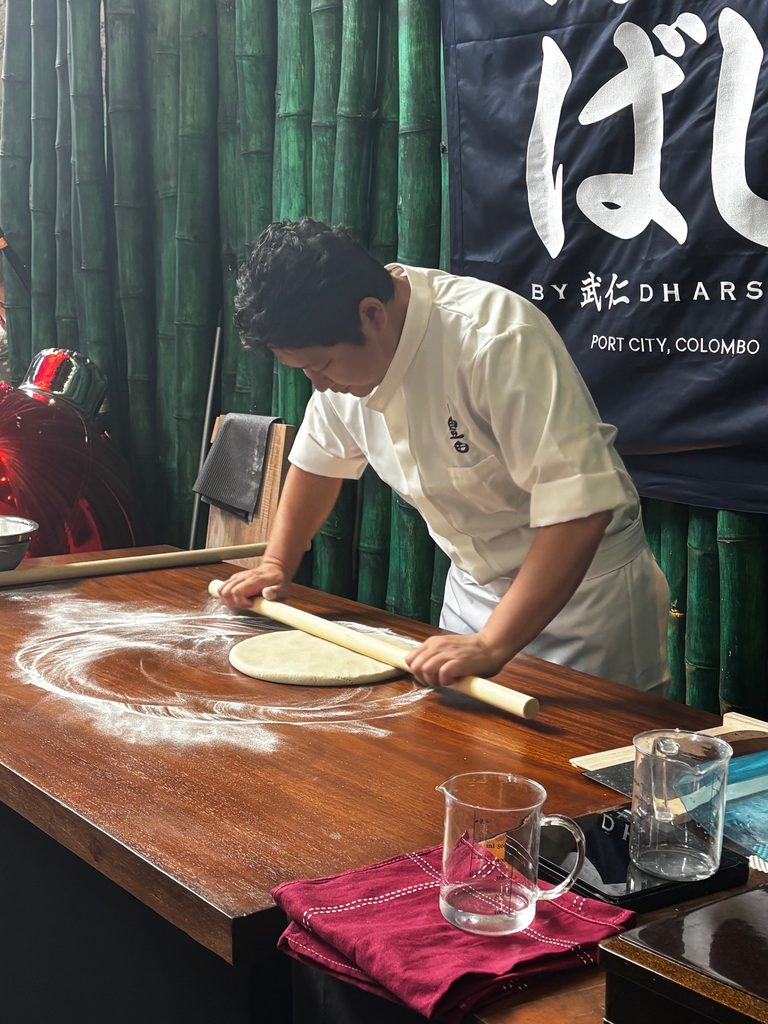
Indeed, nothing is left to chance. From the precise length of the sticks used to roll out the dough to the cutting board and the specially designed knife reserved exclusively for soba-making, every utensil has its purpose.
The next stage is to spread the dough, a process that requires two rolling sticks of different lengths. The shorter stick is first used to flatten and thin the dough, working it outwards in a circular motion.
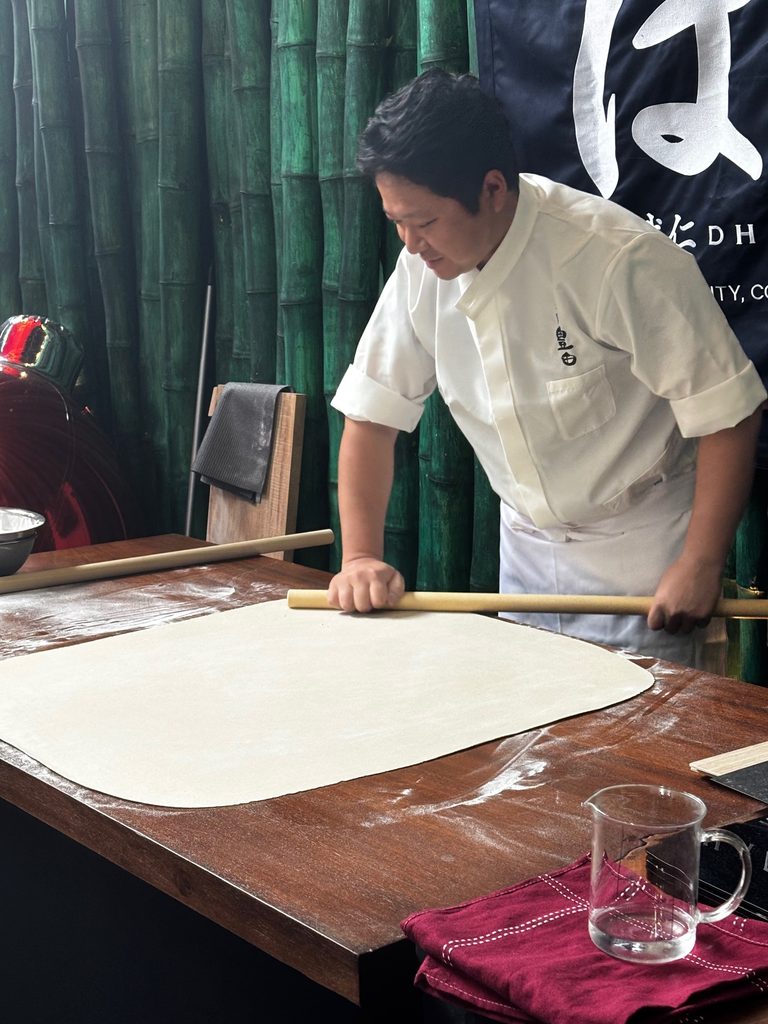
Gradually, the round ball becomes a flat circle before being transformed into a square. Chef Toyoda then switches to the longer stick, using it to stretch the dough further until it reaches the required thinness. It is then carefully folded, ready for cutting.
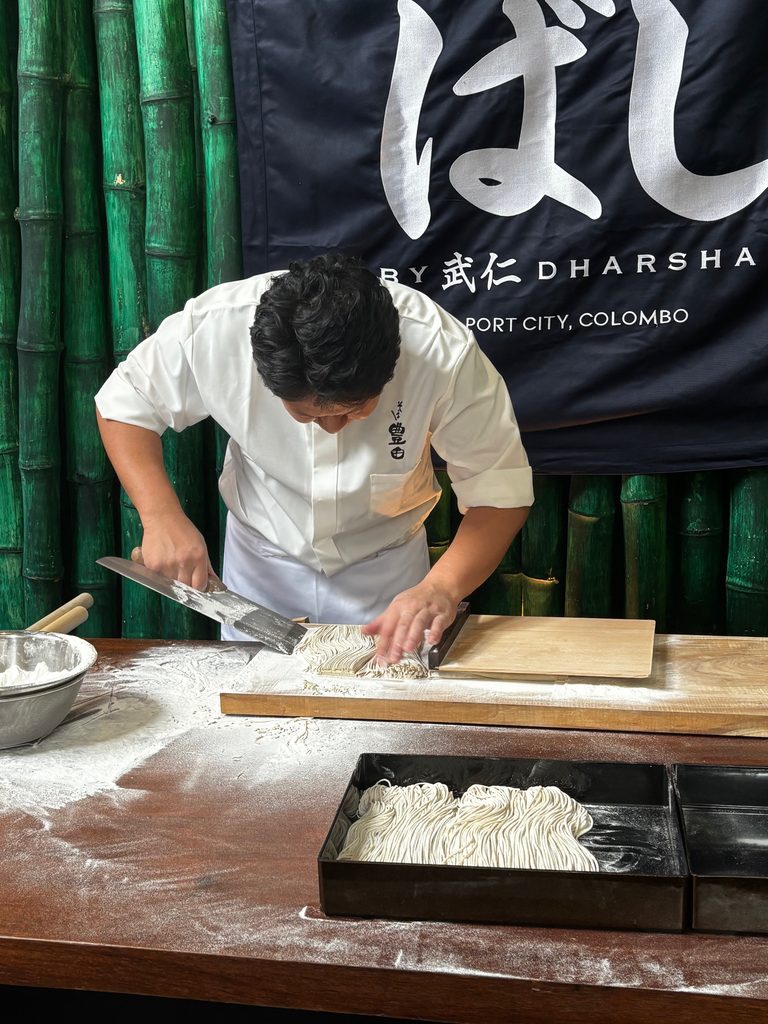
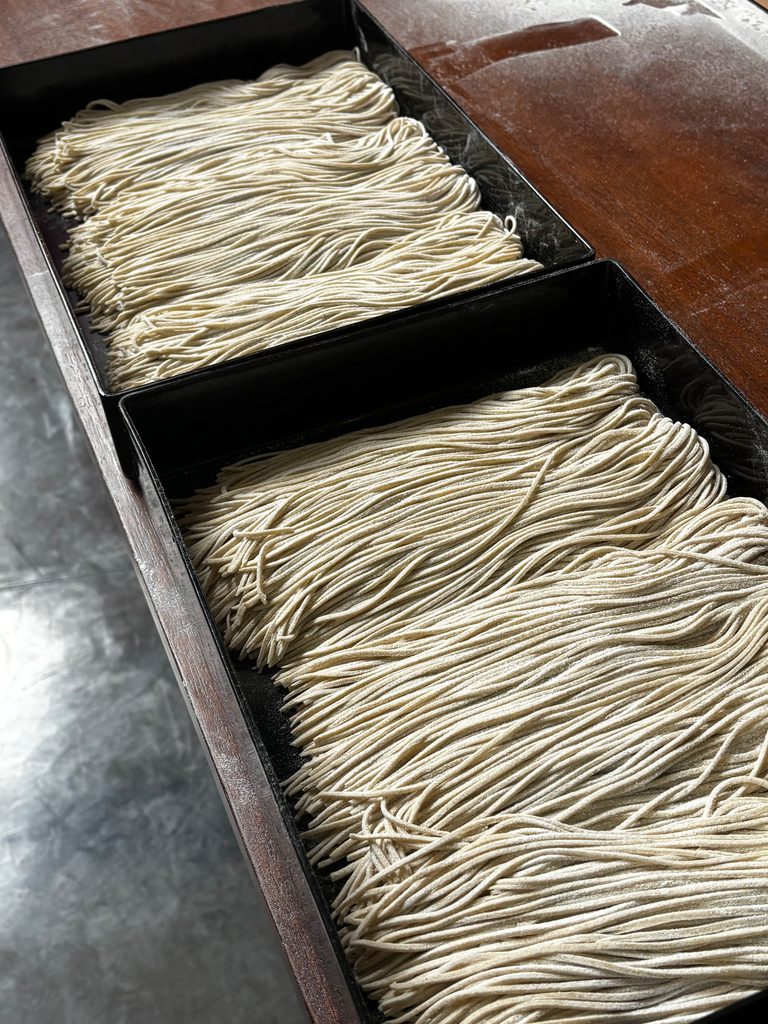
This is perhaps the most mesmerising part of the demonstration. Using a special knife dedicated solely to soba-making, Chef Toyoda begins cutting the folded dough into fine strands, each measuring approximately 0.2–0.3 mm in width. His movements are swift, controlled and remarkably consistent, with 40–50 strokes producing enough noodles for two servings.
Watching the transformation from a simple mixture of buckwheat flour and water into beautifully uniform strands is an appreciation of craftsmanship in its purest form.
The art of eating soba
There is an art to eating soba. With Dharshan leading the way with a delightful lesson in appreciating the dish as it is meant to be enjoyed, we dipped the freshly made noodles into the various sauces and slurped them up, as is customary in Japan.
We were served the freshly made soba with three accompaniments: Kara Jiru Dipping Sauce, Walnut Dipping Sauce, and Dipping Soba with Sri Lankan Mushrooms & Chicken, with each offering a different flavour profile.
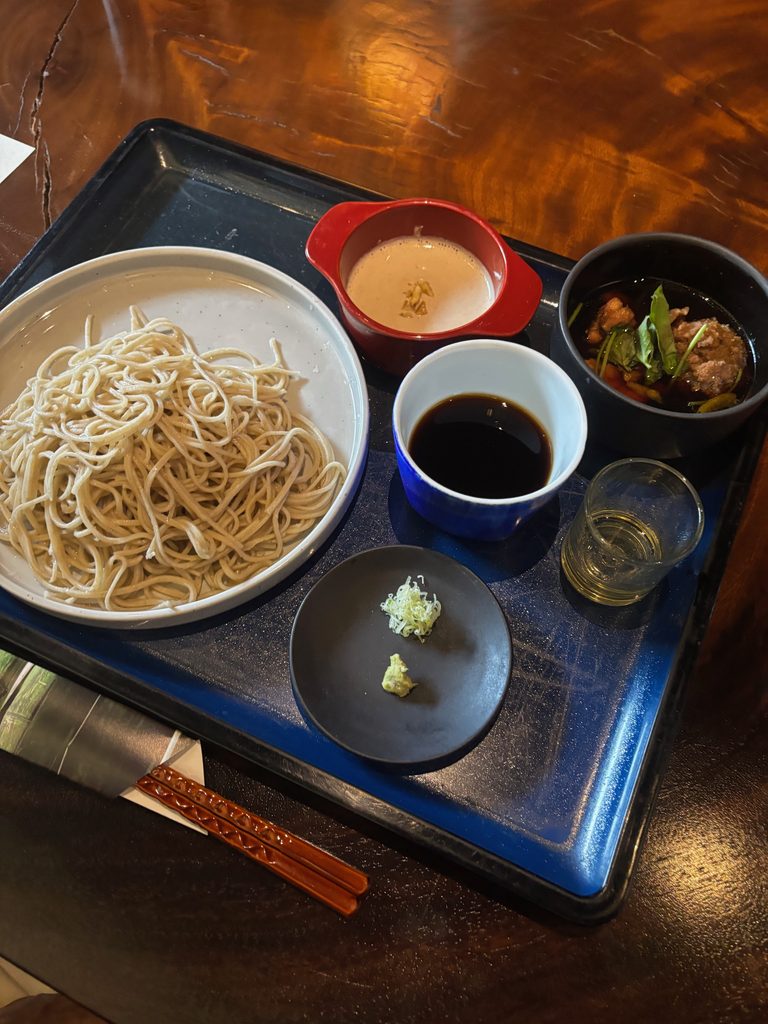
The meal was exquisite and deeply satisfying, with every element serving a purpose. As the menu explained, the dashi is prepared using thick-cut karebushi bonito flakes from Kagoshima, aged for two years to develop a deep, rich flavour. The soba dipping sauce is then made with two distinct varieties of soy sauce and organic sugar, carefully balanced to complement rather than overpower the noodles.
One can also pour the water in which the noodles were boiled – which is also presented at the table – into the dipping sauce cups and drink it as a refreshing broth.
The handiwork of a master
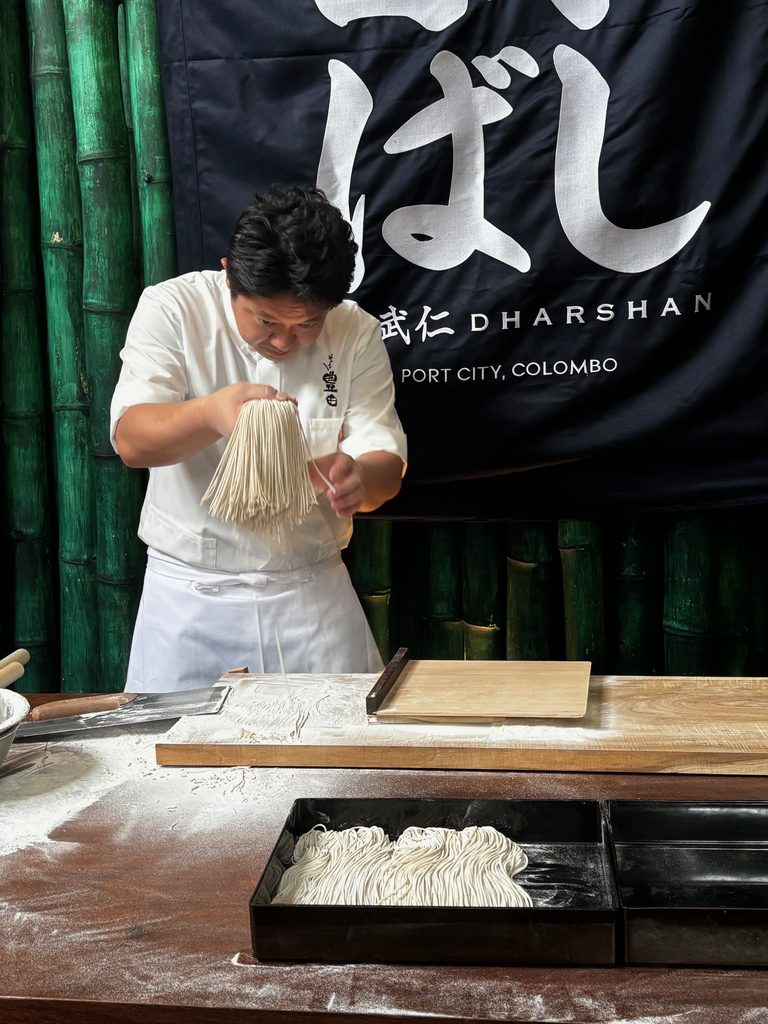
What made the experience particularly special was knowing that these noodles were the handiwork of a master who has devoted years to perfecting his craft and being able to witness the process and savour the finished product in the intimate setting of Nihonbashi was a rare privilege.
For those who appreciate Japanese cuisine, the Soba Festival – which is on today and tomorrow – offers more than simply another dining experience. It is an opportunity to discover the artistry behind one of Japan’s most treasured culinary traditions at one of Sri Lanka’s finest Japanese restaurants.







Leave a comment