
By The Pulseline News Desk
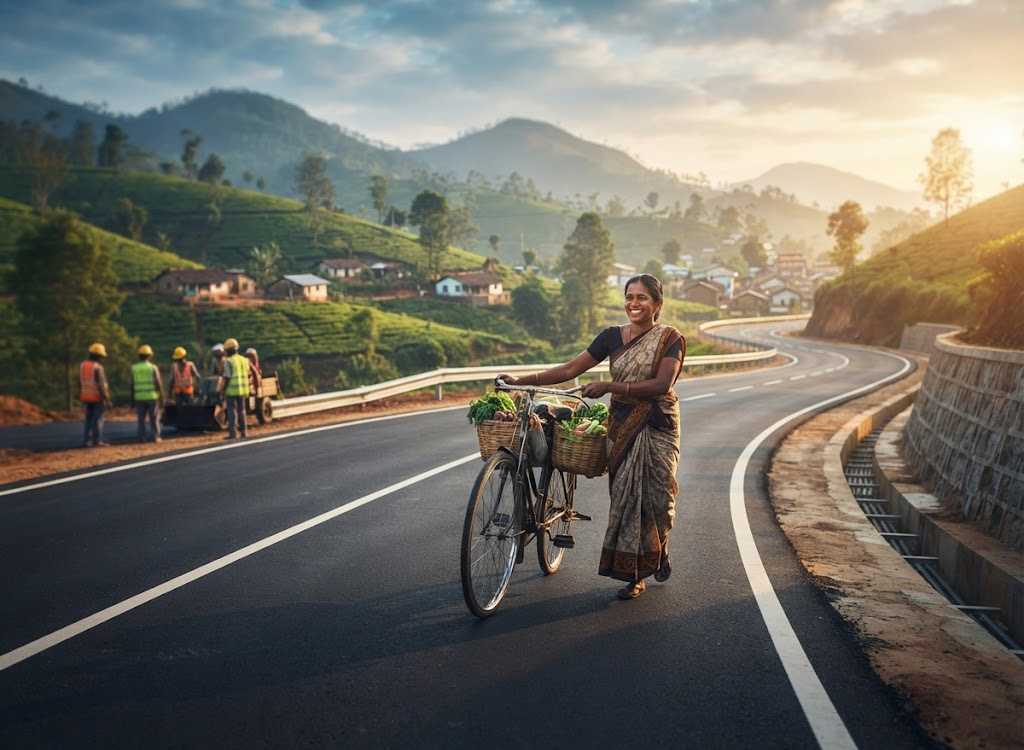
Sri Lanka is set to receive a US$110 million World Bank financing package to repair and reconstruct about 600 kilometres of roads devastated by Cyclone Ditwah, in a major push to restore connectivity and revive economic activity in some of the country’s worst-hit communities.
Approved through the World Bank’s International Development Association (IDA) Crisis Response Window, the financing will target roads considered critical for reconnecting communities with markets, schools and healthcare facilities.
But the project goes beyond simply replacing infrastructure destroyed by the cyclone. The World Bank has said the reconstructed roads will be built to climate-resilient standards, incorporating improved drainage, landslide protection and upgraded engineering designed to withstand increasingly frequent and severe extreme weather events.
The scale of the intervention reflects the enormous damage caused by Cyclone Ditwah, which struck Sri Lanka in November 2025.
The cyclone caused an estimated US$4.1 billion in damage, affected nearly two million people across all 25 districts, and exposed serious vulnerabilities in the country’s transport infrastructure.
The transport sector alone suffered approximately US$973 million in damage. Nearly 2,000 kilometres of provincial roads, more than 3,500 kilometres of rural roads and close to 700 bridges were damaged, while overall transport-sector recovery needs were estimated at US$1.31 billion.
Reconnecting farmers to markets
For Sri Lanka’s rural economy, the road reconstruction programme could have consequences well beyond transportation.
The World Bank has estimated that the investment will directly benefit more than 830,000 people, while nearly two million people across eight target districts are expected to be reached through the wider intervention.
Among those expected to benefit are approximately 22,000 tea, vegetable and paddy farmers, many of whom depend on functioning rural roads to transport produce to buyers and supply chains.
For farmers, damaged roads can quickly become an economic problem. Poor connectivity can increase transport costs, delay deliveries and leave agricultural produce vulnerable to spoilage, while also making it more difficult for farmers to access markets and essential services.
The reconstruction programme is therefore being positioned as part of Sri Lanka’s wider economic recovery rather than simply a post-disaster repair exercise.
The project is also expected to create around 5,671 new or improved jobs through reconstruction and maintenance activities, providing employment opportunities as damaged infrastructure is rebuilt.
Building back against the next disaster
The World Bank’s intervention comes as Sri Lanka faces the challenge of rebuilding infrastructure while simultaneously preparing for a future in which extreme weather events are expected to pose a growing threat.
The decision to incorporate stronger drainage systems and landslide protection into the reconstruction is significant for a country where heavy rainfall, flooding and landslides can repeatedly damage roads and isolate communities.
World Bank Group Country Manager for Sri Lanka Gevorg Sargsyan has said the destruction caused by Cyclone Ditwah had created an opportunity to rebuild infrastructure to a higher standard. “This is about more than fixing roads. It is about restoring livelihoods, reconnecting farmers to markets and families to essential services, and ensuring that the infrastructure rebuilt today is resilient enough to withstand future shocks.”
The new financing will extend Sri Lanka’s ongoing Inclusive Connectivity and Development Project (ICDP) by three years.
With the additional financing, total World Bank investment in Sri Lanka’s transport connectivity under the operation will rise to US$610 million.
Recovery meets resilience
The latest World Bank commitment comes at a critical stage in Sri Lanka’s post-cyclone recovery, with the scale of damage placing considerable pressure on public finances and reconstruction capacity.
The focus on strategically important roads is intended to ensure that limited resources are directed towards infrastructure capable of reopening economic corridors and restoring access to essential services.
The project is aligned with the World Bank Group’s Country Partnership Framework for Sri Lanka for 2026-2030, which identifies resilient infrastructure and improved connectivity as key foundations for economic recovery and private sector-led growth.
For communities still dealing with the consequences of Cyclone Ditwah, however, the significance of the programme is likely to be measured less by the size of the financing package than by how quickly roads are reopened.










Leave a comment