
By The Pulseline News Desk
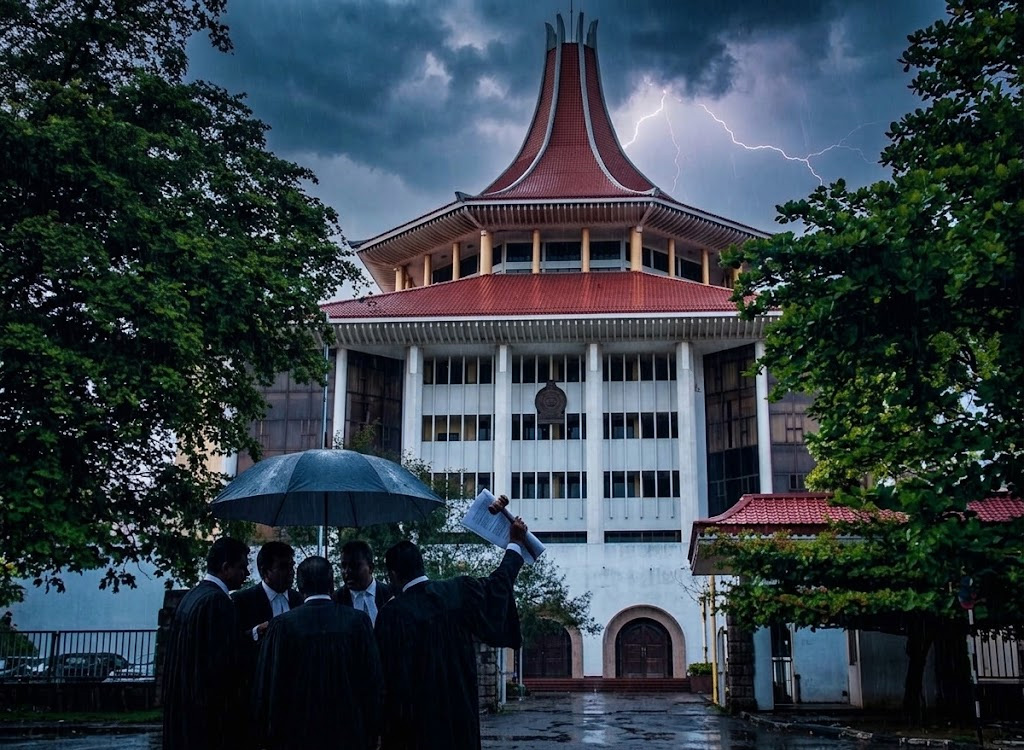
A contentious end to the Supreme Court hearing on petitions challenging the proposed 22nd Amendment to the Constitution has raised fresh questions over courtroom procedure and the opportunity afforded to petitioners to respond to the Government’s case.
The controversy had arisen after the Solicitor General had concluded submissions before the Supreme Court, following which counsel appearing for the petitioners had sought an opportunity to respond to the arguments advanced by the Solicitor General and the intervening petitioners.
However, the Chief Justice had declined the request for further oral submissions and had concluded the hearing, directing counsel for the petitioners to place their responses before Court in writing.
The decision has drawn criticism from lawyers involved in the proceedings, particularly given the constitutional importance of the case and the number of petitions before Court.
As many as 67 petitions were filed by citizens and lawyers that were being considered in relation to the proposed constitutional amendment.
Counsel for the petitioners had made submissions on September 1, with proceedings continuing until around 10.30 p.m. The following day, after the Solicitor General concluded the Government’s submissions, petitioners’ counsel had sought an opportunity to respond.
Lawyers involved in the case have said the request was particularly relevant because aspects of the Attorney General’s position had emerged during the proceedings and, in their view, required a response before the Court concluded its determination hearing.
Instead, the petitioners were directed to address those matters through written submissions.
The petitioners’ legal teams have subsequently decided to file a motion setting out the circumstances surrounding the conclusion of the oral submissions together with their written submissions. The documents are expected to be filed by 3 p.m. today (3).
The episode has also attracted the attention of Commonwealth Lawyers’ Association President Steven Thiru, who had observed the proceedings.
Thiru has expressed concern over the manner in which the hearing concluded, saying it was unfortunate that counsel representing the petitioners were not given an opportunity to make an oral reply after the Solicitor General and intervening petitioners had concluded their submissions.
According to Thiru, counsel had specifically sought an opportunity to respond orally but were instead directed to provide their response in writing.
He has said that in cases of such constitutional importance, counsel would generally be afforded an opportunity to make an oral reply, describing the circumstances as unusual and unfortunate.
Thiru has further expressed the view that petitioners’ counsel should have been permitted to respond orally before the Court concluded the hearing.
The dispute is significant beyond the immediate procedural question.
The Supreme Court is being asked to determine challenges to proposed constitutional changes affecting the country’s superior judiciary. The proceedings have therefore become a major test of the constitutional safeguards surrounding judicial independence and the relationship between the Executive, Legislature and Judiciary.
Against that backdrop, the question of whether petitioners should have been given a final opportunity to address arguments made against them has assumed considerable importance.
The Court’s decision on the constitutionality of the proposed amendment will ultimately determine the legal fate of the legislation. But the manner in which the hearing was brought to a close is likely to remain part of the wider political and legal debate surrounding the amendment.
For critics, the episode represents a worrying restriction of the traditional adversarial process. For the Court, the decision to require written submissions may be viewed as sufficient to ensure that the petitioners’ arguments remain before the Bench.
Either way, the controversy has added another layer to an already highly charged constitutional battle — one in which the substance of the proposed amendment is being debated alongside increasingly pointed questions about the process through which the challenge itself is being heard.











Leave a comment