
By The Pulseline News Desk
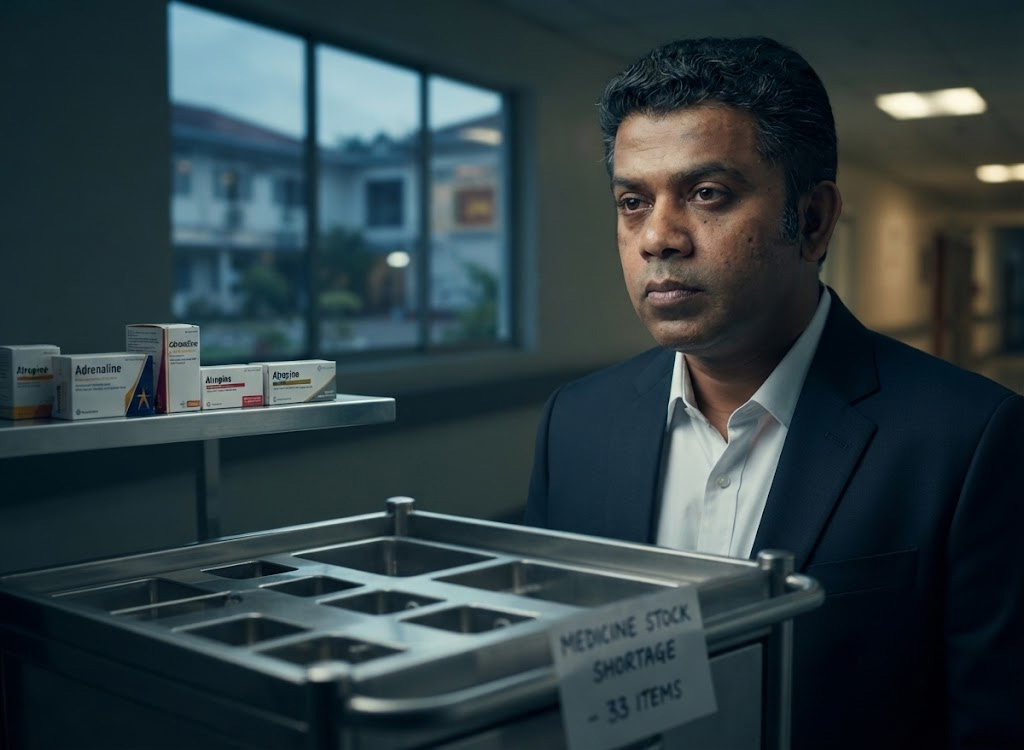
Sri Lanka’s public health system is facing shortages of 33 essential medicines, with Health Minister Nalinda Jayatissa telling Parliament that supplies of 585 of the country’s 618 essential medicines are currently available at health institutions.
However, the Minister assured Parliament that all 13 medicines classified as life-saving medicines remain available, as the Government moves to address gaps in the supply of essential medicines.
Jayatissa disclosed the figures in response to a question raised by opposition MP S.M. Marikkar, providing an update on the availability of medicines across the country’s health institutions.
According to the Minister, while 585 of the 618 medicines classified as essential are currently available, 33 medicines are experiencing shortages.
The shortages come against the backdrop of continued efforts by the Health Ministry to strengthen the medicine supply chain and prevent disruptions to hospital services.
Jayatissa said the Ministry has introduced a priority list of 886 medicines considered necessary to ensure the uninterrupted day-to-day functioning of hospitals.
The priority list is intended to help ensure that medicines regarded as critical to the operation of hospitals receive attention in procurement and supply arrangements.
The Minister also said the Government has allocated funds to facilitate the local purchase of medicines, with the aim of reducing the impact of shortages and ensuring supplies reach health institutions without unnecessary delays.
Local procurement is being used as part of the Government’s response to gaps in the regular medicine supply chain, while measures are being taken to replenish stocks of the 33 essential medicines currently in short supply.
The assurance that all 13 life-saving medicines remain available is significant given the potential consequences of interruptions to supplies of medicines required for critical and emergency care.
Nevertheless, the shortage of 33 essential medicines highlights continuing challenges in maintaining uninterrupted availability across the wider medicine catalogue required by the public health system.
Jayatissa told Parliament that steps were being taken to address the shortages as soon as possible, while the Ministry continues to monitor medicine stocks at health institutions.
The latest figures provide a mixed picture of the country’s medicine supply situation: while a large majority of essential medicines remain available and all life-saving medicines are reportedly in stock, shortages persist in a section of the essential medicine list.
The Government’s response will now be closely watched, particularly on how quickly the 33 medicines can be replenished and whether local procurement can prevent further shortages from emerging.









Leave a comment