
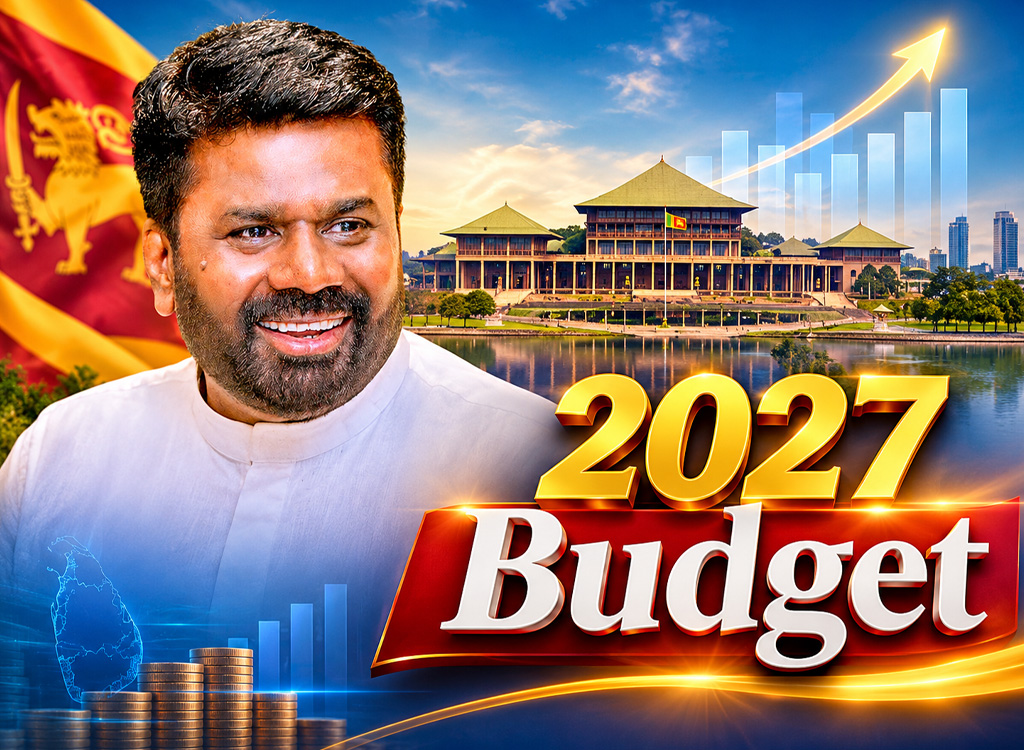
Deputy Finance Minister says next year’s spending priorities should be judged by their contribution to investment, employment, production and exports rather than ministry allocations
By The Pulseline News Desk
The Government is asking the public to look beyond ministry allocations and sector-specific spending when assessing the 2027 Budget, arguing that its real significance lies in the country’s transition from economic stabilisation to long-term economic transformation.
Deputy Finance Minister Anil Jayantha Fernando has said the Government’s third budget would mark a shift in economic priorities, moving away from the immediate challenges of recovery towards creating the conditions necessary for sustainable growth, investment and employment.
According to Fernando, the first two budgets of the current administration were primarily designed to stabilise an economy emerging from one of the worst financial crises in Sri Lanka’s history. With that phase largely behind the country, the Government now intends to focus on expanding economic opportunities and strengthening the productive capacity of the economy.
Focus on transformation
Fernando has suggested that the success of the 2027 Budget should not be measured simply by identifying which ministry received the largest allocation or how much money was earmarked for individual sectors.
Instead, the public should examine whether the proposed spending and policy measures can attract quality investments, generate employment, expand domestic production and increase export earnings. “For this transformation, we need quality investments, we need to expand the economic engagement, we need to create more and more jobs, we need to expand our production, especially targeting for the export markets, we need to facilitate the devices through which the people can engage in these economic activities, and how best these benefits of the economic engagement would be passed on to the people,” Fernando has said.
The emphasis on investment and production signals the Government’s intention to place greater weight on expanding the economy’s capacity to generate income rather than relying primarily on public expenditure and welfare interventions to support livelihoods.
The Deputy Minister has said the objective was to create an economic environment in which people could participate more actively in productive activities and benefit directly from the opportunities generated through economic expansion.
This includes attracting investors capable of creating quality employment, strengthening industries, increasing production and positioning Sri Lankan businesses to compete in international markets.
Economic growth
However, the Government’s transformation agenda will also have to contend with the continuing challenge of ensuring that economic growth translates into tangible improvements in household incomes and living standards.
Fernando has stressed that financial discipline would remain central to the administration’s economic management, with efforts to eliminate waste, prevent corruption and ensure more effective use of public resources continuing into 2027.
Welfare programmes, government assistance schemes and possible tax concessions may also feature in the budget, but he has indicated that these should not be regarded as its defining elements.
Rather, the Government wants the budget to be viewed as a longer-term economic roadmap, outlining how public resources and policy interventions will be used to encourage investment, expand economic activity and improve the country’s productive capacity.
Describing the proposed budget as a “budget of hope”, Fernando has said it was intended to build on the stability achieved during the recovery phase and establish the foundations for sustainable growth, more employment opportunities and higher incomes.
Nevertheless, the challenge will be translating that vision into measurable economic outcomes.
Sri Lanka has previously announced ambitious investment, export and employment targets, but implementation weaknesses, bureaucratic delays and difficulties in executing public investment programmes have often prevented policy ambitions from being fully realised.
The effectiveness of the 2027 Budget will therefore depend not only on the priorities announced but also on the Government’s ability to implement them, attract investors and ensure that allocated funds translate into actual economic activity.








Leave a comment