
‘We know who killed Lasantha, but he will not die’: Kasun Pussewela
‘Heroes like Lasantha should not die, they should win’: Ranga Dissanayake
‘Years can pass, but the truth does not disappear’: Raine Wickrematunge
‘Love can make us incapable of accepting injustice’: Ahimsa Wickrematunge
‘Rajapaksa family knows who killed Lasantha’: Lal Wickrematunge
By Marianne David
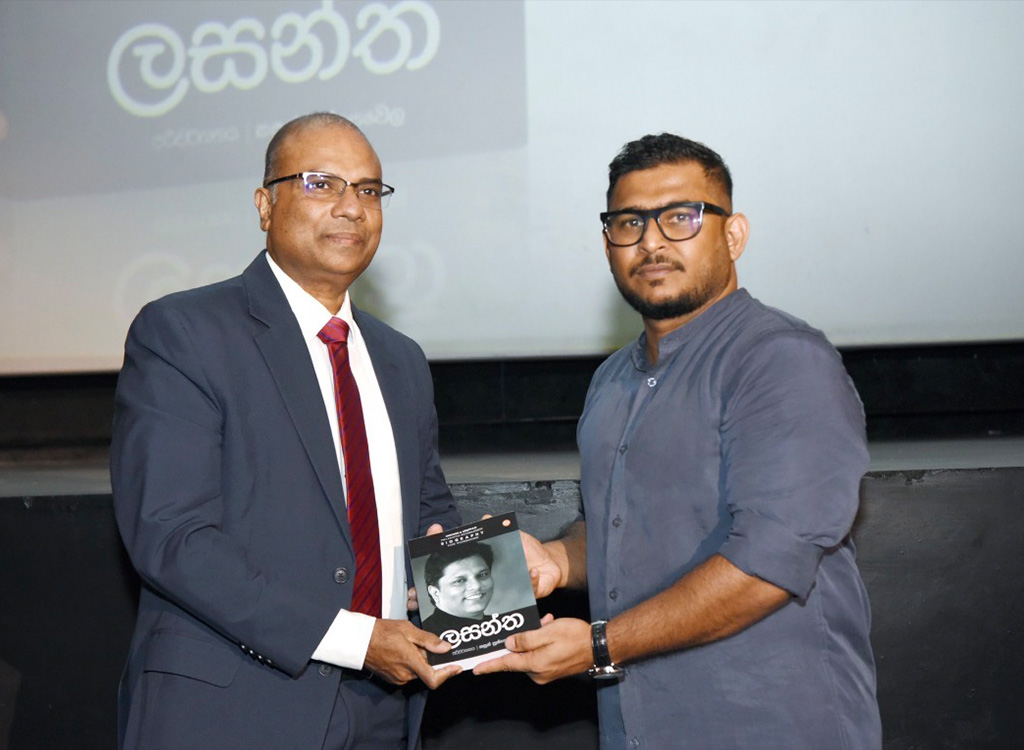
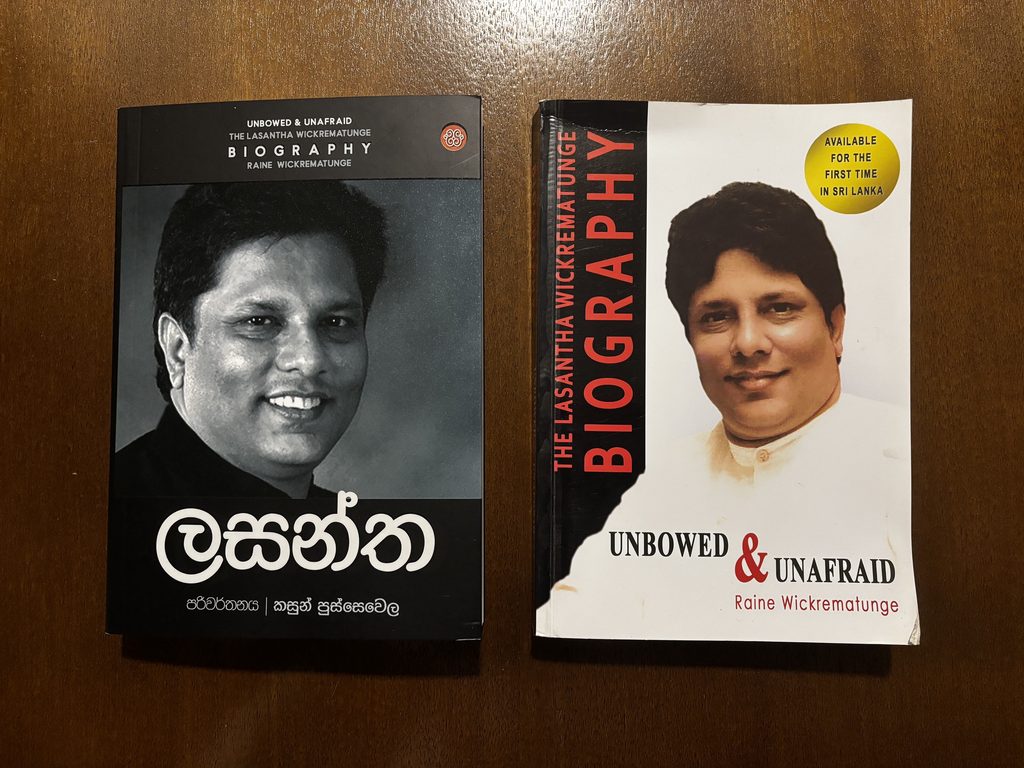
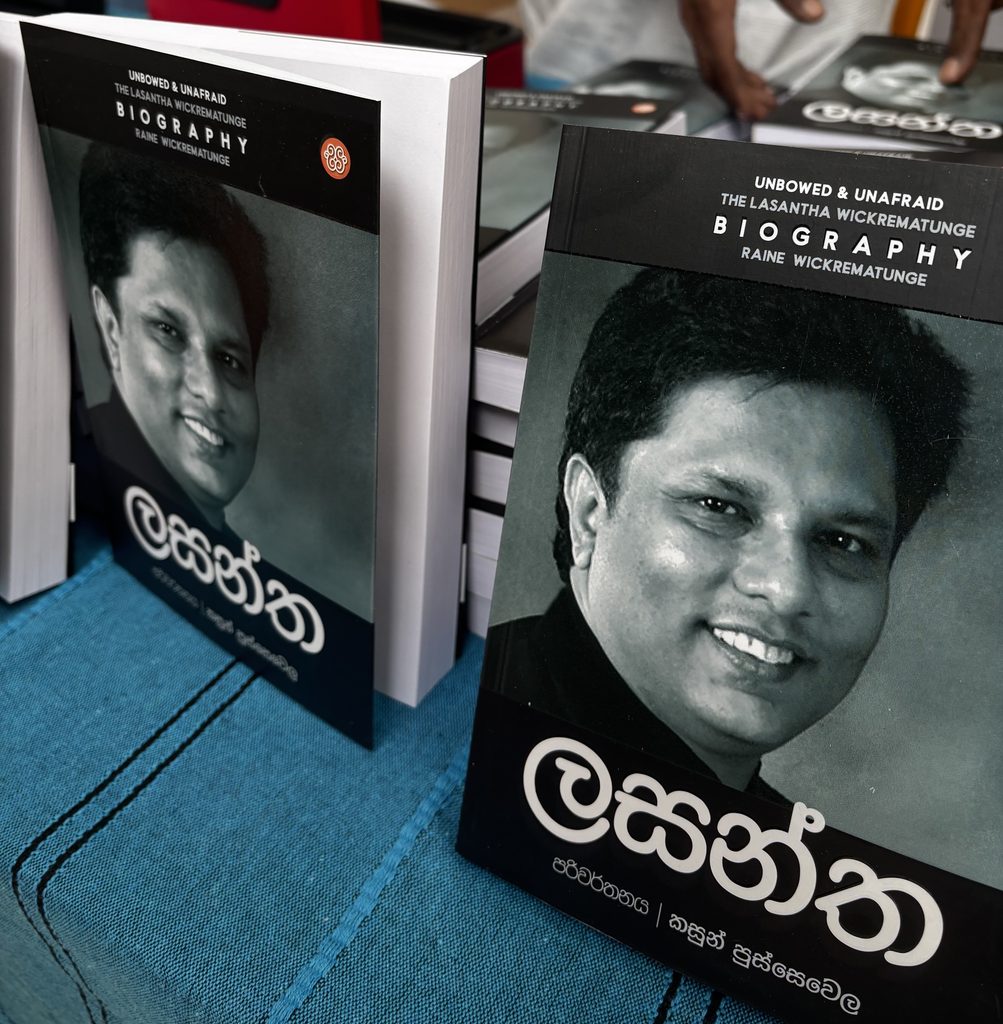
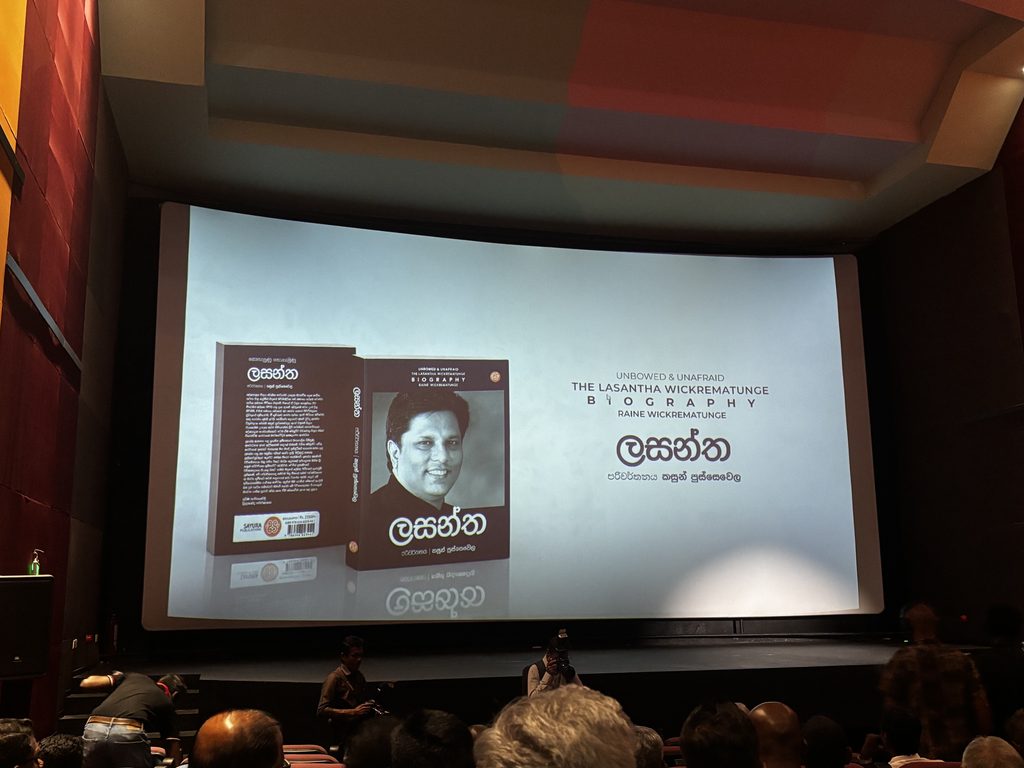
The Sinhala translation of ‘Unbowed & Unafraid,’ the Lasantha Wickremetunge biography authored by Raine Wickrematunge and translated by Kasun Pussewela, was launched yesterday (25) at the National Film Corporation, Colombo.
A World Press Freedom Hero and the recipient of the first-ever Integrity Award from Transparency International, Lasantha Wickrematunge was the Founding Editor-in-Chief of The Sunday Leader. He took journalism to new heights with the paper’s unique brand of no-holds-barred investigative journalism and laid his life on the line every time he took up his pen to write.
Although the threats rolled in, to the point where Lasantha was even included on Amnesty International’s endangered list since 1998, he stood firm. And for that, he was slain in broad daylight almost 18 years ago, on 8 January 2009, in a High Security Zone. While successive governments have promised independent investigations and justice, his killers still roam free.
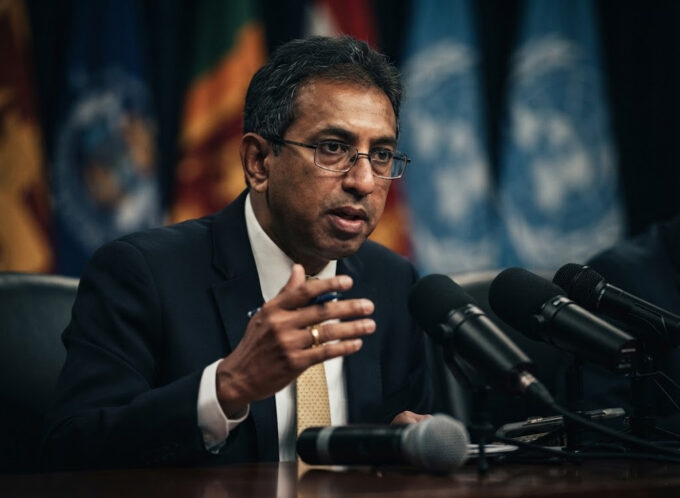
The book launch kicked off with an address by Pussewela, followed by the sharing of statements from Raine Wickrematunge, Ahimsa Wickrematunge, and Lal Wickrematunge, followed by a keynote by Commission to Investigate Allegations of Bribery or Corruption (CIABOC) Director General (DG) Ranga Dissanayake, and the screening of a documentary film titled ‘And Then They Came For Me’.
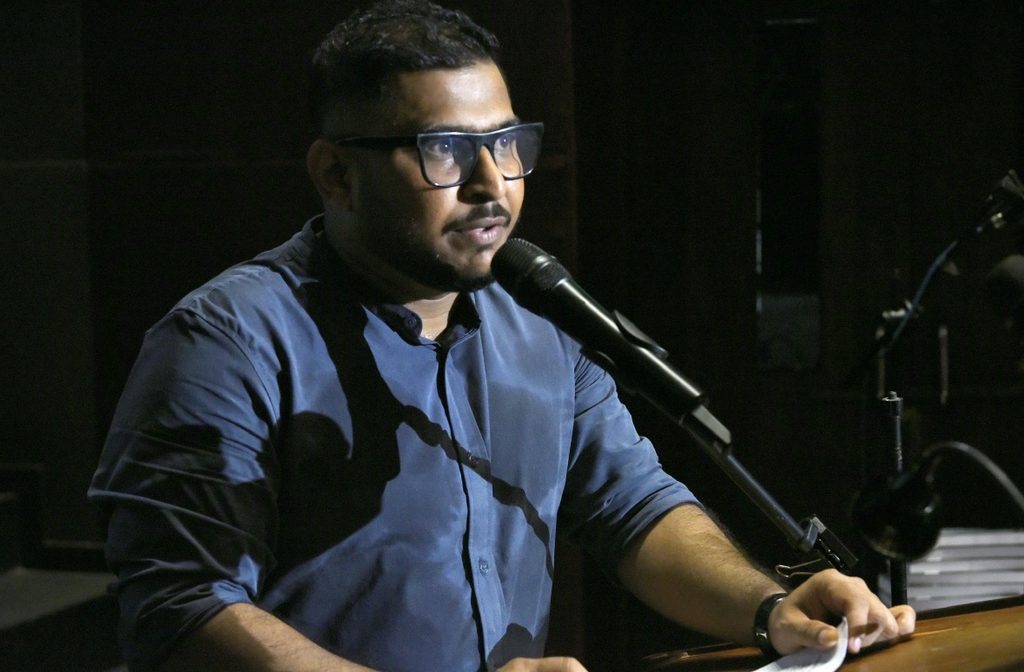
‘We know who killed Lasantha, but he will not die’: Kasun Pussewela
Speaking at the launch, Pussewela said: “Why is Lasantha Wickrematunge important to me? Have I met him? No. Was he one of my peers? No. But I meet him everyday in my life in journalism. I believe he did not die. He cannot die. He built the path of unbowed and unafraid journalism and we meet him on that path in our journey everyday.”
Pussewela’s words brought to mind how the chilling words ‘Who is Lasantha?’ were taken back and made anew by people at the ‘Aragalaya’ (people’s struggle) in April 2022, with placards proclaiming ‘Who is Lasantha? Look around, he is everywhere.’
Pussewela added: “More of us cannot die like Lasantha. This Government promised an independent investigation into his murder. It is responsible for delivering on this promise. Several governments have come and gone. We know who killed Lasantha. But he will not die, he is smiling at us now. As for those who killed him, we know the state they are in now.”
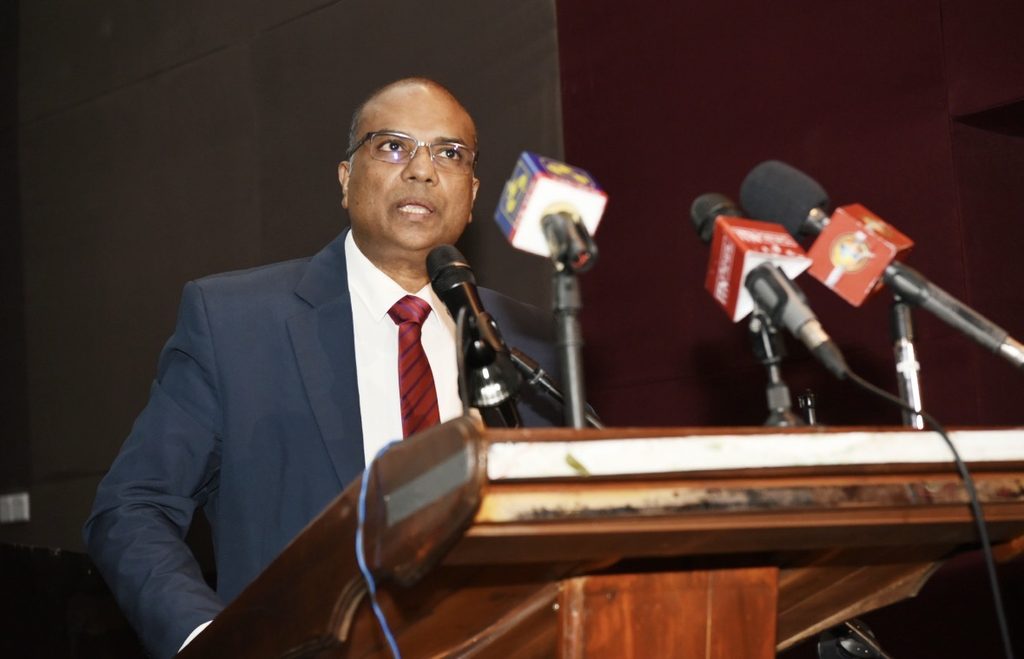
‘Heroes like Lasantha should not die, they should win’: Ranga Dissanayake
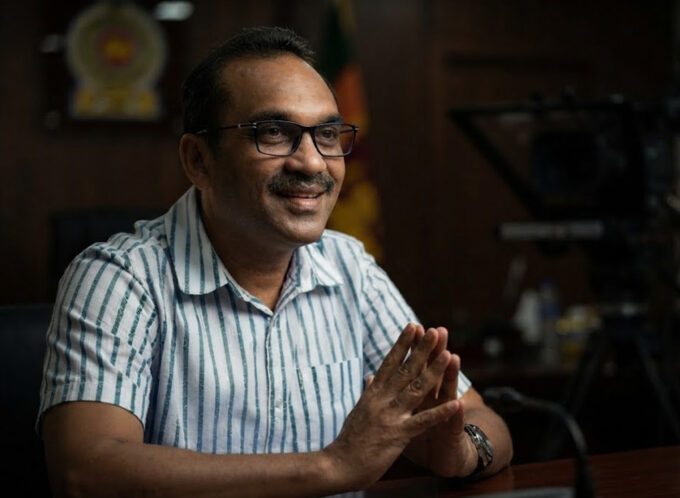
Delivering the keynote, CIABOC DG Ranga Dissanayake commenced his address by saying that he had never met Lasantha and had therefore wondered why Pussewela had invited him to speak.
“I am not a journalist and I have not worked with Lasantha, so why did Kasun invite me to speak? What do we have in common, besides both being lawyers? When I read the book, I realised why: the connection between the reason Lasantha was killed and me. He was killed because he used his pen against corruption in Sri Lanka. What I am now doing is similar to that.”
He continued: “Today the corruption that Lasantha raised his voice against is clear to everyone… The purpose of Lasantha’s killing was not only to get rid of him, but to also send a message of intimidation to everyone like him to mind their own business without trying to be too smart.”
Dissanayake also recalled the murders of Prof. Senaka Bibile and OIC Sujith Priyantha and the acid attack on Auditor General Lalith Ambanwela, stating that Lasantha’s murder was not only intended to silence him but also send a message to other journalists to toe the line.
“Our curse is that our society has received this message loud and clear, accepted it very well, and fallen in line. When Lasantha was killed, if more Lasanthas had been born, their message would have failed. But with Lasantha’s killing, many people became subservient. As a society, we must do the opposite and stand against that message.”
Speaking about the lack of justice in relation to Lasantha’s murder, Dissanayake questioned whether there was a genuine desire to ensure justice, while acknowledging that justice had not been delivered due to a lack of evidence: “Without proof, justice cannot be ensured in a court of law. While justice has not been delivered for Lasantha in court, there are people who know who killed Lasantha who are yet to speak up. Someday, even at the moment of their death, they will know they did not do justice by Lasantha.”
Concluding his address, Dissanayake said: “More Lasanthas should be born… The story cannot end with the hero dying. I am waiting for the hero to win. From now on, heroes like Lasantha should not die, they should win.”
‘Years can pass, but the truth does not disappear’: Raine Wickrematunge
Addressing the audience via a voice message, Raine Wickrematunge expressed her gratitude to everyone gathered and said it was a great source of pride for her to be able to offer Lasantha’s biography to the people of Sri Lanka and an honour to tell the story of a courageous journalist who gave his life in pursuit of the truth.
“Journalism is an honourable profession that carries a profound responsibility towards society and demands immense dedication. For Lasantha, that dedication was as fundamental as life itself. He was aware of the grave threats he faced because he exposed corruption and stood against authoritarianism. He received threats. He was brutally assaulted. The printing press of the newspaper was set on fire. Our home was shot at. Yet he remained steadfast and continued his investigative journalism through The Sunday Leader,” said Raine, recalling how Lasantha never allowed fear to stand in the way of his duty.
“While the world saw him as a seeker of truth, a renowned investigative journalist, and a giant who fought for press freedom, to our family Lasantha was a loving father to his children, a compassionate man whose heart could be touched in an instant, and a simple man who lived his life with humour and laughter. His assassination changed the lives of his three children forever,” she added.
Speaking about why she wrote this book, Raine said that she wanted to document Lasantha’s remarkable career as a journalist and his assassination and to preserve for future generations the inspiring story of a journalist who believed that the public had a right to know the truth.
“When a journalist is killed for exposing the truth while carrying out his duty, it is not only his family and loved ones who lose him. The entire society loses a voice that stood up for the truth. When such a voice is gradually silenced and forgotten over time, we risk losing something else of great importance: the memory of what happened and the courage to ask difficult questions about it.
“That is why the publication of this book is so important. I believe this work will help bring Lasantha’s voice back among us and keep his memory alive, not only for his sake, but in the cause of truth and justice… Through Kasun’s dedication, we are able today to bring Lasantha’s story to Sinhala-speaking readers. Kasun has breathed new life into Lasantha’s story and carried it forward.”
She also thanked journalists, activists, and others who continue to keep Lasantha’s memory alive and those who took Lasantha to hospital after he was attacked and was dying even though they did not know him.
“And finally, to our three children, Avinash, Ahimsa, and Aadesh, this book is also a part of your father’s legacy… People can be silenced. Newspapers can be burned. Evidence can disappear. Years can pass. But the truth does not disappear. Thank you,” she concluded.
‘Love can make us incapable of accepting injustice as inevitable’: Ahimsa Wickrematunge
In her message to the audience, Ahimsa Wickrematunge said the book about her father Lasantha was not simply a book, but a record of a life, a country, and the extraordinary price that people are sometimes asked to pay when they refuse to surrender the truth.
“Tonight, in Sinhala, my mother’s words are returning to the country from which so much of their meaning emerged. That matters enormously to me. Because language is not merely a vessel for words, it is a vessel for memory… To have this book live in Sinhala is therefore not simply to make it accessible to more readers. It is to allow these memories to be heard in a language that belongs profoundly to the soil on which these events unfolded.
“My mother wrote from a place of extraordinary love. Love for my father. Love for her children. Love for the country that he believed could become something better than what it had been. And perhaps that is one of the great paradoxes of love: that it can make us vulnerable to grief, but it can also make us incapable of accepting injustice as inevitable.”
Ahimsa added that for her, justice had never meant vengeance, but something more demanding than vengeance: “Justice requires truth. It requires accountability. It requires institutions that are stronger than fear and laws that are stronger than power. And it requires memory. Because forgetting can sometimes be presented as peace. But forgetting is not peace. Silence is not reconciliation. And the passage of time, by itself, is not justice.
“My mother’s book is important because it refuses that easy silence. It tells us that behind the abstractions of history are human beings. There is a husband. There is a wife. There are children. There is a family whose lives are permanently divided into a before and an after. And there is a society forced to confront what it is willing to tolerate when truth becomes inconvenient. Today, I want to honour not only my mother for writing this book, but everyone who has preserved the truth in Sri Lanka when doing so was difficult… Their courage reminds us that justice is rarely the work of one heroic moment.”
‘The Rajapaksa family knows who killed Lasantha’: Lal Wickrematunge
Over the course of his three decades in journalism, Lasantha’s star shone the brightest during his 14 years as Editor of The Sunday Leader.
In his message, Lal Wickrematunge recalled how asked Lasantha to join him as Editor when he decided to move into newspaper publishing: “Though he was a lawyer he had been contributing articles to newspapers. I asked him to join me as Editor. He asked but one question, ‘No interference to the Editorial?’ I readily agreed. The rest, as everyone would know, is history. Lasantha was murdered. Yes, murdered. Why? We know why. Who did it? We know who. Who ordered it? We know who ordered it.”
Lal said that despite Lasantha being assaulted and shot at and the Leader presses being burnt down and forced to shut down under Emergency laws, they still continued because they felt the people wanted a better Sri Lanka: “Somebody had to put their hand up. Lasantha did. The people by a large majority could not be bothered.”
Having successfully pioneered investigative journalism in the country and taken it to new heights, Lasantha wrote so that all of us would have a better world to live in, laying his life on the line to expose corruption. On that fateful day on 8 January 2009, his car was shot at as he drove to work, forcing him to a halt, and fatal wounds were delivered with weapons similar to cattle prods.
Lasantha was not the only one murdered for telling the truth. As Lal emphasised, the many journalists who were killed in the north and east also need to be remembered and have justice delivered for their families. “We have not given up, nor will we. I am not afraid to say that the Rajapaksa family knows who killed Lasantha. Everyone knows too. Let there be justice for Lasantha’s family. Let there be justice for all the journalists who were done to death.”
Even as we wait for justice and hope we do not wait in vain, Lasantha’s own words come to mind: “I have the satisfaction of knowing that I walked tall and bowed to no man… There is a calling that is yet above high office, fame, lucre, and security. It is the call of conscience.”
May justice prevail.








Leave a comment