
By The Pulseline News Desk
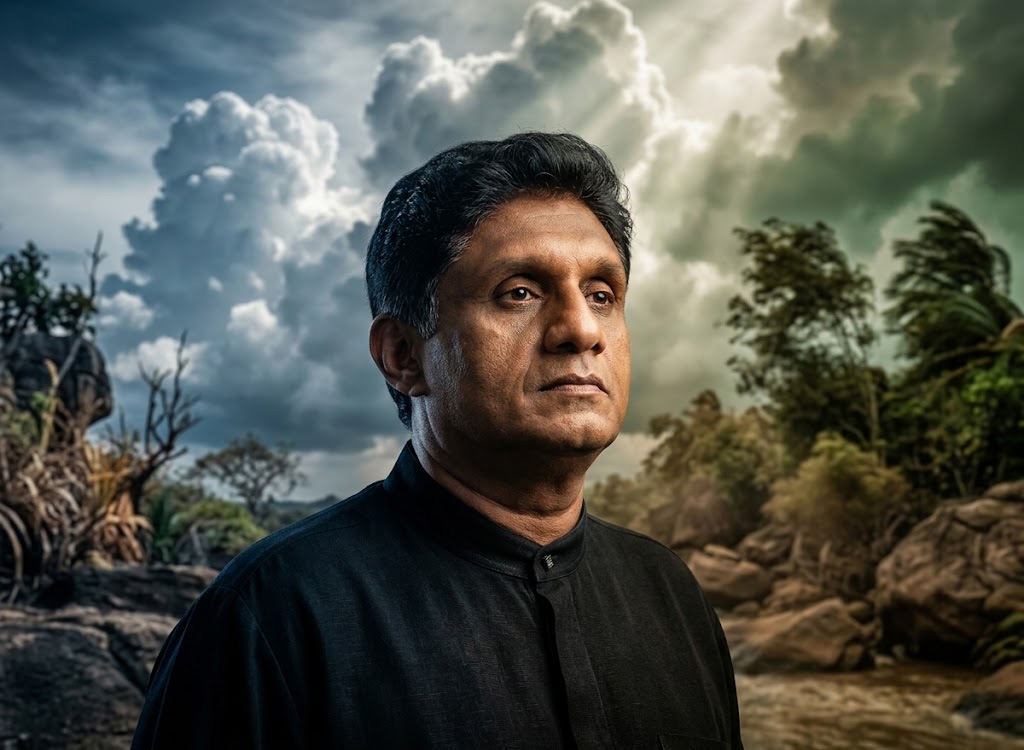
Opposition Leader Sajith Premadasa has called for a national effort involving the Government, Opposition and the public to prepare for the potentially far-reaching impacts of El Niño and La Niña, warning that climate-related threats will affect the entire country regardless of political divisions.
Addressing the Caucus on Climate Parliament of Sri Lanka, which he co-chairs with Prof. L.M. Abeywickrama, Premadasa has said the impact of El Niño had now reached “100%” and has stressed that Sri Lanka could not afford to treat the emerging risks as an issue for a single political party or institution.
He has said the Caucus had discussed the potential effects of El Niño and La Niña even before international organisations began raising wider concerns over the phenomena. With their possible consequences now attracting increasing international attention, he has said Sri Lanka needed to strengthen its preparedness rather than wait until disasters occurred.
Premadasa has said the protection of human resources, wildlife, biodiversity and the environment should be elevated to the level of a national security priority.
He has announced that the Climate Parliament Caucus would initiate a national dialogue on these issues, stressing that the process should be conducted without political divisions and with transparency.
Beyond floods and droughts
The Opposition Leader has warned that the consequences of climate phenomena could extend well beyond individual weather events. Sri Lanka needs to assess their potential impact on forests, wildlife, biodiversity, drinking water, irrigation, food supplies and energy security, he has said.
Wildlife protection should also form part of the national response, Premadasa has said, noting that animals have no voting rights but must nevertheless be protected for the benefit of both current and future generations.
His comments come as Sri Lanka remains vulnerable to weather-related disruptions, with changes in rainfall patterns capable of affecting agriculture, reservoirs, water availability and electricity generation.
For an economy still rebuilding from a severe economic crisis, such disruptions could also have wider implications for food prices, agricultural incomes, energy costs and household expenditure.
Early warning must lead to early action
Premadasa has also criticised the country’s tendency to concentrate on disaster response after an event has already occurred.
While acknowledging the important role played by the disaster management mechanism during emergencies, he has said Sri Lanka needed a dedicated system capable of acting on early warnings.
He has called for a mechanism through which advance information on potential risks would immediately trigger preventive measures, including evacuation where necessary.
According to Premadasa, global disaster-risk warnings should not simply remain as information received by authorities. They should result in an immediate and coordinated response at the national and local levels.
The proposed approach would require authorities to identify vulnerable communities and areas in advance, prepare evacuation plans and ensure that essential services can continue during climate-related disruptions.
Preparing before the crisis
Premadasa has said Sri Lanka should develop a comprehensive assessment of both global and domestic El Niño and La Niña impacts, covering water, agriculture, forests, biodiversity, food and energy.
The central challenge, he has suggested, is to move away from a “disaster happens, response follows” model towards a pre-disaster preparedness programme.
Such a shift would require stronger coordination among government institutions, local authorities, disaster management agencies, scientists and communities.
The call also highlights a broader policy challenge for Sri Lanka: climate risks are no longer confined to environmental policy. Their effects can move rapidly through agriculture, water management, electricity generation, food security, public finances and household costs.
As El Niño and La Niña continue to influence global weather patterns, the effectiveness of Sri Lanka’s response may therefore depend less on how quickly it can react to disasters and more on how early it can anticipate and prepare for them.
For Premadasa, the message is that climate-related risks should not become another arena for political division. The Government, Opposition and public will ultimately face the same floods, droughts, water shortages and other consequences — and preparedness, rather than politics, will determine how severely the country is affected.









Leave a comment