
By The Pulseline News Desk
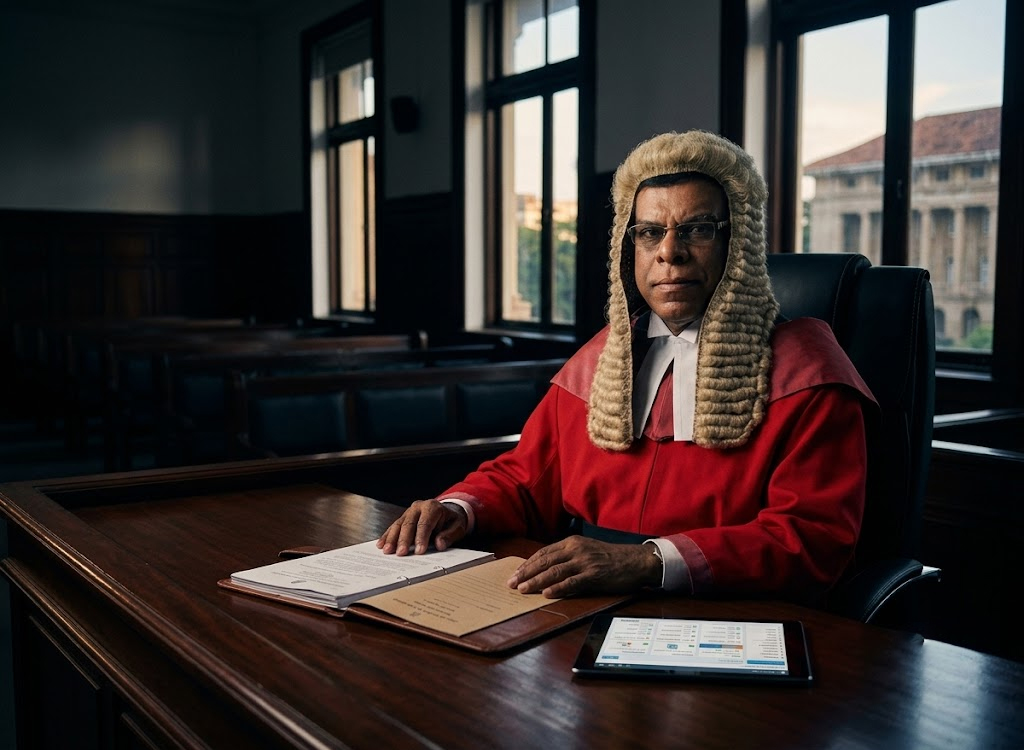
Sri Lanka’s Chief Justice Preethi Padman Surasena has stated that the dramatic reduction in the Supreme Court’s case backlog demonstrates that effective case management, not merely increasing the number of judges, is the most sustainable solution to delays in the administration of justice.
Addressing the ceremonial sittings of the Supreme Court to mark its 225th anniversary, the Chief Justice has revealed that the apex court has reduced its pending caseload by more than 1,500 cases within a year despite operating with fewer judges than permitted under the Constitution.
“When I assumed office as the 49th Chief Justice on July 28, 2025, there were 5,326 cases pending determination,” he has said.
He has noted that following changes to the court’s case management approach, all judges sat five days a week, with five three-judge benches functioning regularly.
By the end of 2025, the Supreme Court had disposed of 602 pending cases. During the first five months of 2026, a further 805 cases were concluded, while another 156 cases were cleared between May 8 and July 14.
As a result, the number of pending cases has fallen from 5,326 to 3,763.
‘More judges are not the answer’
Drawing attention to the figures, the Chief Justice has argued that the experience had challenged the long-held belief that expanding the bench was the primary solution to judicial delays.
“This shows one primary thing. That is the importance of introducing and establishing a case management system,” he has said.
“It also shows that the mere increase of judges in numbers is not the best solution for clearing backlogs.”
The remarks come at a time when judicial reforms, court efficiency and delays in litigation have become central issues in discussions on improving Sri Lanka’s justice system.
Justice Surasena has noted that because the backlog has significantly reduced, the Supreme Court no longer requires five benches to sit regularly.
“During the second term of this year we realised that we do not any longer need five benches to comfortably handle the case load in the Supreme Court,” he has said.
Constitutional expansion
The Chief Justice has also recalled that until 2020 the Supreme Court was constitutionally limited to a maximum of 10 judges.
Following the enactment of the 20th Amendment to the Constitution, that ceiling was increased to 16 judges.
However, he has noted that the recent reduction in pending cases had been achieved despite the Supreme Court functioning with fewer judges than the maximum allowed.
His remarks are likely to add weight to the growing debate over whether judicial reform should focus on expanding court capacity or improving court administration and case management.
Praise for the legal profession
Justice Surasena has also credited the legal profession for helping accelerate the disposal of long-pending litigation.
“If you want to walk fast, walk alone. But if you want to walk far, walk together,” he has said, borrowing a well-known proverb.
“The judges walked with the lawyers. The lawyers never complained when the court was ready to take up cases.”
He has observed that lawyers often incur additional costs and preparation when hearings are postponed yet had cooperated with the court’s efforts to hear matters without unnecessary delay.
“If not for the support from the Bar, we would not have been able to bring down the backlog in this court,” he has said.
Digital courts gathering pace
The Chief Justice has also highlighted the progress of the judiciary’s digital transformation, describing the newly introduced electronic court management platform as a major milestone.
Electronic filing of cases has been available in the Supreme Court since February this year, with the number of digitally filed cases continuing to rise.
He has said the digitalisation of the Supreme Court had now been completed, with work underway to upload older, physically filed case records into the electronic system.
Priority, he has noted, is being given to pending cases rather than concluded matters.
Justice Surasena had also spoken at the launch of the judiciary’s expanded digital court system, which now covers the Supreme Court, Court of Appeal, Commercial High Court, Civil Appellate High Courts, High Courts, District Courts and Magistrates’ Courts.
Describing the platform as a “home-grown solution” to long-standing administrative challenges, he has expressed confidence in its reliability after extensive testing in open court.
“It is fascinating to conduct the hearing of a case when you have an electronically constructed case in the system,” he has said.
He has added that the judiciary remains committed to ensuring the full implementation of the system and will continue conducting awareness programmes for lawyers to ensure they are equipped to operate in an increasingly digital court environment.
The Chief Justice’s remarks underscore a broader shift in Sri Lanka’s judicial reform agenda — from expanding institutions to improving efficiency through technology, structured case management and closer cooperation between the Bench and the Bar.












Leave a comment