
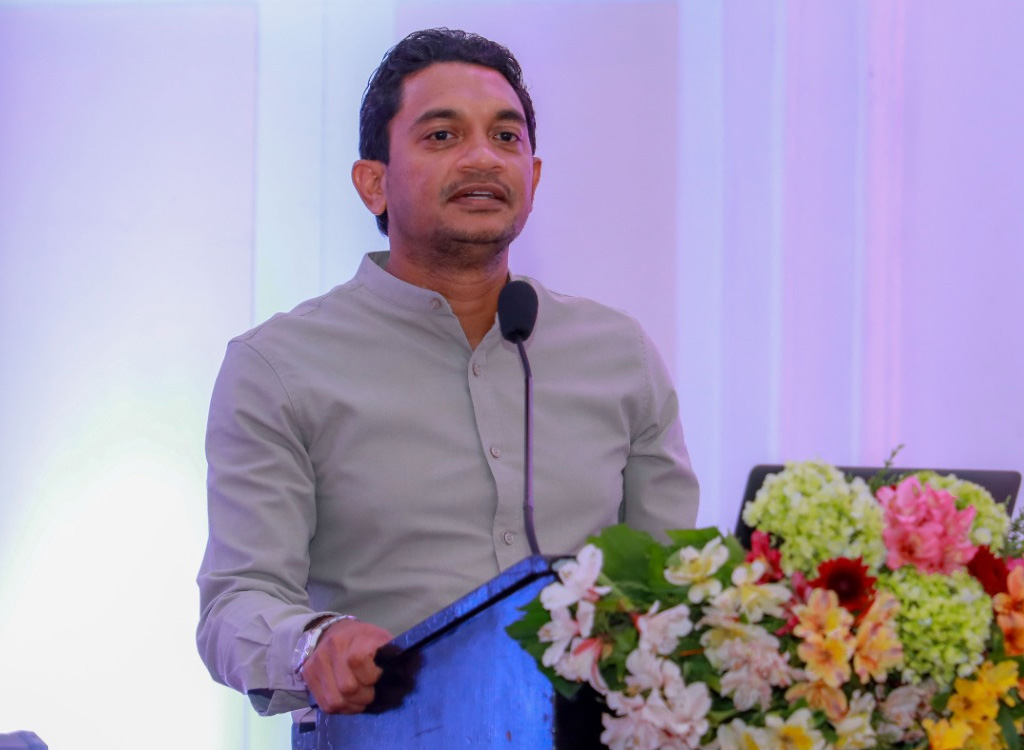
Deputy Minister of Industry and Entrepreneurship Development Chathuranga Abeysinghe has defended the government’s economic performance while acknowledging deep-rooted inefficiencies in public sector systems, stating that meaningful reforms will require time.
In a recent Facebook post, Abeysinghe addressed criticism that the current administration lacks experience in managing the economy. Despite challenges in 2025 – including what he described as “Trump tariffs and Ditwa” – he said Sri Lanka had nevertheless recorded “significant economic performance” during the year.
“If this continues, the same old opposition will have to fade away for good,” he stated.
The Deputy Minister emphasized that longstanding weaknesses in government services, including inefficiency and exposure to fraud, cannot be resolved overnight. He noted that digital transformation efforts are underway but cautioned that the process would take years to fully implement.
“We all know government services are inefficient and vulnerable to risk and fraud. It may take many years to fix such issues through the use of digital transformation. We have started, but it will take time,” he said.
Abeysinghe also argued that such administrative shortcomings are increasingly being used as a basis for political criticism. “The opposition now use the inefficiencies in government services to attack the political leadership,” he said.
Referring to recent controversies, he pointed to issues surrounding curriculum book printing, delays in customs clearance under a fast-track container system, coal tender procedures, and weaknesses in Treasury-related payment mechanisms.
“All four counts are due to deficiencies in process or people in government services, and these need to be improved. Many more will get exposed,” he added.
He stressed that ongoing reforms are aligned with broader goals of good governance, transparency, and economic restructuring – objectives that gained prominence during the Aragalaya.
“We should improve the process and system and continue the journey on good governance, transparency and economic reforms which were the demands of Aragalaya,” he said.
Abeysinghe also expressed confidence that public support for change would remain intact as reforms progress.
“We hope that people who believed in change (60%) will see the big picture and the reforms taking place,” he added.












Leave a comment