
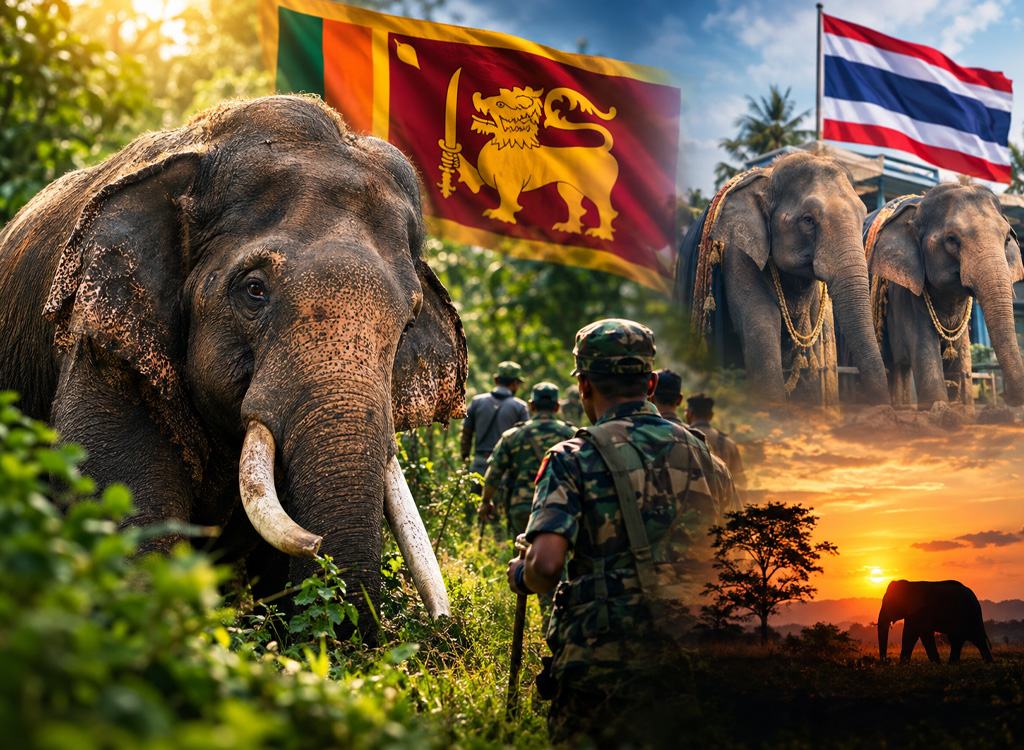
Wild tusker Agbo reported safe after military-assisted search as concerns grow over elephant welfare, conservation and the protection of Sri Lanka’s wildlife
By The Pulseline News Desk
The successful search for the injured wild tusker Agbo in Anuradhapura has renewed attention on Sri Lanka’s efforts to protect its elephant population, amid growing public concern over wildlife conservation and reports of pressure from Thailand to repatriate two elephants gifted to Sri Lanka.
Agbo was located on October 19 in the Ihattewa forest area in Nachchaduwa, Anuradhapura, with assistance from Sri Lanka Army personnel working alongside officers of the Department of Wildlife Conservation.
Opposition Leader Sajith Premadasa has subsequently said the elephant was safe and well, citing information he had received from wildlife sources.
“AGBO is well and good, according to reliable information received from wildlife sources,” he has said in a post on X, congratulating wildlife officials and military personnel involved in the search.
The operation followed a request from Environment Minister Dammika Patabendi and instructions from Defence Secretary Air Vice Marshal Sampath Thuyacontha (Retd.).
An initial team of 30 Army personnel was deployed, with the number subsequently increased to accelerate the search. The military worked in coordination with wildlife officials to locate the tusker.
Although the successful operation brought relief to those concerned about Agbo’s welfare, it also highlighted the challenges involved in monitoring and protecting wild elephants, particularly when injured animals move through forest areas.
Thai pressure over elephants gifted to Sri Lanka
The search for Agbo comes as the Government faces another wildlife-related concern involving two elephants gifted to Sri Lanka by Thailand.
Environment Minister Patabendi has said Thai authorities are under pressure from animal rights activists to bring the two elephants back to Thailand.
The Minister has told the media that his ministry was in contact with Thai authorities to assure them that the elephants were receiving proper care in Sri Lanka.
He has said some groups had staged demonstrations outside the Sri Lankan Embassy in Bangkok and suggested that the protests could have a political dimension.
To address the concerns, the Ministry had deployed veterinary surgeons to examine the elephants and prepare reports on their condition. The reports are expected to provide information that can be communicated to Thai authorities amid the concerns raised by animal welfare groups.
The issue recalls the case of Sak Surin, a 29-year-old male elephant gifted to Sri Lanka by the Thai royal family in 2001 to carry Buddhist relics during religious processions.
Sak Surin was returned to Thailand on July 2, 2023, following a diplomatic dispute over allegations of neglect and serious leg injuries.
His repatriation brought international attention to the welfare of elephants gifted between countries for religious and cultural purposes.
The current concerns involving the two elephants have once again placed the treatment of captive elephants under scrutiny, particularly where animals are associated with religious ceremonies and diplomatic relations.
Kavantissa killing prompts new protection initiative
Meanwhile, the reported killing of the tusker Kavantissa has prompted Opposition Leader Premadasa to announce the formation of a community-based organisation aimed at strengthening elephant protection and safeguarding Sri Lanka’s biodiversity.
The initiative, named the Kavantissa Elephant Protection Organisation, was launched following a discussion at the Opposition Leader’s Office involving civil society representatives and individuals concerned about wildlife and environmental conservation.
Premadasa has said several proposals to strengthen elephant protection had been presented during the meeting.
He has added that he intended to bring the proposals to the attention of Parliament and the Government in the future.
The initiative is intended to address concerns arising from Kavantissa’s killing while promoting the protection of elephants, other wildlife and the country’s wider biodiversity.
The formation of the organisation also reflects growing calls for stronger public participation in wildlife conservation and more effective measures to prevent the killing of elephants.
Human-elephant conflict remains a major challenge
Sri Lanka’s elephant conservation efforts continue to face challenges arising from habitat loss, human-elephant conflict and the killing of wild elephants.
Encounters between people and elephants can result in deaths, injuries and damage to property, while elephants face threats from gunshot injuries, electrocution, explosives concealed in food and other human-related dangers.
Conservation efforts therefore require coordination among wildlife authorities, other Government institutions, local communities and organisations working to protect natural habitats.
The search for Agbo demonstrated how cooperation between wildlife officials and the military can assist in locating an animal in difficult terrain. However, finding an injured elephant is only one part of the broader task of ensuring its safety and long-term survival.
Veterinary assessment, continued monitoring and measures to reduce threats to wildlife are also important in responding to such incidents.
Similarly, the concerns raised by Thailand highlight the importance of maintaining appropriate standards of care for captive elephants and addressing animal welfare concerns transparently.
From individual cases to long-term conservation
The cases involving Agbo, Kavantissa and the two Thai elephants highlight different aspects of Sri Lanka’s wildlife protection responsibilities.
Agbo’s discovery brought relief after an intensive search, while Kavantissa’s killing has prompted calls for stronger protection measures. Meanwhile, the concerns raised in Thailand demonstrate how the treatment of elephants can also affect Sri Lanka’s international relationships.
Together, these developments have renewed attention on whether existing conservation measures are sufficient to protect the country’s elephant population and ensure the welfare of animals under human care.
For Sri Lanka, the challenge extends beyond responding to individual incidents. It requires sustained action to protect elephant habitats, reduce human-elephant conflict, investigate wildlife-related offences and ensure that animal welfare concerns are addressed effectively.
The successful search for Agbo is a welcome development, but the wider debate over elephant protection underscores the need for continued cooperation between authorities, conservationists and communities to safeguard Sri Lanka’s wildlife for future generations.













Leave a comment