
By The Pulseline News Desk
Sri Lanka is facing the prospect of an unusually intense El Niño event later this year, with the Department of Meteorology warning that the phenomenon could become one of the strongest recorded in more than seven decades.
Director General of the Department of Meteorology Ajith Wijemannage said global forecasting models now indicate a more than 90% probability that the ongoing El Niño conditions will intensify into a very strong event by the end of 2026.
He said there is also nearly a 70% probability that this year’s El Niño could be stronger than any El Niño event recorded since 1950.
“Global forecasts show that by the end of this year, the likelihood of a very strong El Niño is more than 90 percent,” Wijemannage told the media, noting that the phenomenon is continuing to strengthen.
According to him, when compared with El Niño events recorded over the past 75 years, the probability that the current event will surpass all previous events is currently estimated at nearly 70%.
The warning comes as several parts of Sri Lanka are already experiencing noticeably hotter conditions, raising concerns over water availability and the impact of prolonged dry weather.
Northern and dry-zone areas feel the heat
Wijemannage said a notable increase in body temperature has been observed among people in the Northern, North-Central and North-Western provinces, as well as in the Monaragala and Hambantota districts.
However, the Western and Sabaragamuwa provinces have not experienced the same degree of temperature increase, largely because intermittent rainfall has continued in those areas.
The developing weather pattern is particularly significant for Sri Lanka because prolonged dry conditions can place additional pressure on agriculture, drinking-water supplies and hydropower generation.
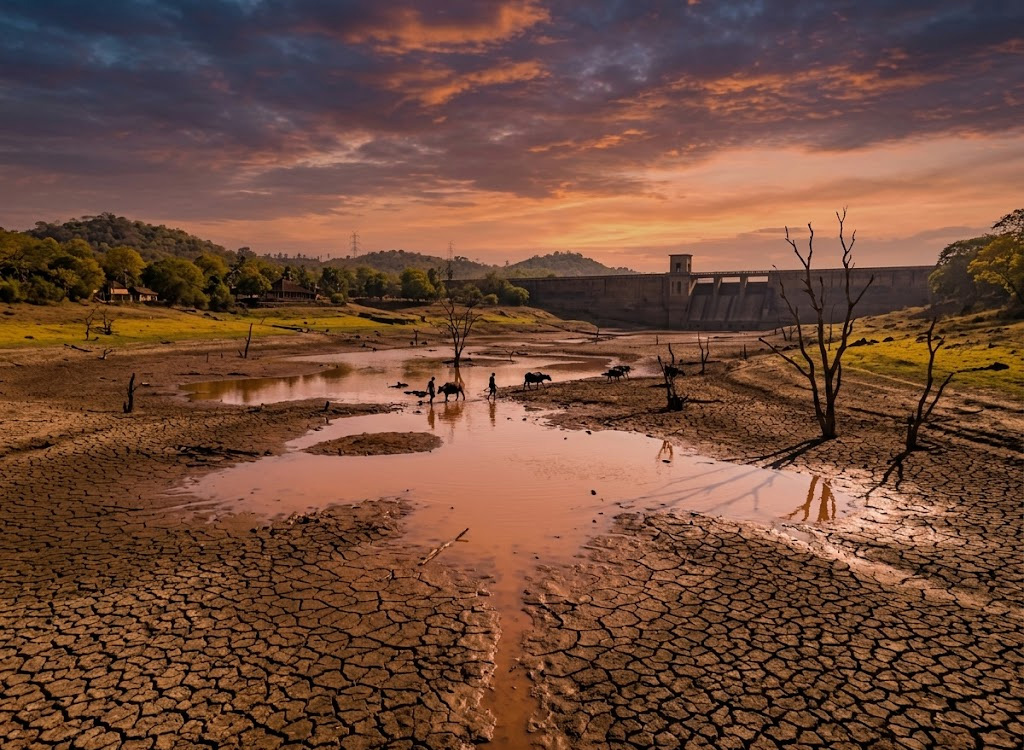
Reservoir levels fall to 37%
The Irrigation Department has meanwhile reported that the water volume in reservoirs under its control has fallen to around 37%, prompting authorities to urge the public to use water responsibly.
Director of Water Management Engineer H.N.P.S.D. Herath has said the available water is currently expected to be sufficient to meet requirements during the Yala cultivation season and until the anticipated November–December rains arrive.
However, the declining reservoir levels underline the importance of conserving available water if dry conditions persist or intensify in the coming months.
The Irrigation Department has also indicated that more than 56% of reservoirs under its control have recorded reductions in water levels, highlighting the widening impact of the dry spell.
Water supply maintained
Despite the decline in reservoir levels, the National Water Supply and Drainage Board (NWSDB) has assured the public that there has been no reduction in treated water supplies.
NWSDB Chairman Chandana Bandara has said water treatment plants across the country are currently operating at 100% capacity.
He has said water supplies have not been curtailed despite dry conditions affecting several districts.
The assurance provides some immediate relief to consumers, although authorities are increasingly stressing the need for careful water management as the country moves towards the latter part of the year.
Growing concern ahead
The combination of intensifying El Niño conditions, elevated temperatures and falling reservoir levels could become a major environmental and economic challenge if the dry spell persists.
For Sri Lanka, the immediate concern is to ensure adequate water for drinking purposes and agriculture while maintaining sufficient reserves until the next major rainfall season.
The Meteorology Department’s latest projections therefore add urgency to calls for water conservation, particularly in areas already experiencing high temperatures and declining water availability.
With the probability of a very strong El Niño event now exceeding 90%, the coming months could prove critical for Sri Lanka’s water, agricultural and weather-management systems.













Leave a comment