
By The Pulseline News Desk
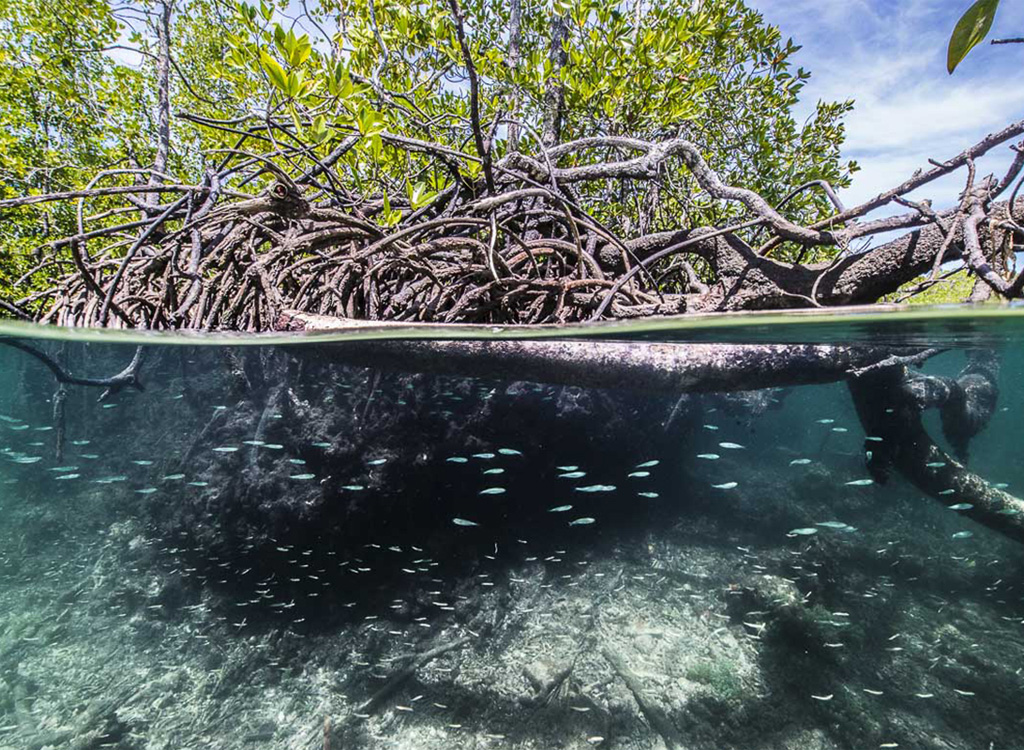
The Government has expanded Sri Lanka’s network of protected mangrove ecosystems by declaring eight new mangrove forest systems in the Puttalam District as reserves, strengthening efforts to conserve one of the country’s most valuable natural defences against climate change.
The gazette, signed on Monday (27) by Environment Minister Dammika Patabendi, brings 176.67 hectares of mangrove forests under formal protection as part of the national programme, Give Space for Mangroves to Breathe, implemented under the Government’s environmental policy framework, A Sustainable Biosphere – Evergreen Life.
The declaration, which follows International Mangrove Ecosystem Conservation Day on July 26, also forms part of the broader Vanaspathi conservation programme.
The newly protected forests include Thilliyadiya, Sammattawadiya, Muthalapali, Kudawa, Kumbutu Kuliyawa, Karambe, Kandakuliya and Mandala Kudawa, all located within Sri Lanka’s largest mangrove belt in the Puttalam lagoon system.
The move builds on similar declarations made in 2025, when around 67 hectares of mangrove forests in the Puttalam and Chilaw range offices were brought under protection.
With the latest gazette, the Government is signalling that mangrove conservation has become a key component of its broader environmental agenda.
That recognition is well-founded.
Mangroves are among the world’s most productive ecosystems, acting as natural barriers against coastal erosion, storm surges and flooding while serving as breeding grounds for fish, crabs and shrimp that support coastal livelihoods. They also rank among the planet’s most efficient carbon sinks, storing significantly more carbon than many terrestrial forests and playing an increasingly important role in climate change mitigation.
Sri Lanka is estimated to have around 12,500 hectares of mangrove forests spread across its coastal lagoons and estuaries, with Puttalam accounting for the country’s largest concentration. Researchers have identified 11 mangrove species across the island, making the ecosystem both ecologically diverse and economically significant.
However, conservationists have long argued that legal protection alone will not guarantee the survival of these fragile habitats.
Over the years, mangrove ecosystems have come under pressure from shrimp farming, illegal land reclamation, pollution, unregulated coastal development and unsustainable resource extraction. In several coastal areas, protected status has not always translated into effective management on the ground.
The Ministry of Environment says the latest initiative is intended not only to conserve mangroves but also to raise public awareness of their ecological value while promoting their sustainable management and responsible use.
That objective reflects a growing shift in environmental policy, where conservation is increasingly linked with community participation rather than relying solely on regulatory enforcement.
The challenge now lies in implementation.
Protecting mangroves requires regular monitoring, adequate funding, stronger enforcement against encroachment and close cooperation with local fishing communities, whose livelihoods are closely tied to these ecosystems. Without sustained management, gazette notifications risk becoming symbolic rather than transformative.
For Sri Lanka, which is increasingly vulnerable to rising sea levels, coastal erosion and extreme weather linked to climate change, healthy mangrove forests represent more than an environmental asset. They are a form of natural infrastructure that strengthens coastal resilience while supporting biodiversity, fisheries and local economies.
The latest declaration therefore marks another positive step in environmental policy. Whether it delivers lasting ecological benefits, however, will depend on how effectively these newly protected forests are managed long after the gazette has been signed.











Leave a comment