
By The Pulseline News Desk
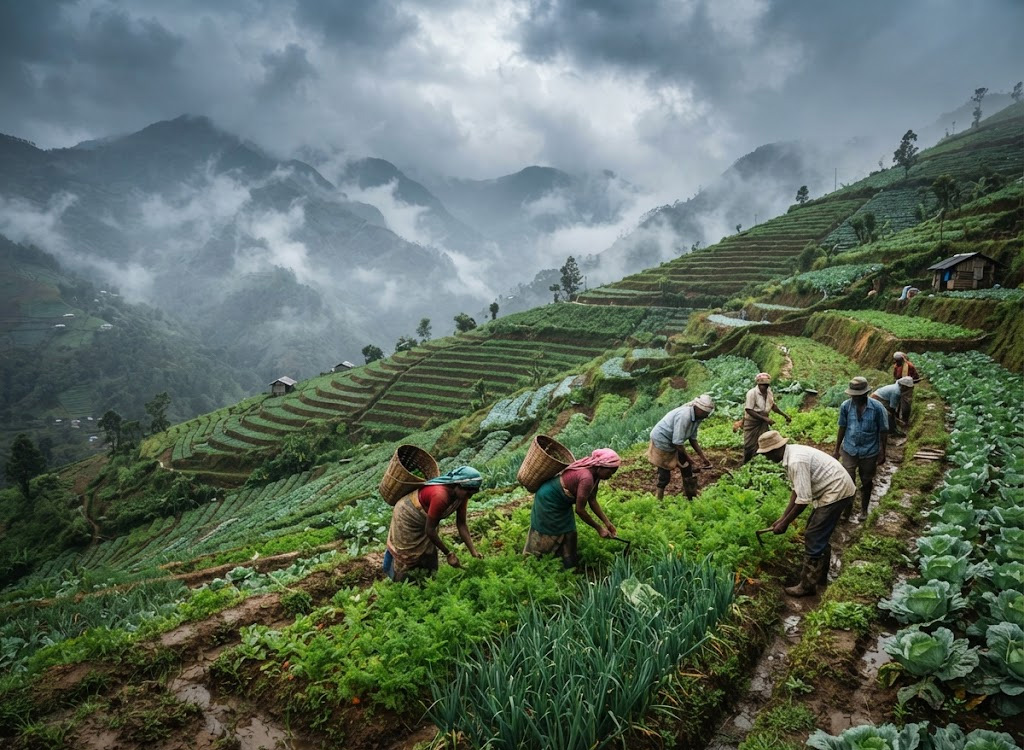
Vegetable farmers in Nuwara Eliya are being squeezed by rising production costs and falling market prices, with some saying they can no longer recover even the money invested in their crops.
Farmers has told the media that they spend nearly Rs. 4,000 a day on seeds, chemical fertilisers, pesticides, fungicides and labour, only to find traders offering prices that barely cover their costs.
Payments are also frequently delayed, with some farmers saying they wait weeks or even months to receive money for produce already sold.
The financial pressure has led some growers to reconsider vegetable cultivation altogether, while others have been forced to leave or destroy unsold crops in their fields.
Traders point to crop quality
Traders, however, have attributed the low prices partly to declining quality in some crops, particularly leeks and carrots.
They have raised concerns that the use of hybrid seeds and excessive quantities of chemical fertilisers and pesticides may be affecting the size and quality of vegetables reaching the market.
One trader has noted that leeks, for example, appeared to be growing much larger than their usual size, potentially affecting their market demand.
Farmers, meanwhile, have argued that the use of fertiliser and crop-protection chemicals is driven by the high costs and risks of cultivation and that they remain dependent on these inputs to maintain production.
Farmers face an uncertain future
The widening gap between cultivation costs and farm-gate prices is leaving growers with little financial room to continue.
Poor returns from one harvest reduce their ability to finance the next, while delayed payments further disrupt the cultivation cycle.
Farmers warn that continued losses could push more growers out of vegetable cultivation, threatening the livelihoods of farming families in one of Sri Lanka’s key vegetable-producing regions.
The crisis has also renewed concerns over the lack of predictable prices and stronger links between farmers and markets, leaving growers exposed to fluctuations they have little control over.












Leave a comment