
By The Pulseline News Desk
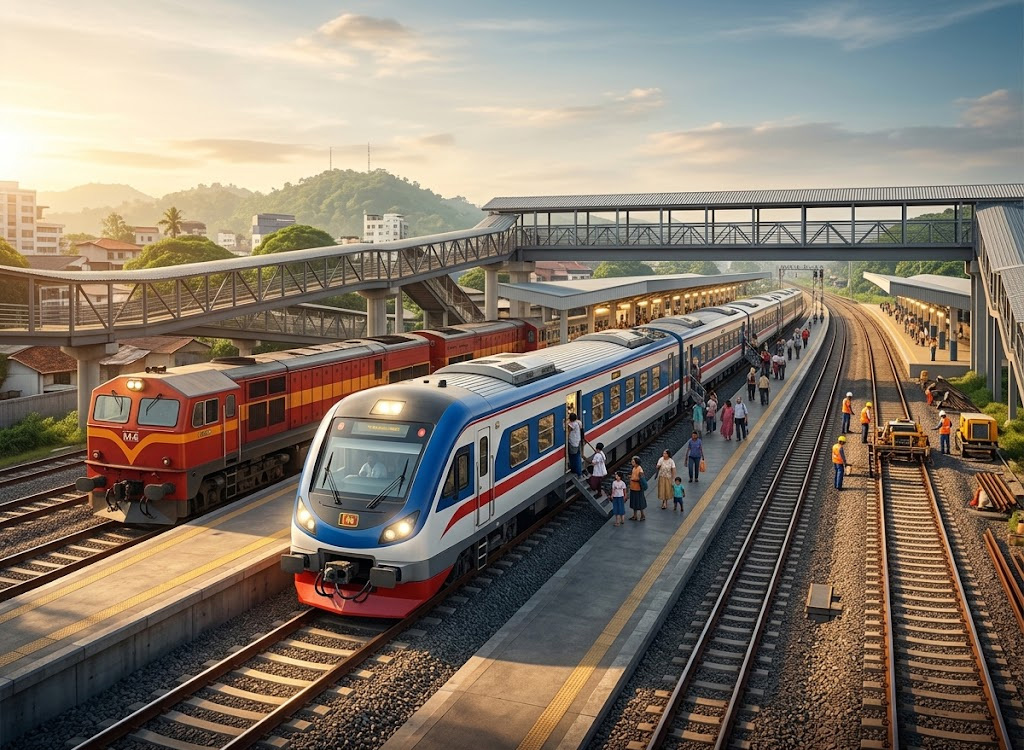
The Government is moving ahead with plans to expand and modernise Sri Lanka Railways’ fleet while upgrading key sections of the existing railway network, Deputy Minister of Transport Prasanna Gunasena has informed Parliament.
Gunasena has said the Government currently had no plans to extend the overall length of the railway network but was instead focusing on improving existing lines and strengthening the capacity of the current system.
Among the projects being pursued is the planned upgrade of the Polgahawela–Kurunegala railway section, which is expected to improve the efficiency and reliability of services along the route.
The Government is also advancing the procurement of new trains, with tenders already called for five new power sets.
According to the Deputy Minister, the tender evaluation process is currently underway, with the Government expecting to award the contract before the end of 2026.
Further additions to the fleet are also planned under the 2027 Budget.
Gunasena has said funds are expected to be allocated next year to procure another five train sets, which would further increase the number of trains available for passenger services.
The Government is also considering the procurement of bidirectional trains capable of operating shorter-distance services.
Such trains could provide greater flexibility in deploying services on routes where full-sized train sets may not be required, while potentially improving service frequency and operational efficiency.
Meanwhile, Sri Lanka is also seeking to develop local capacity in railway equipment manufacturing.
The Government has initiated a project to assemble three light train sets locally, with bids already called and currently under evaluation.
Gunasena has said the procurement process for the local assembly project is expected to be completed within the next three months and before the end of 2026.
The planned acquisitions and infrastructure upgrades come as Sri Lanka Railways seeks to address long-standing concerns over an ageing fleet, limited service capacity and the need to improve the reliability of passenger services.
Rather than expanding the railway network into new areas at this stage, the Government’s approach is focused on upgrading existing infrastructure while increasing the number and variety of trains available to passengers.
The introduction of locally assembled light train sets could also mark a step towards developing domestic technical and manufacturing capabilities within the railway sector.
With procurement processes for several projects already underway, the Government expects the measures to gradually strengthen the railway fleet and improve the quality and availability of services across the existing network.










Leave a comment