
By The Pulseline News Desk
Sri Lanka’s inflationary pressures have intensified in August, with the overall rate of inflation rising to 8.1% year-on-year, as measured by the National Consumer Price Index (NCPI), driven largely by a sharp acceleration in food prices.
According to the Department of Census and Statistics (DCS), national inflation has increased from 7.2% in July to 8.1% in August, marking a 0.9 percentage-point increase within a month.
The latest figures point to a broadening of price pressures, with both food and non-food categories recording increases during the month.
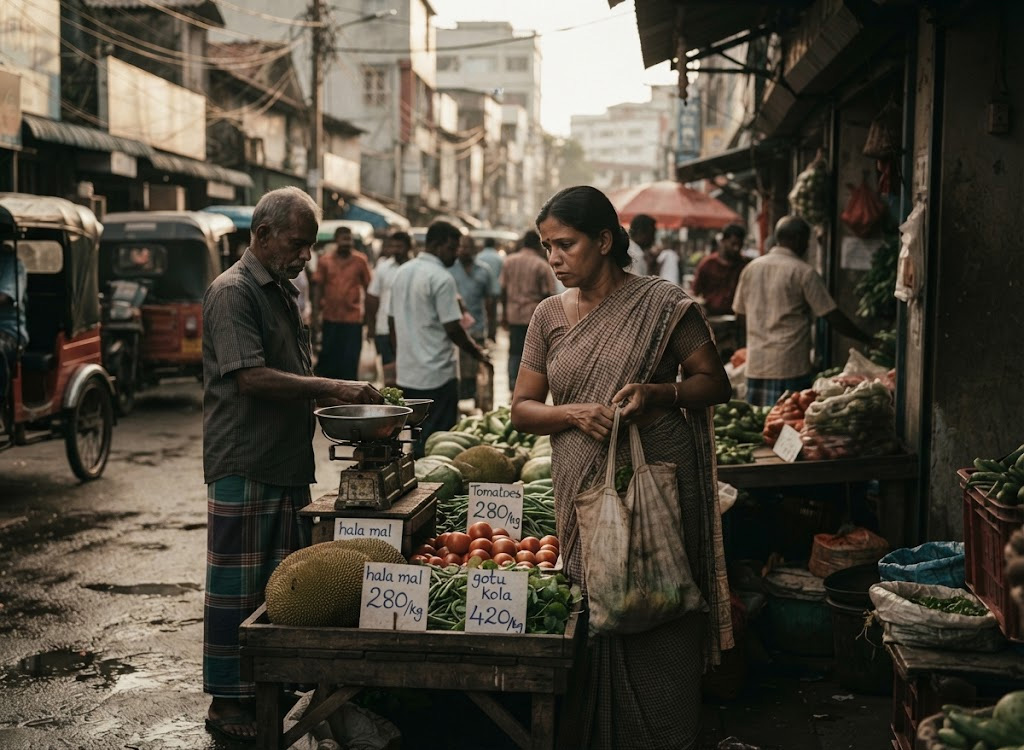
Food inflation rose significantly to 6.6% in August, compared to 4.9% in July. The 1.7 percentage-point increase indicates that food prices have once again become a more prominent contributor to the overall rise in the cost of living.
Non-food inflation also edged higher, increasing to 9.3% in August from 9.2% in July.
The acceleration in national inflation comes at a time when household budgets remain under pressure, particularly as increases in food prices tend to have a direct impact on lower- and middle-income households.
The latest NCPI figures also highlight the different price trends between food and non-food items. While non-food inflation remains higher at 9.3%, the sharper monthly increase in food inflation could translate into a more immediate impact on household spending.
The August figures will also be closely watched by policymakers as the Government seeks to maintain economic stability while managing the pressures arising from higher living costs.
Sri Lanka’s inflation rate had fallen sharply following the economic crisis and the subsequent stabilisation measures, but price pressures have been building again in recent months.
The latest increase therefore adds to the challenge of sustaining the country’s economic recovery while preventing renewed inflation from eroding household purchasing power.
With inflation now exceeding 8% at the national level, developments in food prices, transport, utilities and other essential household expenses are likely to remain key indicators of how the recovery is translating into living costs for consumers.













Leave a comment